Ada vs Forethought: Complete 2026 comparison

Kenneth Pangan
Last edited May 8, 2026
Disclosure: This article is published by eesel AI, a competitor of Ada and Zendesk. We encourage you to read Ada's own materials and Zendesk's own materials for their perspective.
If your team prioritizes rapid, self-service deployment, Ada's fluid automation handles roughly 70% of queries out of the box. For organizations that need granular triage control across complex ticket workflows, Forethought AI agents by Zendesk offers a more structured, routing-first approach. The differentiator that splits this decision for most teams is whether you need a platform-agnostic AI brain or Zendesk-native structured triage.
The 2026 market for customer experience has moved past simple chatbots. AI agents are now expected to reason through problems, access real-time data, and resolve issues end-to-end without constant human hand-holding. Choosing between Ada and Forethought AI agents by Zendesk is no longer just about which one has the better chat widget. It is about which reasoning architecture fits your support stack.
That choice became more defined in early 2026. Zendesk acquired Forethought on March 11, 2026, tightly coupling Forethought's product roadmap to the Zendesk platform. Whether you are looking to automate hundreds of thousands of conversations or simply want to reduce repetitive ticket volume, understanding the trade-offs between these two platforms before you start a sales cycle is time well spent.
What are Ada and Forethought AI agents by Zendesk?
Ada is an AI-first customer service automation platform built around what it calls "Agentic CX." Instead of rigid decision trees, you deploy AI agents powered by a patent-pending Reasoning Engine that understands customer intent and plans multi-step resolutions. Ada targets companies handling at least 300,000 annual conversations. Its goal is to make every customer interaction feel like a fluid, human-like conversation, regardless of channel.
Forethought AI agents by Zendesk is a multi-agent platform for enterprise customer support, now fully owned by Zendesk following the March 2026 acquisition. Rather than a single bot, it offers a suite of specialized AI agents: Solve, Triage, Assist, and Discover, each handling a different stage of the support lifecycle. Zendesk has stated that the acquisition accelerates its AI roadmap by over one year, and is integrating Forethought's technology into its Resolution Platform.
The clearest difference in 2026 is platform independence. Ada remains a standalone, omnichannel platform integrating across Salesforce, Zendesk, and Oracle. Forethought AI agents by Zendesk, while still supporting other platforms, is increasingly optimized for Zendesk users, offering a native experience for teams already committed to that stack.
Core features and automation capabilities
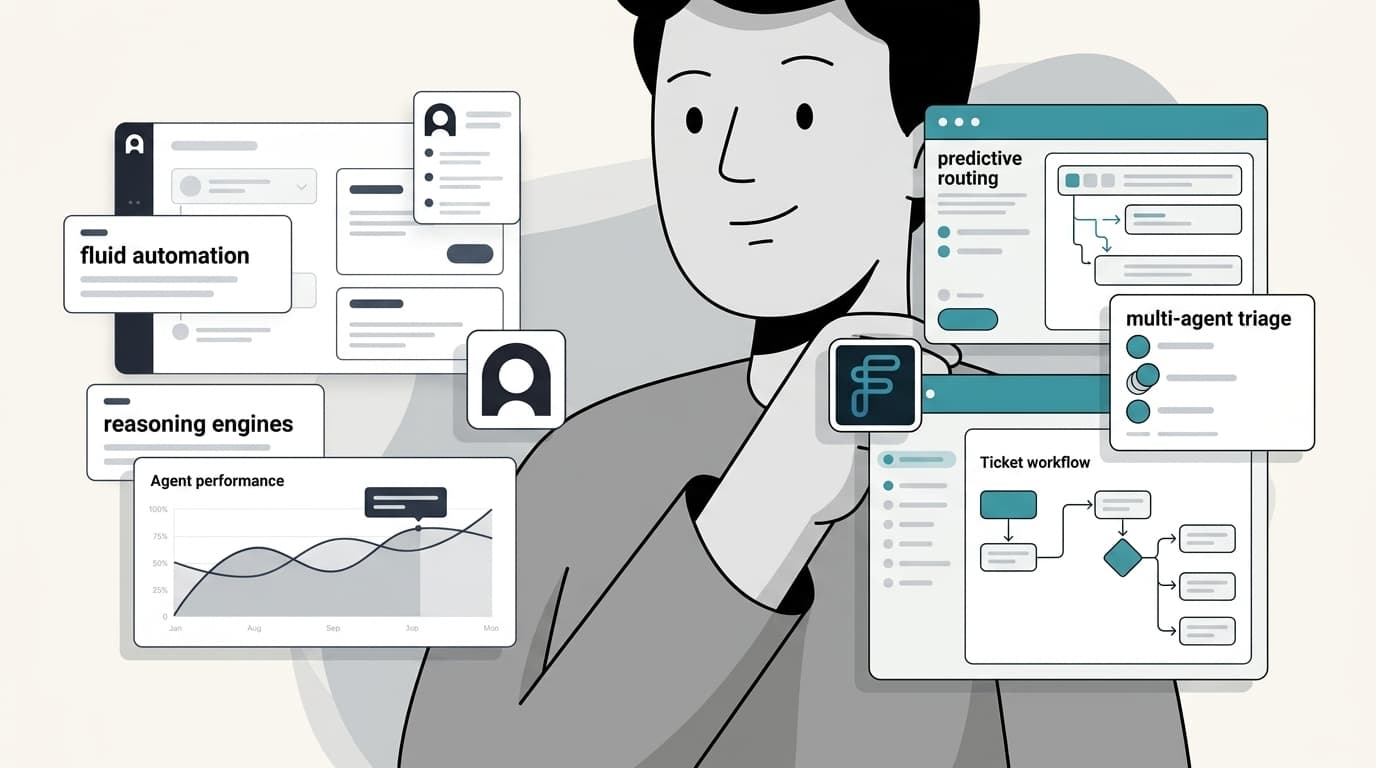
When comparing Ada and Forethought AI agents by Zendesk on automation, you are looking at two different approaches to reasoning.
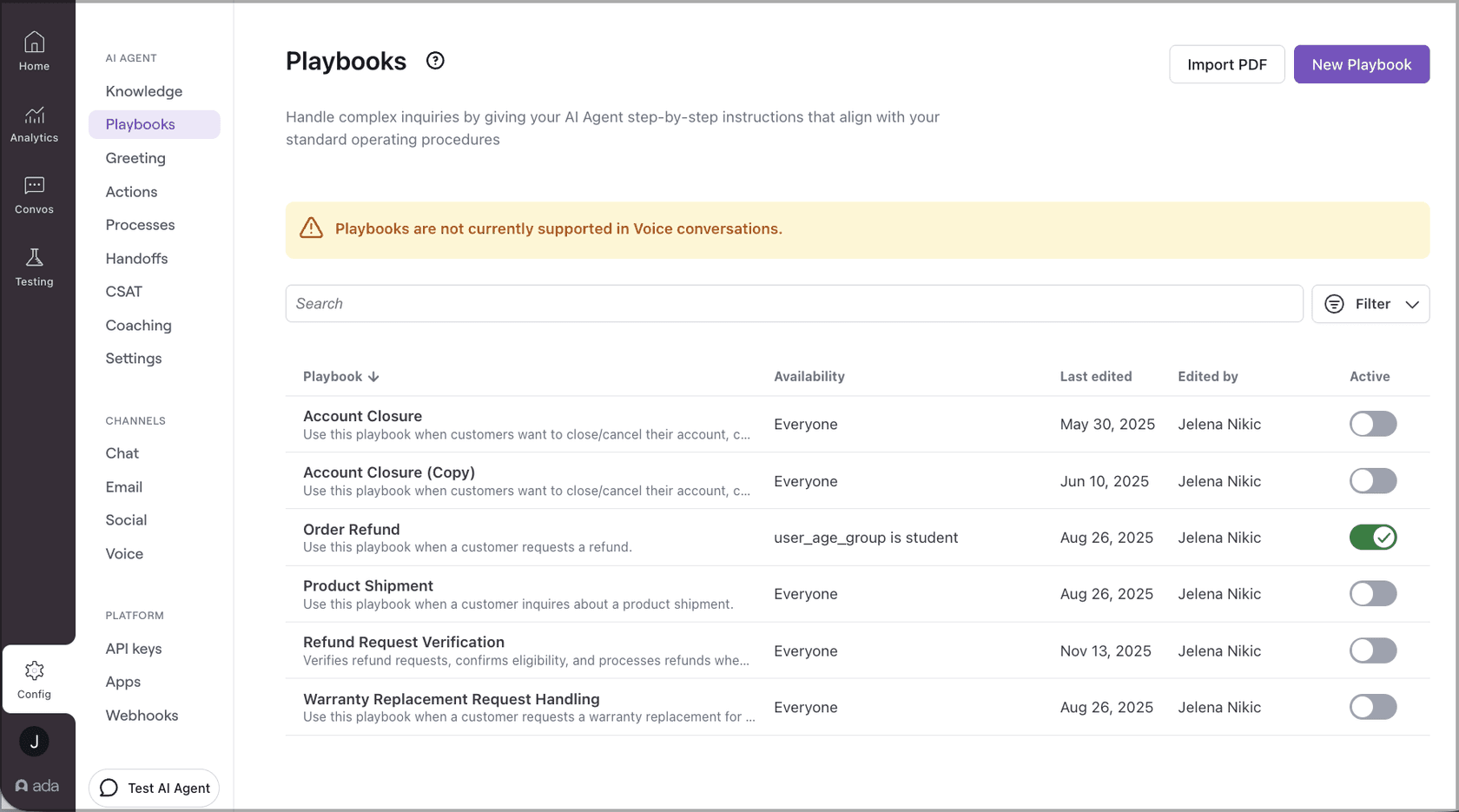
Ada uses its Reasoning Engine to move beyond "if this, then that" logic. Its agents can follow Playbooks, multi-step workflows powered by real-time data, without rigid scripting. If a customer asks for a refund, the Ada agent checks the customer's history, reviews the refund policy, and processes the transaction without escalating to a human.
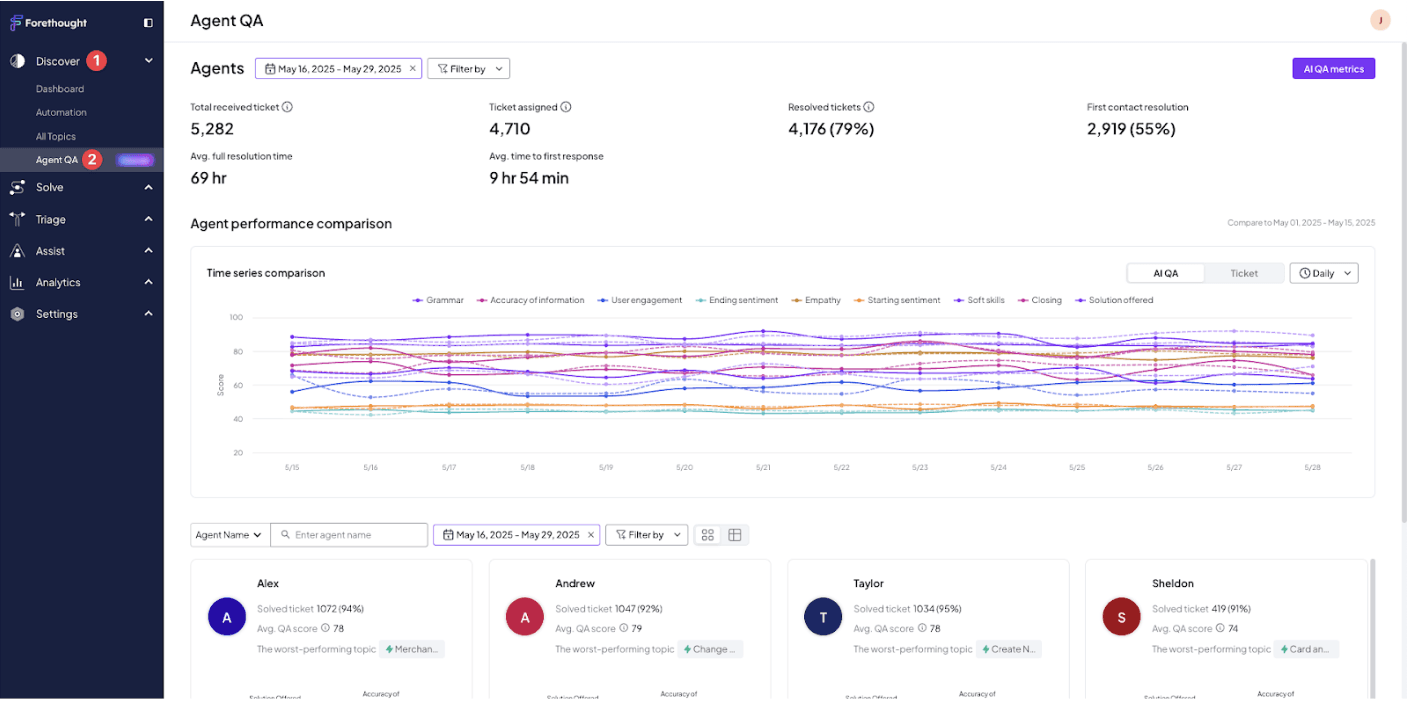
Forethought AI agents by Zendesk takes a modular approach. Its Solve agent handles the customer interaction using Autoflows, agentic workflows built from natural language. The Discover agent scans historical ticket data to surface knowledge gaps, and the Triage agent automatically classifies and prioritizes tickets based on intent and sentiment.
Voice AI and omnichannel support
Ada has invested heavily in voice AI, letting its agents handle phone calls with the same reasoning capabilities as chat. It supports 60+ languages across channels, so a customer can start a conversation on WhatsApp and finish it over the phone without repeating their issue.
Forethought AI agents by Zendesk also covers omnichannel, though its standout feature in this area is the Assist agent. This copilot gives human agents real-time resolution guidance and draft replies, making it a practical choice for teams that want to support their staff rather than replace the human layer entirely.
Pricing and plans
Pricing is where both platforms diverge most sharply from the rest of the market. Neither Ada nor Forethought AI agents by Zendesk publishes pricing online.
Ada's pricing page requires a sales conversation to get any numbers. The only public signal is the minimum volume threshold: 300,000 annual conversations. Ada's model is usage-based and contract-negotiated, meaning cost varies by volume tier and contract terms. For specifics, you need to contact Ada's sales team directly.
Forethought AI agents by Zendesk also does not disclose pricing publicly. The model combines a platform access fee with committed usage costs based on deflection volume. Three tiers exist (Basic, Professional, and Enterprise), but all are sales-gated.
| Product | Entry pricing | Billing model | Best for |
|---|---|---|---|
| Ada | Not publicly disclosed | Usage-based, custom contract | Companies with 300k+ annual tickets |
| Forethought AI agents by Zendesk | Not publicly disclosed | Platform fee + deflection volume | Zendesk teams needing deep triage |
| eesel AI | $0.40 / helpdesk task | Pure usage-based | Teams wanting transparent, pay-as-you-go pricing |
Both platforms require a multi-month sales cycle and an annual contract before you can fully evaluate them. For teams that need to compare options without a long procurement process, that sales dependency is a real barrier to a fair comparison.
Ease of use and implementation
The speed to first value is a major factor in the Ada versus Forethought AI agents by Zendesk decision.
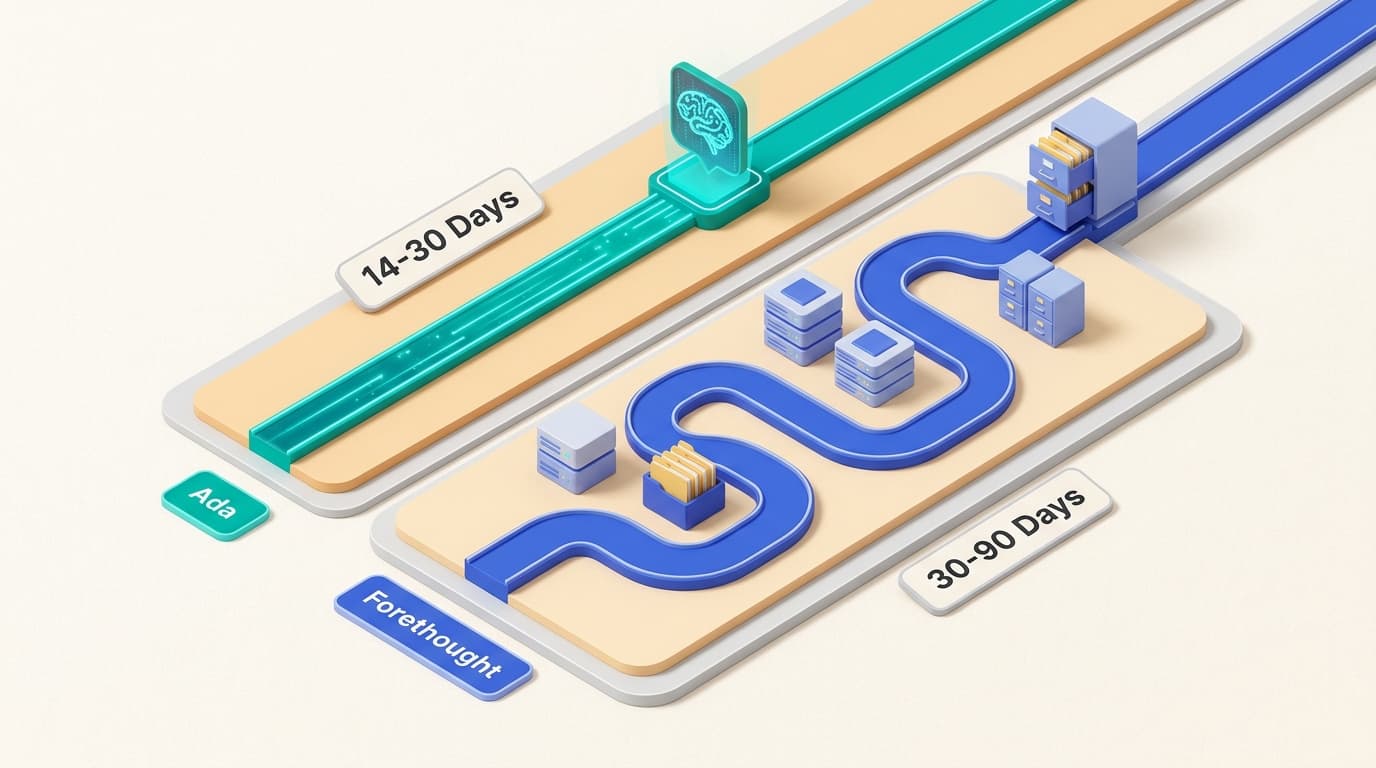
Ada's setup is designed to be relatively quick. Because it is AI-first, it can ingest your help center and start drafting replies with minimal manual configuration for routine tasks. Teams can often get a baseline agent running in a few weeks, though building complex Playbooks for deeper tech stack integrations takes longer.
Forethought AI agents by Zendesk generally requires a more structured implementation phase. Because its triage and routing models rely on historical data to learn your workflows, it often needs 20,000 or more historical tickets to achieve accurate results. Most implementations run 30 to 90 days. That setup takes longer, but the result is a tightly tuned system that understands the specific patterns in your ticket queue.
If you need an agent handling tickets today, Ada is the faster path. If you need a system that deeply understands your existing Zendesk workflow and can organize ticket routing for you, Forethought AI agents by Zendesk is worth the longer setup window.
Choosing the right AI teammate: eesel AI as an alternative
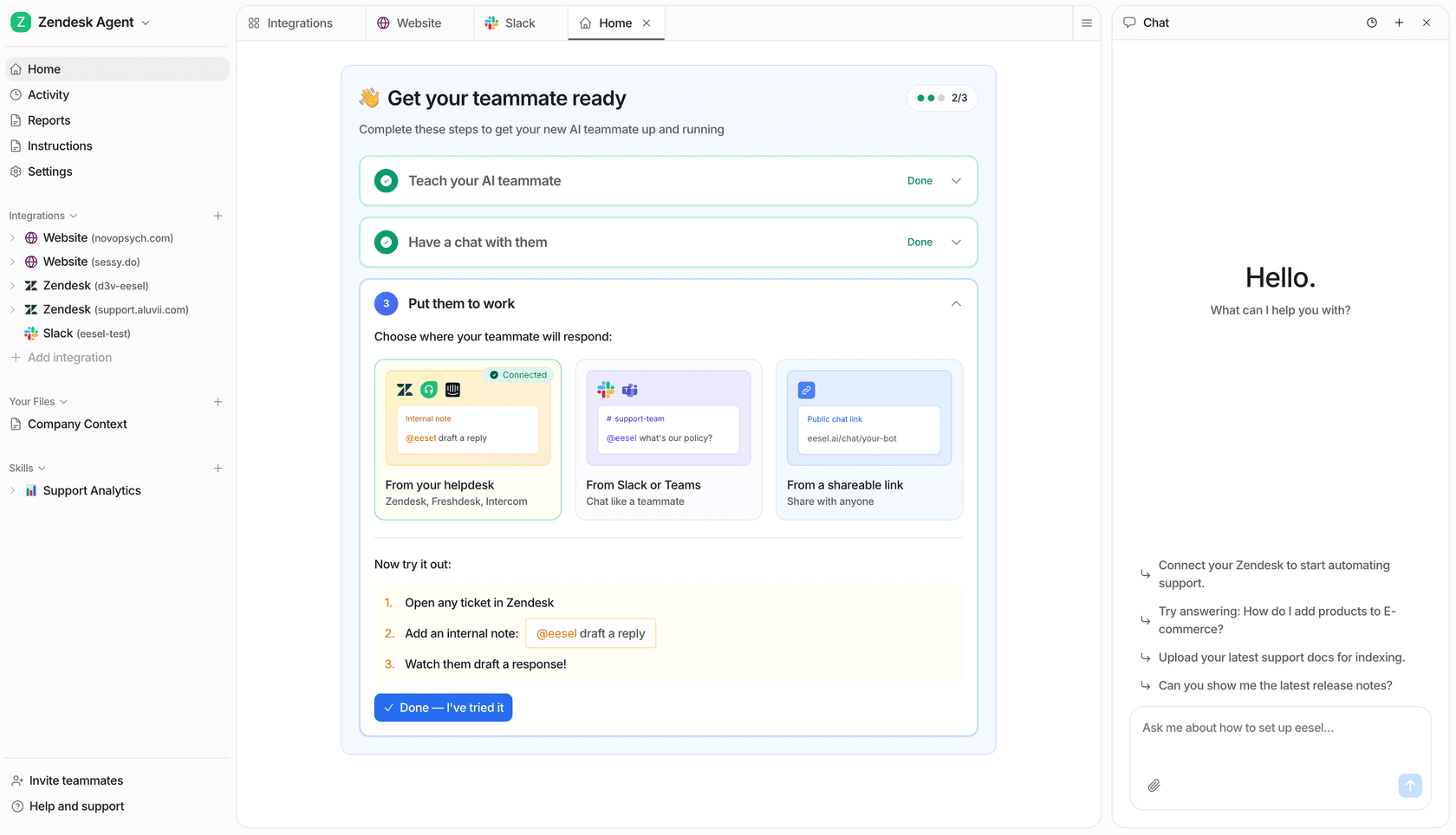
For many teams, the choice between Ada and Forethought AI agents by Zendesk means committing to a substantial annual contract before you have seen either platform handle a real ticket from your actual queue. At eesel AI, we built a third option.
We don't think you should configure a bot for 90 days or spend months in a sales process before seeing results. Instead, you can deploy an AI teammate that joins your team and starts working in minutes.
The teammate model vs. the bot model
The core difference is that you don't build eesel AI; you onboard it. When you connect eesel AI to your helpdesk, it immediately learns from your past tickets, your help center, your macros, and even your internal Notion or Google Docs. It doesn't need 20,000 tickets to get started. It uses your company's existing history to become productive on day one.
Unlike Ada or Forethought AI agents by Zendesk, eesel AI supports a progressive rollout. You can start by having our AI Helpdesk Agent draft replies as internal notes for your team to review. As you build confidence, you can let it handle specific ticket types or business hours autonomously. It is about building trust incrementally, not flipping a switch and hoping for the best.
Transparent pricing
We are one of the only platforms in 2026 with a completely transparent, usage-based pricing model. There are no platform fees, no per-seat charges, and no monthly minimums.
- $0.40 per helpdesk task: You only pay for what our AI actually handles. If your volume drops, your bill drops.
- $4.00 per heavy task: Complex multi-step automations like content writing or deep research are billed at the heavy-task rate.
- $50 free trial: You can start with full access to every feature without entering a credit card.
Pricing at eesel AI is built to be predictable. You can set monthly caps to ensure there are never any surprises, and you're never charged for tickets your human agents handle. That level of flexibility is difficult to get from a traditional enterprise contract.
Final verdict: Which should you choose?
Choosing between Ada and Forethought AI agents by Zendesk depends on your scale and your stack.
Pick Ada if:
- You have high ticket volume (300,000+ per year).
- You want best-in-class voice AI and natural, fluid conversations.
- You need a platform-independent solution that works across multiple CRMs.
Pick Forethought AI agents by Zendesk if:
- You are a Zendesk power user and want a native, deeply integrated experience.
- Your primary pain point is ticket triage, routing, and organization.
- You want specialized agents for different parts of the support lifecycle: Discover, Assist, and Triage.
Pick eesel AI if:
- You want to start today without a sales call or a large upfront commitment.
- You value transparency and want usage-based pricing with no platform fees.
- You want an AI teammate that can handle support, write content, and answer internal questions from one account.
Don't get locked into a contract before you've seen the AI work with your actual data. Start with a free eesel trial or run a simulation to see how a modern AI teammate handles your real support volume.

Frequently Asked Questions
Share this article

Article by
Kenneth Pangan
Writer and marketer for over ten years, Kenneth Pangan splits his time between history, politics, and art with plenty of interruptions from his dogs demanding attention.