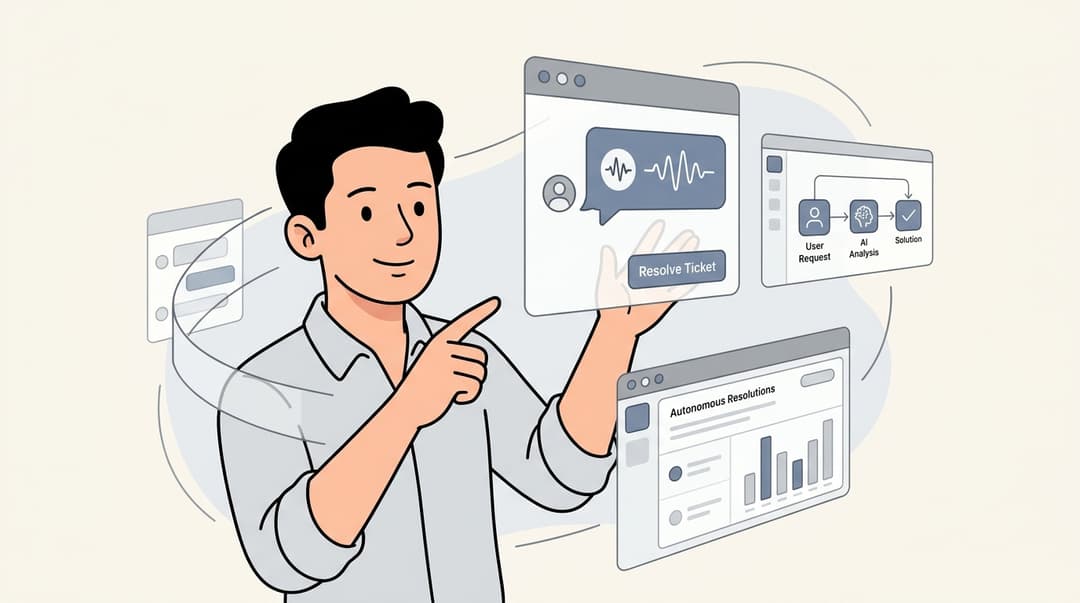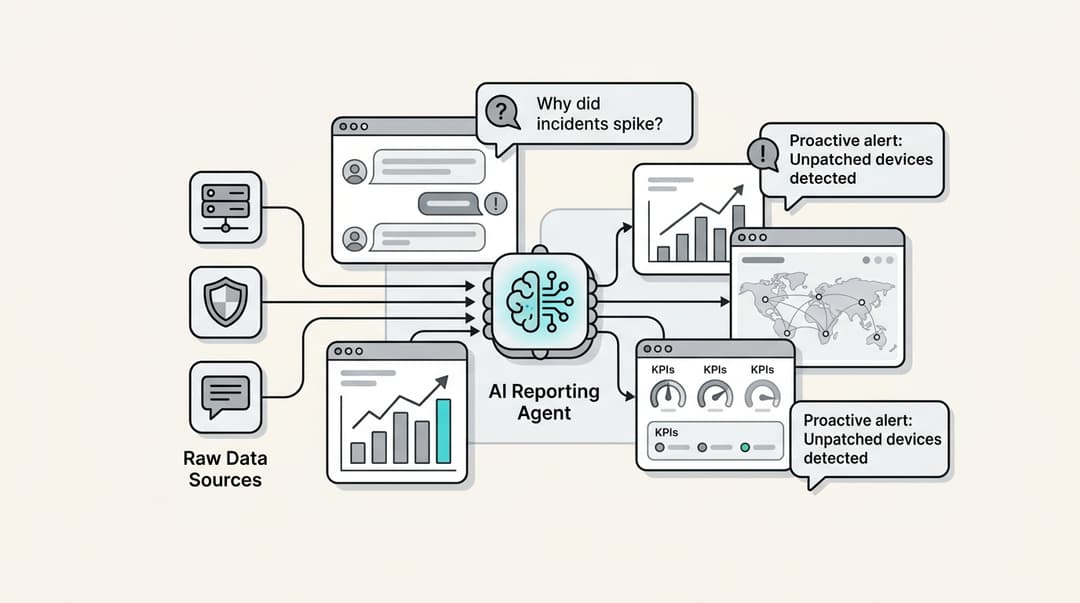
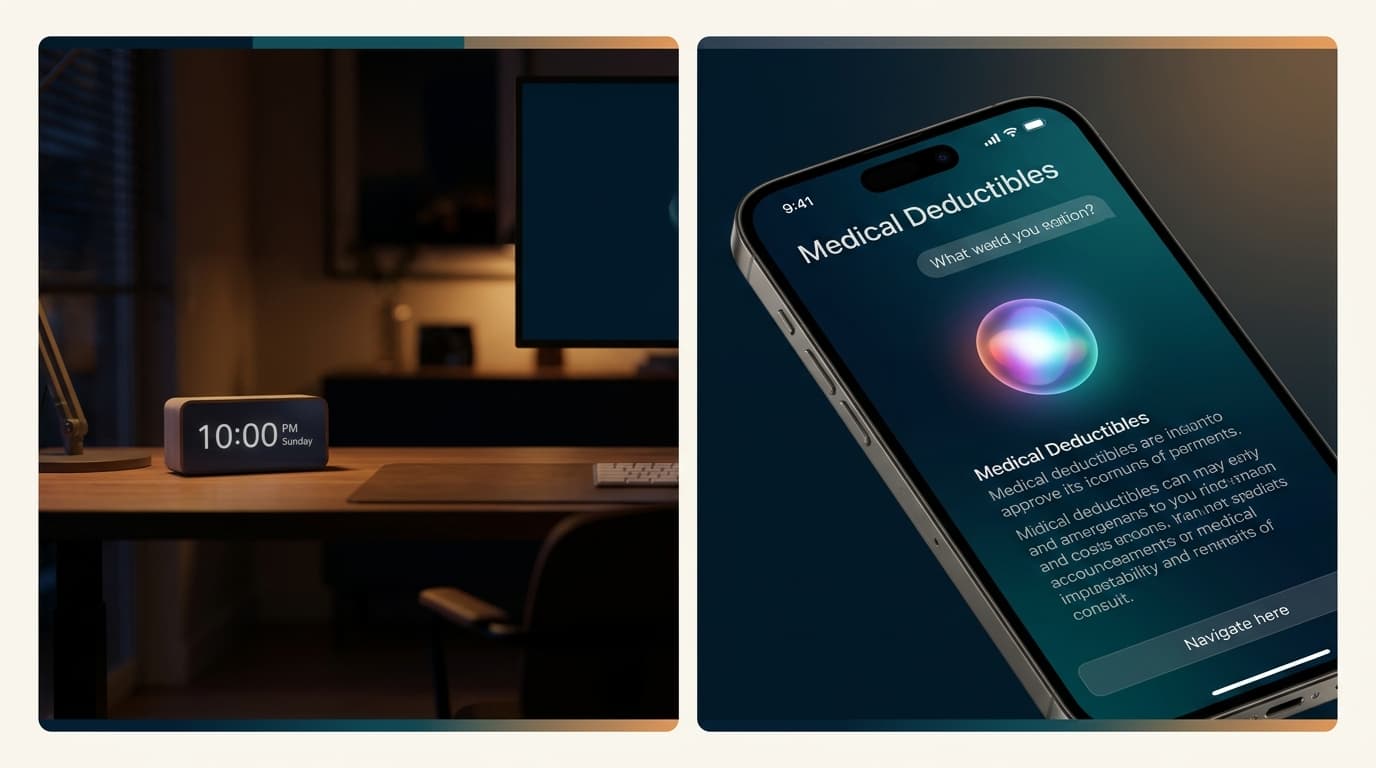
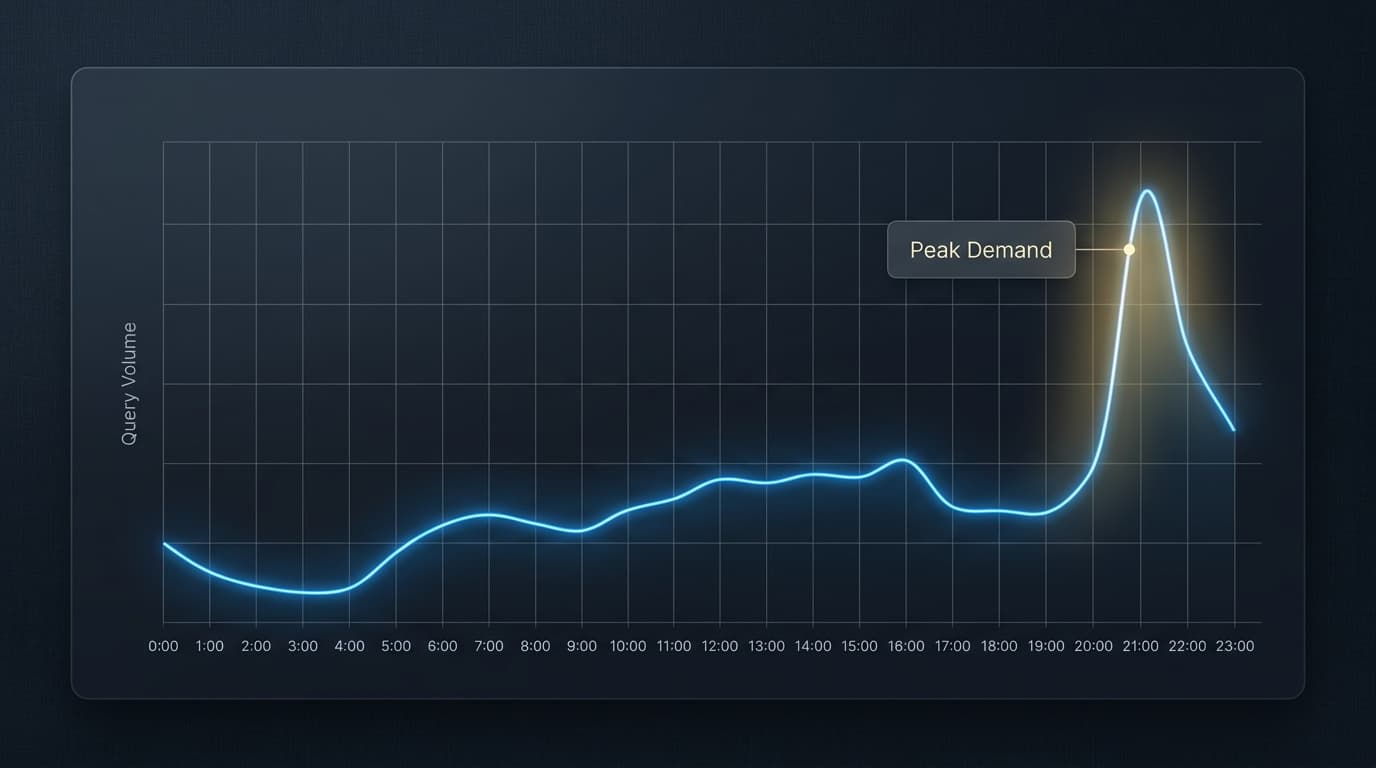
Roughly 86% of employees admit they are totally confused about their benefits, yet nearly 40% of their questions arrive on evenings or weekends when HR is offline. In 2026, leading organizations report resolving up to 90% of these queries automatically using AI agents. The differentiator isn't just speed, it's the shift from static bots to agentic teammates.
This evolution in HR technology is not just about answering FAQs. It is about closing the "literacy gap" that has plagued benefits administration for decades. Even the most comprehensive benefits guide is useless if an employee cannot find the one specific detail they need at 10 PM on a Sunday. By implementing specialized AI for benefits questions, companies are transforming their HR departments from reactive ticket-handlers into proactive strategic partners.
What is an AI benefits assistant?
At its most basic level, AI for benefits questions refers to an intelligence layer designed to understand, translate, and act on complex benefits documentation. Unlike the traditional "if-then" chatbots of the early 2020s, which relied on rigid decision trees and often frustrated users with "I didn't understand that" errors, modern AI benefits assistants use natural language processing (NLP) to understand intent.
These systems are trained to act as a bridge between dense legal documentation and the everyday language of employees. Here is the short version of what these assistants actually do:
- Translate jargon: They convert complex phrases like "deductible waiver provisions" into plain-language explanations like "you don't have to pay for this service out of pocket."
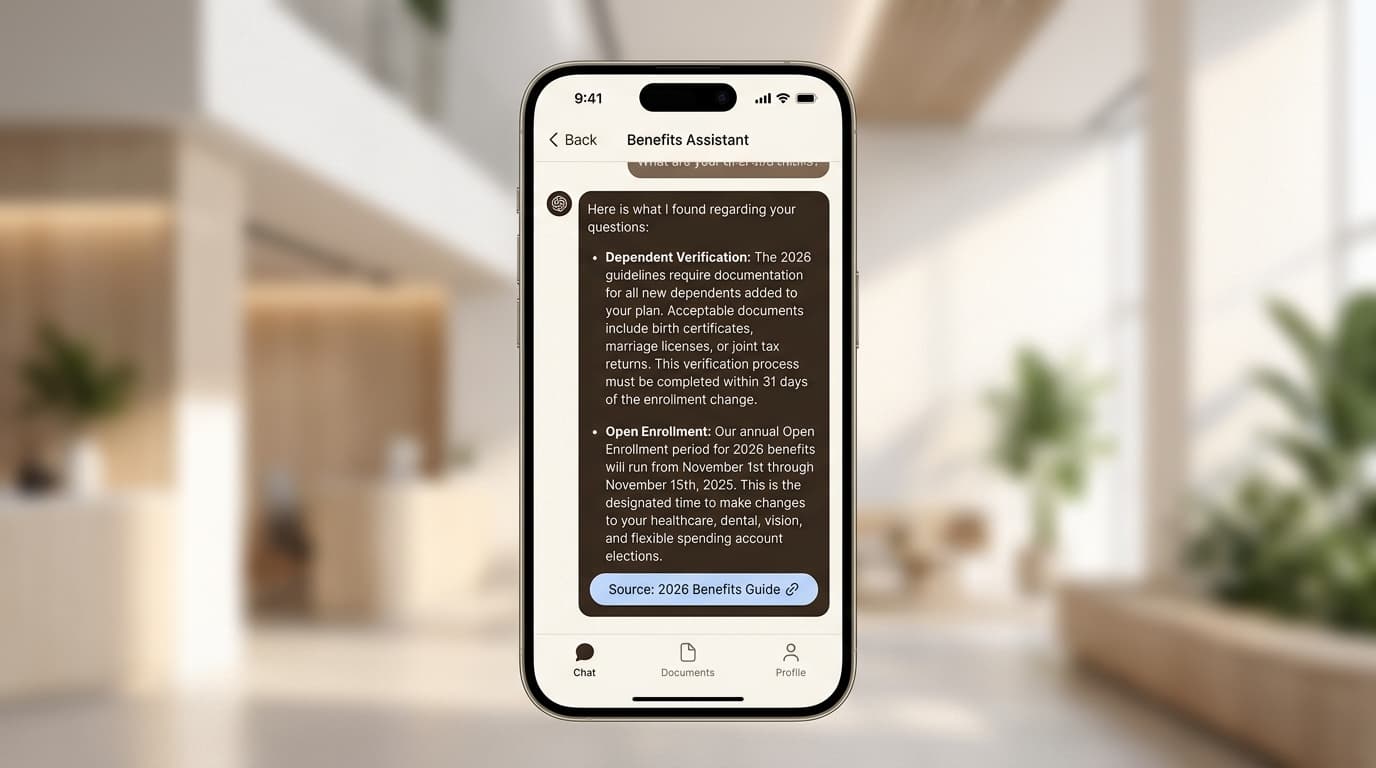
- Source-based retrieval: They scan Summary Plan Descriptions (SPDs), benefits guides, and carrier websites to find exact answers with cited sources.
- Scenario simulation: They help employees compare plans by simulating out-of-pocket costs based on their past healthcare usage.
- Action-taking: The most advanced versions, known as "agentic AI," can actually update dependents, process life events, or trigger enrollment changes directly in your HRIS.
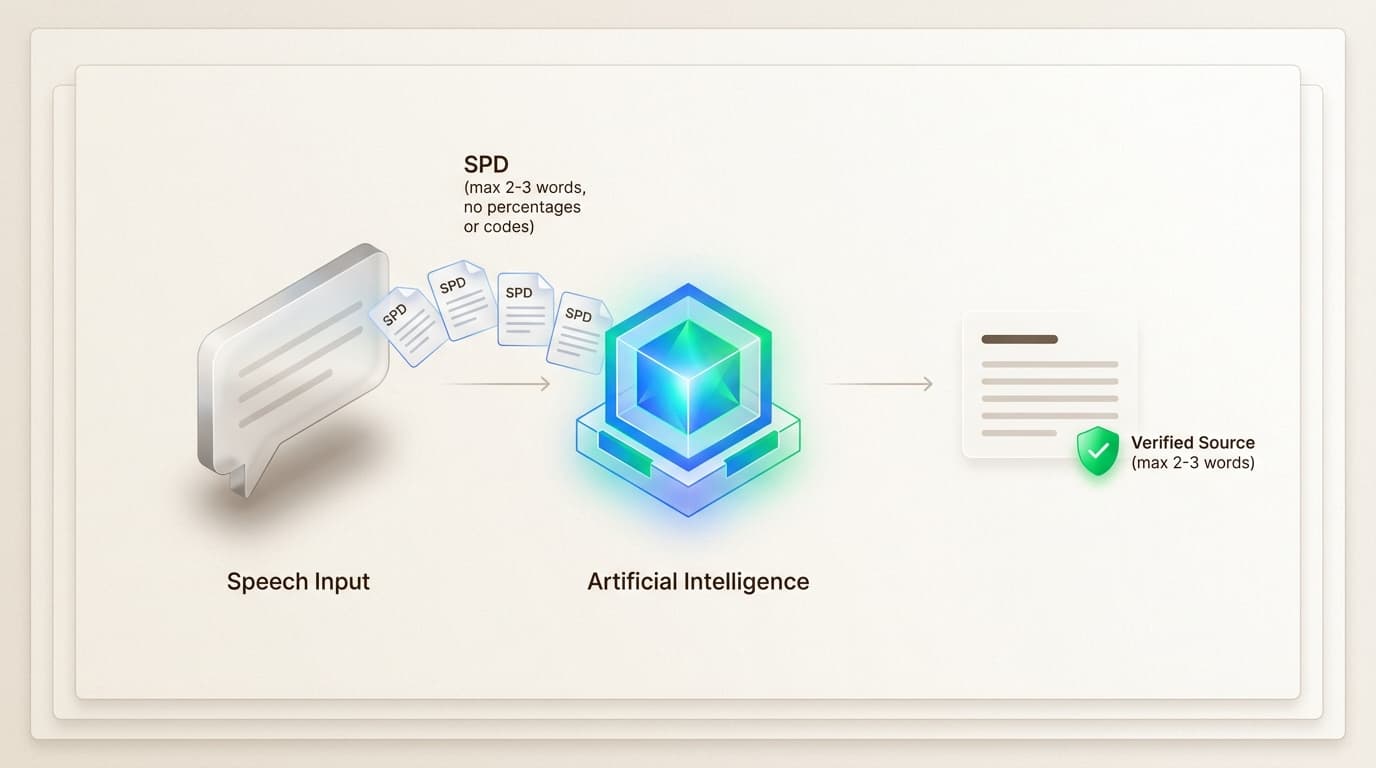
This translation process ensures that every member of the workforce can make informed decisions about their coverage without waiting for a human response.
Why 2026 is the year benefits AI becomes mission-critical
The urgency for AI integration in benefits has reached a tipping point in 2026. HR teams are facing a "literacy crisis" where 86% of employees remain confused despite companies spending millions on "better" communication materials. The problem isn't a lack of information, it's a lack of accessibility.
The rise of administrative cost avoidance
As healthcare costs continue to climb, HR leaders are under pressure to find efficiencies. Businessolver has reported that companies with 11,000 employees have achieved over $3M in cost avoidance through AI-driven plan steerage and reduced call center volume. By resolving routine questions automatically, you are not just saving time, you are protecting the bottom line.
The hidden risk of shadow AI
Perhaps the most significant driver for 2026 is the risk of "Shadow AI." When employees cannot get a quick answer from HR, they often turn to public, unsecured AI tools to help them understand their benefits. This creates a massive data security risk, as sensitive personal information can leak into public training models. Providing a secure, company-sanctioned AI for benefits questions is no longer optional, it is a security requirement.
10 essential questions for your benefits AI RFP
Buying AI for HR is different from buying traditional software. You are not just buying a tool, you are hiring a digital teammate. To ensure you pick the right partner, use this buyer's roadmap for your next Request for Proposal (RFP).
| Question | Why it matters | What to look for |
|---|---|---|
| 1. How do you handle complex questions? | Multi-step reasoning is required for things like COBRA or FMLA. | Look for an AI that can maintain context across multiple turns. |
| 2. What is the confidence threshold? | You don't want the AI guessing benefits facts. | Ask how it handles "I don't know" and how it escalates to a human. |
| 3. Can the AI cite its sources? | Trust is earned through verification. | Every answer should link directly to the specific page of your SPD. |
| 4. How is data secured? | Sensitive HIPAA data must be protected from public model leakage. | Ensure the vendor uses isolated data environments. |
| 5. Does the AI have "memory"? | Repeating information is the number one frustration for employees. | The AI should remember the start of the chat at the end. |
| 6. How is knowledge updated? | Plan rules change annually (or even mid-year). | Look for automated indexing that doesn't require manual retraining. |
| 7. Can the AI take real actions? | Speed comes from resolving the issue, not just answering the question. | Check for one-click integrations with your helpdesk or HRIS. |
| 8. How do you audit for bias? | AI can unintentionally steer people unfairly. | Ask for their algorithmic fairness governance framework. |
| 9. What is the agentic roadmap? | The technology is moving fast. | You want a partner focused on long-term workflow automation. |
| 10. Is there a simulation mode? | You should test the AI on real past tickets before going live. | Look for tools that let you score accuracy in bulk. |

10 questions your employees should ask AI to unlock their benefits
For employees, the shift to AI-driven support means moving from "What is this benefit?" to "How do I actually use this benefit?" To help your team get the most value, encourage them to use specific prompts. Here are 10 questions every employee should ask their AI benefits assistant:
- "Explain the difference between my PPO and HDHP options in plain language." This helps them move past the jargon and understand the financial impact of their choice.
- "How much can I contribute to my HSA this year to maximize my tax savings?" AI can calculate specific contribution limits based on their age and plan type.
- "Is [specific procedure] covered, and what is the estimated out-of-pocket cost?" Getting a conversational estimate helps with financial planning for medical care.
- "What happens to my coverage if I have a new baby?" AI can outline the life event window and the required documentation immediately.
- "How do I find an in-network specialist for my condition near my house?" Instant network searches save employees hours of frustration on carrier websites.
- "Am I vested in my 401(k) match yet, and how do I increase my contribution?" Financial wellness questions often have cited answers in policy handbooks.
- "What mental health resources are available to me for free?" Many employees underutilize EAPs simply because they don't know where to find them.
- "Can you summarize the changes to my pharmacy benefits for 2026?" AI can highlight plan year updates so there are no surprises at the pharmacy.
- "What documentation do I need to submit a claim for this service?" Getting the correct list of documents the first time reduces claim rejections.
- "How do I use my telemedicine benefit at 2 AM?" Providing immediate access to care instructions is the ultimate test of an AI teammate.
Choosing the right AI teammate: why eesel AI is different
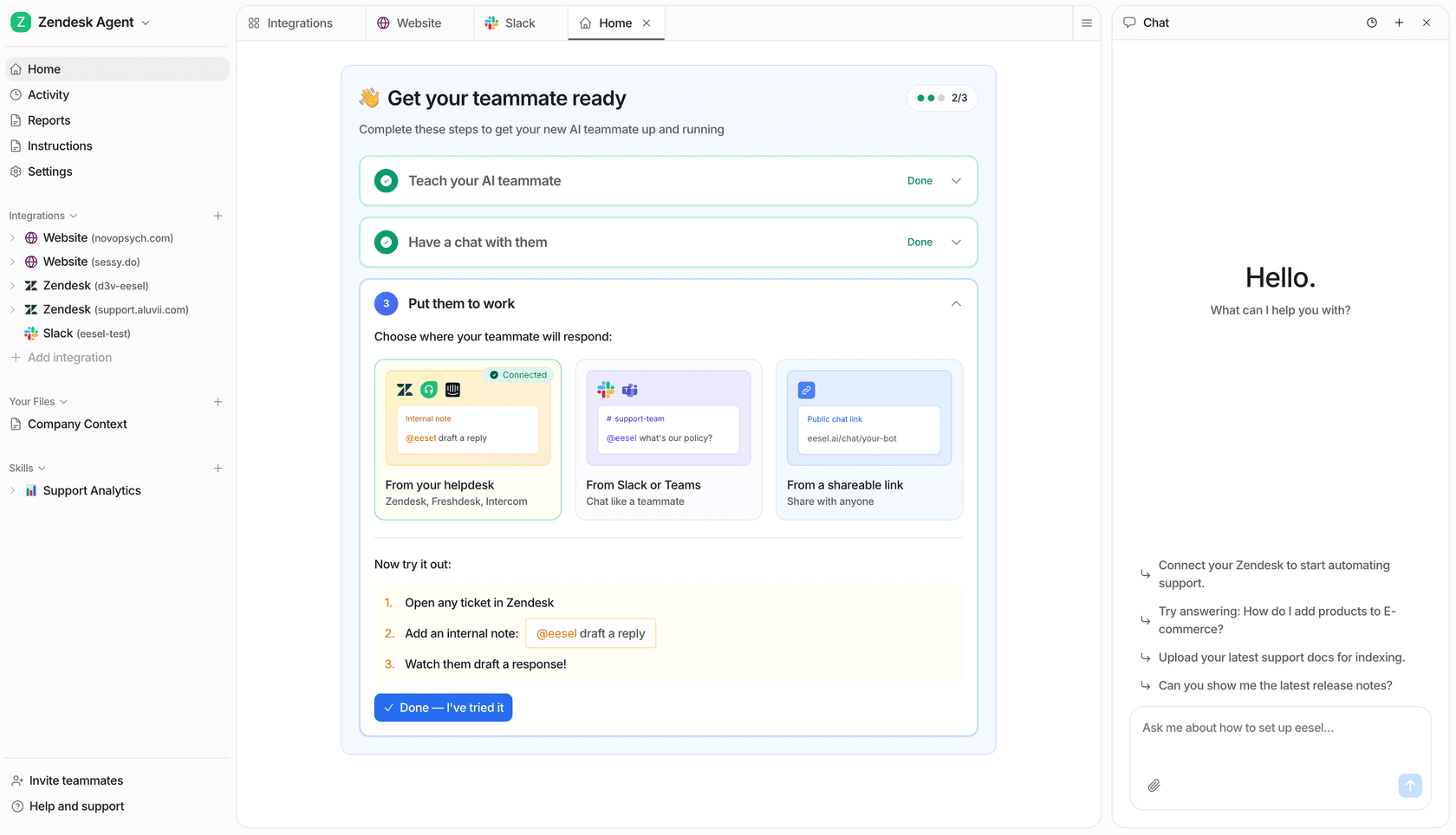
In 2026, you don't just "configure" a bot, you hire an AI teammate. Our AI Helpdesk Agent is built on this "teammate" mental model. Most AI support tools are black boxes where you turn them on and hope for the best. We take a different approach. Like a human new hire, our AI teammate learns your business first, starts with guidance, and levels up to work autonomously as it earns your trust.
How our AI teammate learns your benefits in minutes
Instead of weeks of manual training, we connect directly to your sources of truth. Our AI teammate learns from your Summary Plan Descriptions, your HR help center, your past tickets, and even your internal Slack conversations in minutes. It understands your tone, your specific plan rules, and your unique company culture from day one.
Earned trust through a progressive rollout
We believe trust should be earned, not configured. You can start by having our AI teammate draft replies for your HR team to review. As you see the accuracy and quality of the responses, you can expand its role to handle specific ticket types autonomously or work 24/7. This "Draft-to-Autonomous" path ensures you are always in control of the employee experience.
Pricing that scales with your results
We don't believe in platform fees or per-seat charges that penalize you for growing your team. You only pay for what our AI teammate actually does.
| Plan | Price | Key Features |
|---|---|---|
| Free Trial | $0 ($50 credit) | All features unlocked, no restrictions, test on real data. |
| Regular Task | $0.40 per task | Per resolved benefits ticket or chat session (unlimited messages). |
| Heavy Task | $4.00 per task | Per blog post draft (includes deep research and SEO). |
| Enterprise | $2,100/mo | Compliance, SSO, HIPAA, signed cloud service agreement. |
Bottom line? We offer a $50 free trial with no monthly minimums or platform fees. You can hire your first AI teammate today and see the results on your own benefits data before committing a single dollar.
Building your 2026 AI benefits roadmap
Implementing AI for benefits questions doesn't have to be a multi-month engineering project. Here's how the process works to get you from confusion to clarity in weeks, not years:
- Audit your current documentation. Identify the gaps in your current benefits guides and FAQs. If your AI doesn't have the data, it can't give the answer.
- Hire an AI teammate. Don't build a bot. Hire a specialized AI Helpdesk Agent that can hit the ground running with your existing documentation.
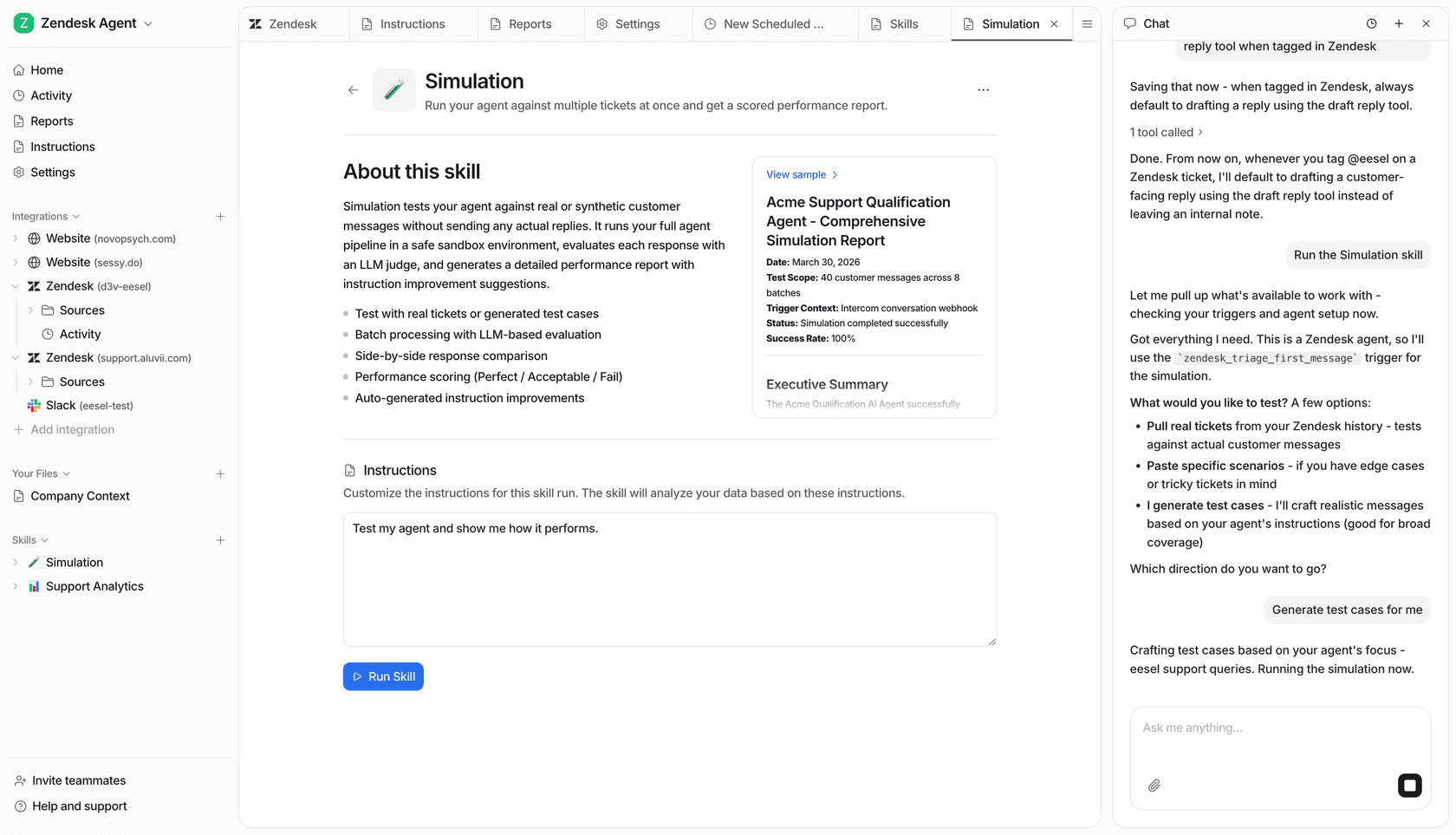
- Iterate with simulation data. Use simulation mode to run the AI against your last 1,000 benefits tickets. This gives you a risk-free way to verify quality and find knowledge gaps before your next open enrollment.
The goal for 2026 is simple: give employees the answers they need, exactly when they need them, without burning out your HR team. By moving to an agentic AI teammate model, you can resolve 90% of routine queries while reserving your human experts for the complex life events that genuinely require a human touch. For more insights on scaling your support with AI, explore our latest research and guides.

Frequently Asked Questions
Share this article

Article by
Stevia Putri
Stevia Putri is a marketing generalist at eesel AI, where she helps turn powerful AI tools into stories that resonate. She’s driven by curiosity, clarity, and the human side of technology.