

I work the support queue every day, so when I look at voice AI I’m not asking "does the demo sound cool?", I’m asking "would this actually help an agent, or just create a new mess to clean up?" The buzz is getting louder for a reason: AI can now handle customer calls cheaper, faster, and sometimes more consistently than a tired human at 3 p.m. It’s turning 24/7 availability into an actual reality.
But with the explosion of AI voice companies, picking the right one can feel a bit like walking through a minefield. Many platforms are clunky, require a team of developers just to get started, or come with eye-watering, unpredictable price tags. To cut through the noise, I rolled up my sleeves and put the top contenders to the test, focusing on what really matters for a business just trying to get work done.
What are AI voice agents from AI voice companies anyway?
So, what exactly is an AI voice agent? Put simply, it’s a smart piece of software that uses artificial intelligence to understand what you’re saying and talk back in a surprisingly human-like voice. It mashes together a few technologies, like natural language processing (NLP) and speech recognition, to hold a conversation in real time.
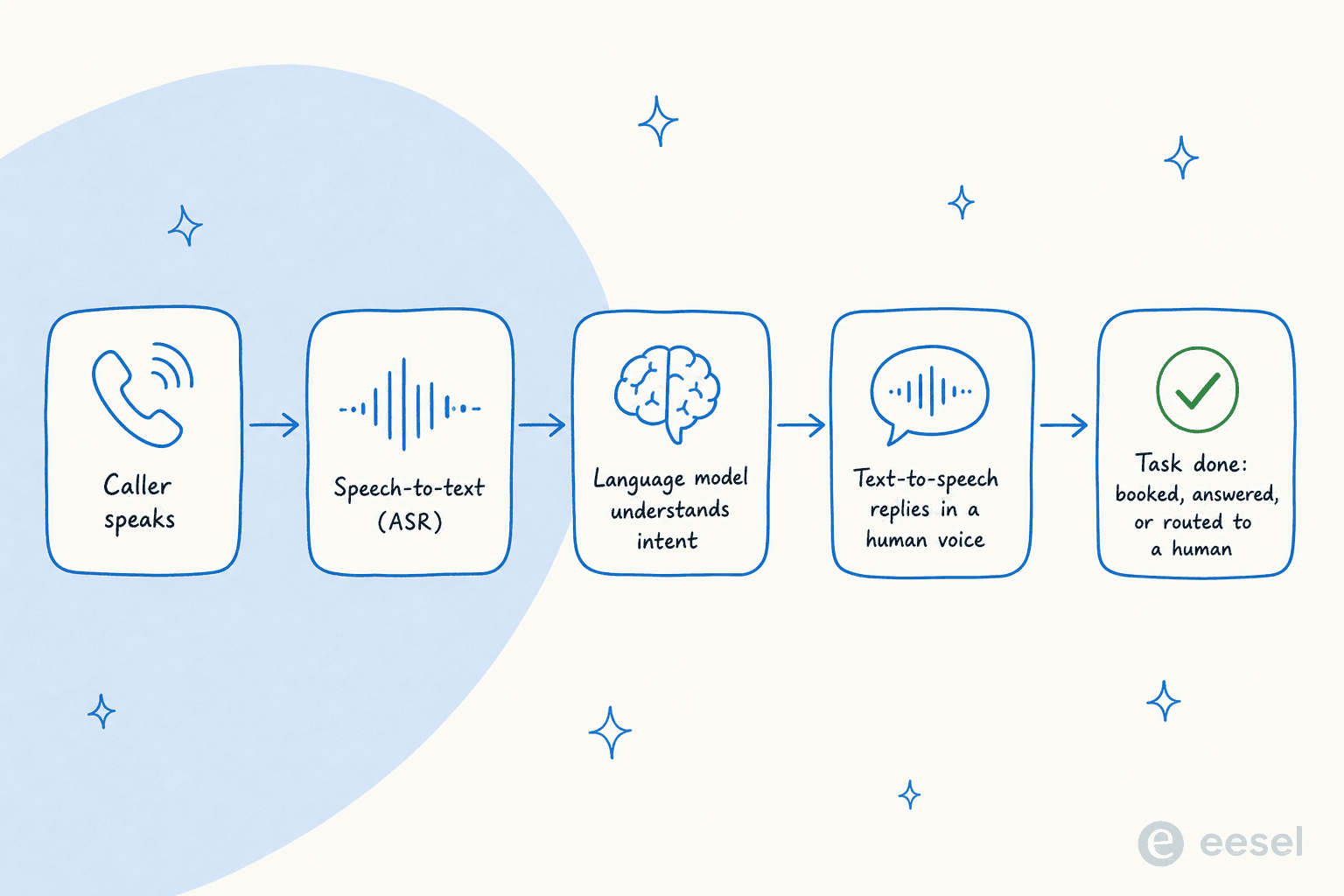
Think of it as an automated assistant that can take phone calls, answer questions, or even handle tasks like booking appointments and vetting new sales leads, all on its own. For businesses, this can be a massive help. It means you can free up your team from the same repetitive calls, cut down on operational costs, and scale your support without having to hire an army of new agents. Best of all, it gives your customers instant help, day or night.
How I tested and ranked the best AI voice companies
To get past all the flashy marketing demos, I tested each of these AI voice companies with a simple, hands-on approach. I wanted to see which tools could actually deliver on their promises in a real-world business setting.
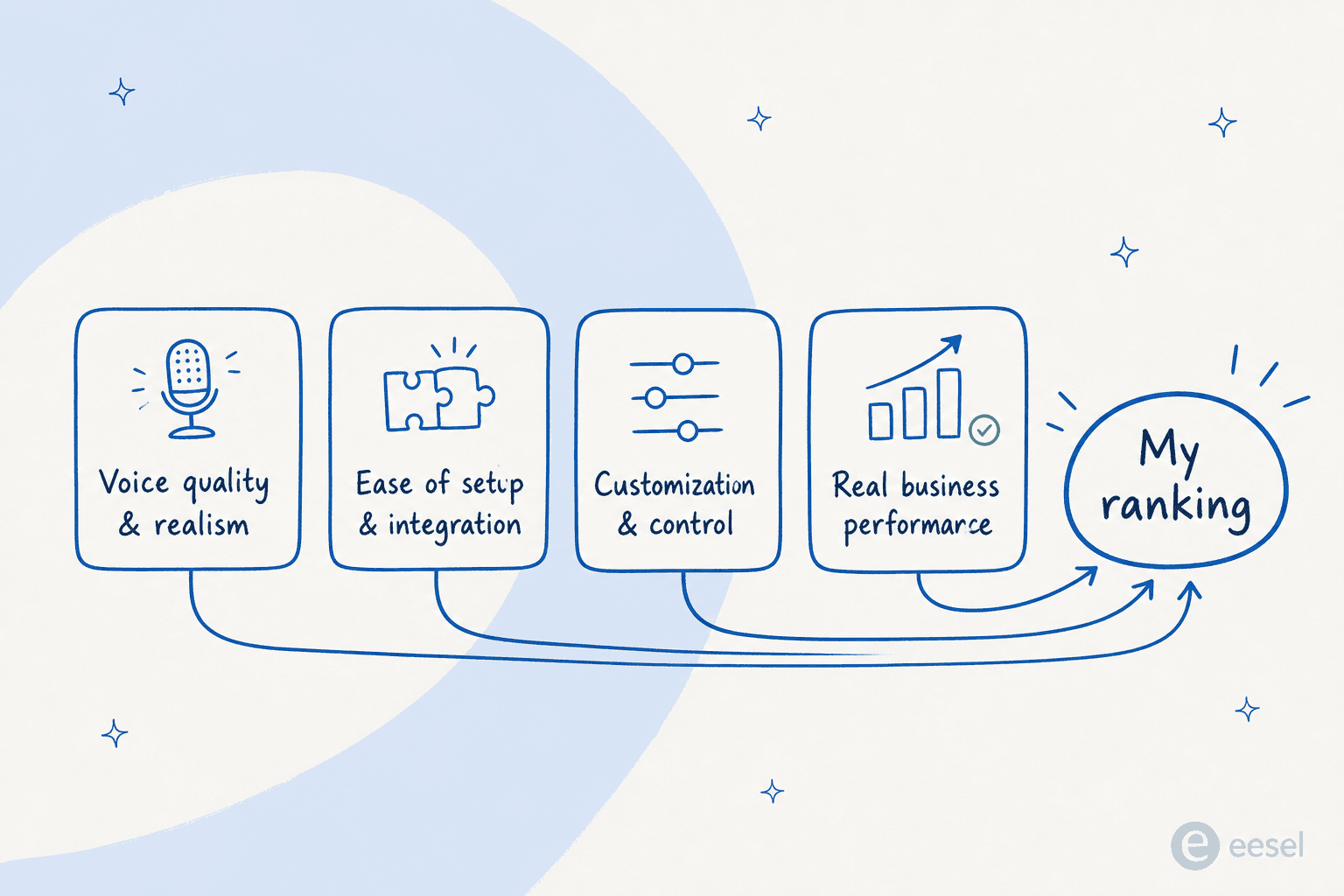
Here’s what I was looking for:
- Voice quality & realism: How human did it actually sound? I listened for natural-sounding conversations, realistic pauses, and the ability to handle different tones without sounding like a robot reading from a teleprompter.
- Ease of setup & integration: How long does it take to get from signing up to having a working agent? I gave bonus points to platforms you could set up without a computer science degree and that could easily connect with tools like your CRM or helpdesk.
- Customization & control: Could I actually steer the conversation? I looked for tools that let me map out the agent’s logic, create custom workflows, and set clear rules for when a call should be handed off to a human.
- Practical business performance: I put each platform through its paces on real-world tasks. This wasn't just about reading a script; it was about qualifying leads, booking appointments, and answering common support questions for industries like real estate and customer service.
The best AI voice companies in 2026: a comparison
Here’s a quick breakdown of how the top platforms compare at a glance.
| Company | Best For | Voice Realism | Setup Complexity | Pricing Model |
|---|---|---|---|---|
| Lindy | All-in-one no-code voice automation | Excellent | Low (No-code) | Subscription (from $49.99/mo) |
| Vapi | Developers building custom solutions | Good (Customizable) | High (API-first) | Usage-based ($0.05/min) |
| ElevenLabs | Generating expressive, studio-quality voices | Studio-Quality | Low (API/UI) | Subscription (from $22/mo) |
| Synthflow | Non-technical teams deploying agents fast | Good | Low (No-code) | Per-minute |
| Retell AI | Support teams needing call summaries | Good | Low (No-code) | Usage-based |
| Cognigy | Large enterprises with complex needs | Good | High (Low-code) | Custom |
| Hume AI | Emotionally intelligent conversations | Excellent | High (API-first) | Usage-based |
A detailed review of the top 7 AI voice companies
After putting them all through their paces, here’s a closer look at the seven best AI voice companies you should be looking at in 2026.
1. Lindy: best of the AI voice companies for overall AI voice agents
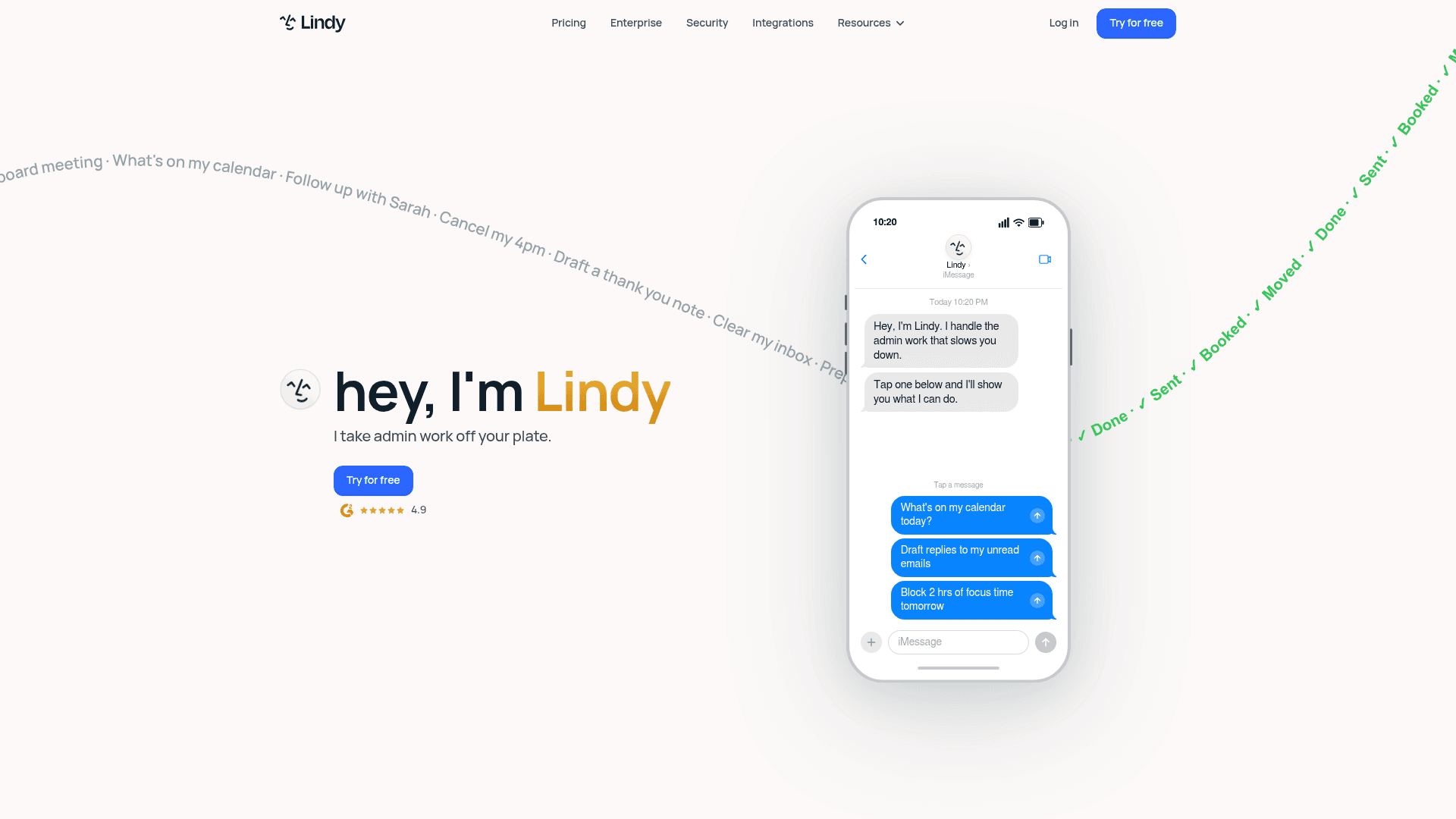
Lindy is a seriously impressive no-code platform that feels like it was built for people who need to get things done. It can make and take calls, carry on a natural conversation to qualify leads, shoot off follow-up emails, and automatically update your other systems. It’s an all-in-one tool that just works out of the box.
- Pros: The conversational flow is natural, and it can even search your internal documents mid-call to find answers. The built-in call summaries and Slack alerts are a huge time-saver.
- Cons: You'll need to be on a paid plan to get access to the phone call features. Also, if you have super specific or complex needs, you might find it less flexible than a tool built for developers (the Lindy alternatives worth a look in that case).
- Pricing: Lindy has a free plan to get you started. The calling features unlock on the paid tiers, which start at $49.99 per month (Plus), with Pro at $99.99/month.
2. Vapi: best of the AI voice companies for developers
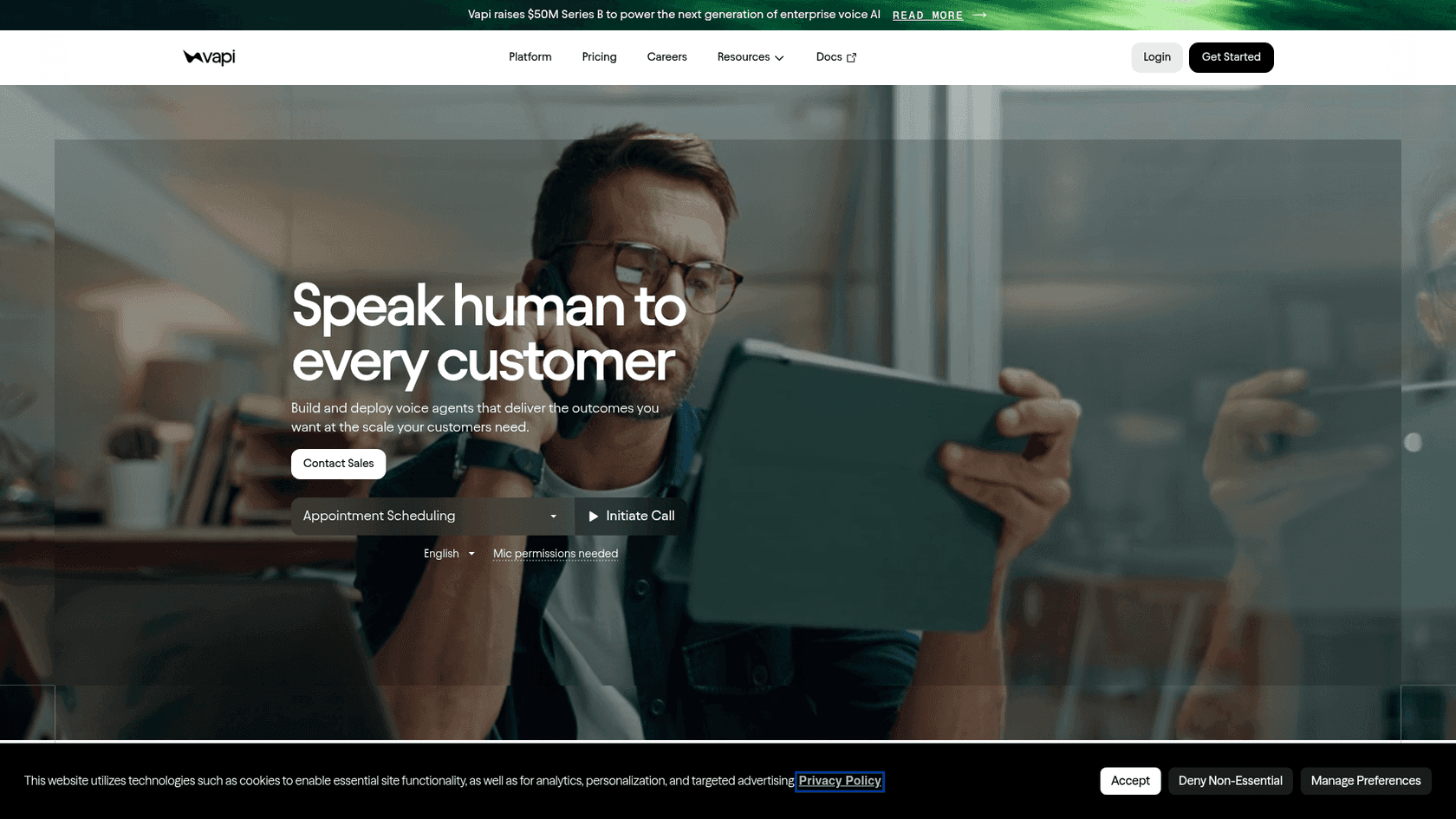
If you have a development team and want total control over every little detail, Vapi is the way to go. It’s an API-first platform built for speed and flexibility. You can bring your own language models, tweak everything down to the millisecond, and build a completely custom voice agent that fits perfectly into your existing tech stack.
- Pros: The latency is incredibly low, which makes conversations feel instant and natural. It’s built to scale to millions of calls, and its API-first design means you can integrate it with literally anything.
- Cons: This is definitely not for beginners. You need to be comfortable with code to use it, and because you’re paying for everything separately (Vapi, OpenAI, etc.), the final bill can be a bit of a guessing game.
- Pricing: Vapi uses a pay-as-you-go model at $0.05 per minute, but remember to factor in the costs of any third-party models you use.
3. ElevenLabs: best of the AI voice companies for expressive AI voices
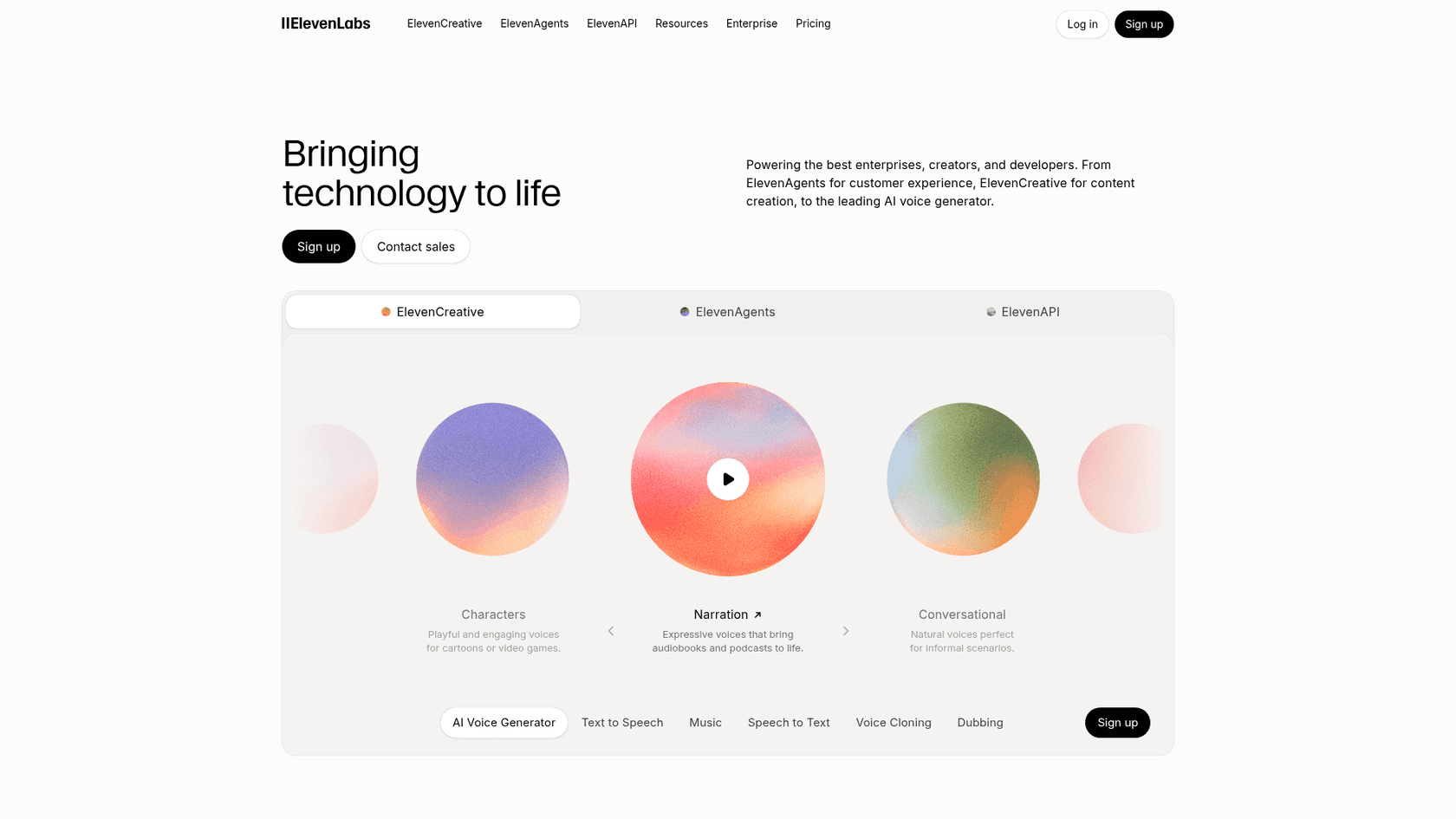
ElevenLabs isn’t a full voice agent; it’s a voice generator. And it’s the best in the business at what it does. The voices it creates are stunningly realistic and packed with emotion. It’s the perfect tool to pair with a platform like Vapi or Lindy to give your AI agent a truly human-sounding voice.
- Pros: The voice quality is in a league of its own. It supports a massive range of languages and accents, and its voice cloning feature lets you create a consistent brand voice for all your projects.
- Cons: It doesn’t do anything beyond generating the voice. You can’t build call logic, handle phone calls, or automate workflows with it by itself (the ElevenLabs alternatives cover tools that do more).
- Pricing: There’s a free plan to test it out. The Creator plan, which includes voice cloning, starts at $22 per month.
4. Synthflow: best of the AI voice companies for quick deployment
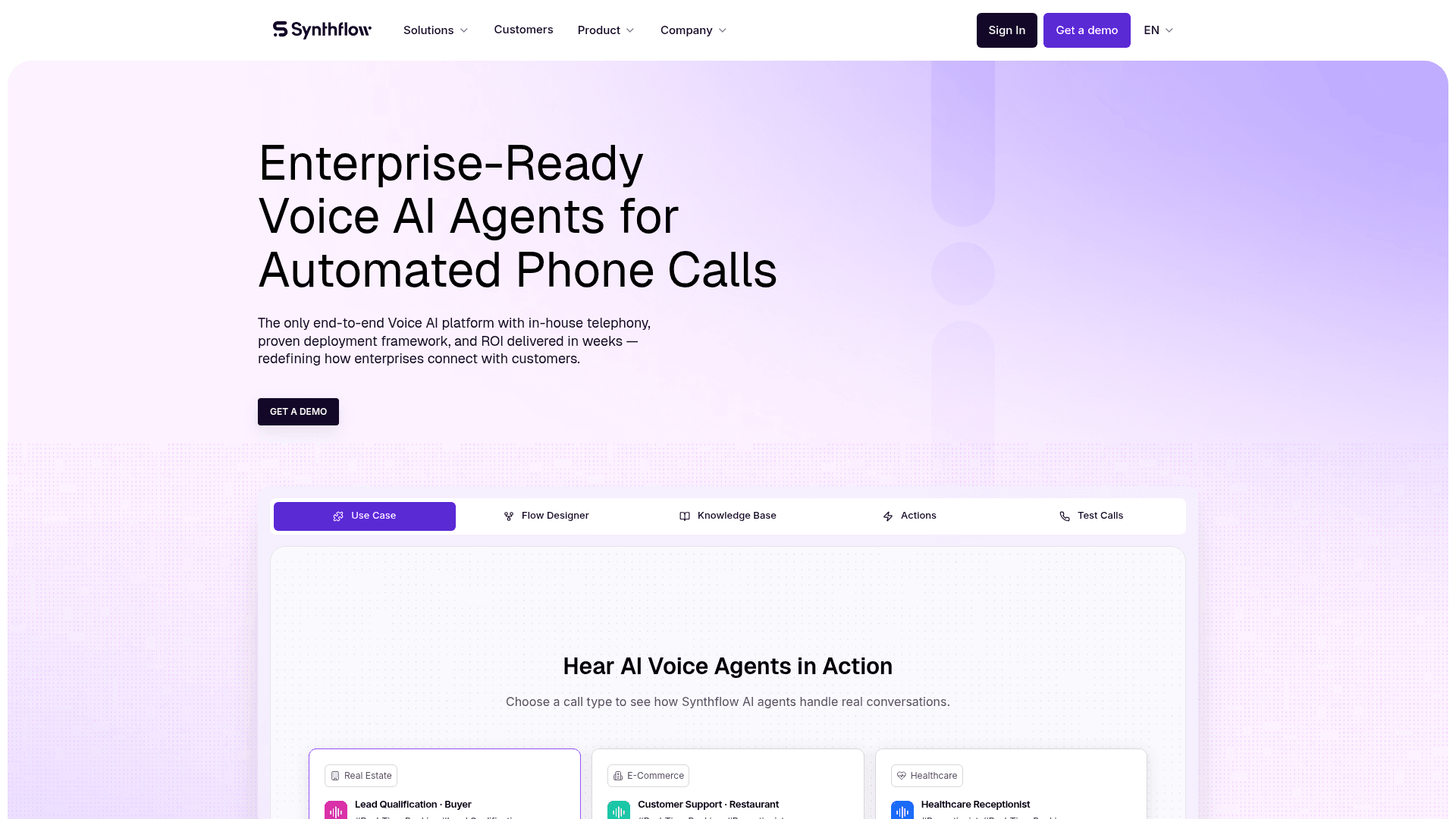
Synthflow is a no-code builder that makes it dead simple to get a voice agent up and running fast. It's designed for businesses that want to automate tasks like lead follow-ups or appointment booking without writing a single line of code. Its visual builder lets you map out conversation flows pretty easily.
- Pros: You can go from an idea to a live agent in under an hour. The platform includes real-time analytics and call transcripts, so you can see exactly how it’s performing.
- Cons: While it’s easy to get started, building truly smart and scalable conversation flows takes some practice. There’s also a pretty big jump between tiers as your call volume grows.
- Pricing: Synthflow has moved to a transparent per-minute model, with paid plans starting in the ~$29/month range for low call volumes.
5. Retell AI: best of the AI voice companies for support teams
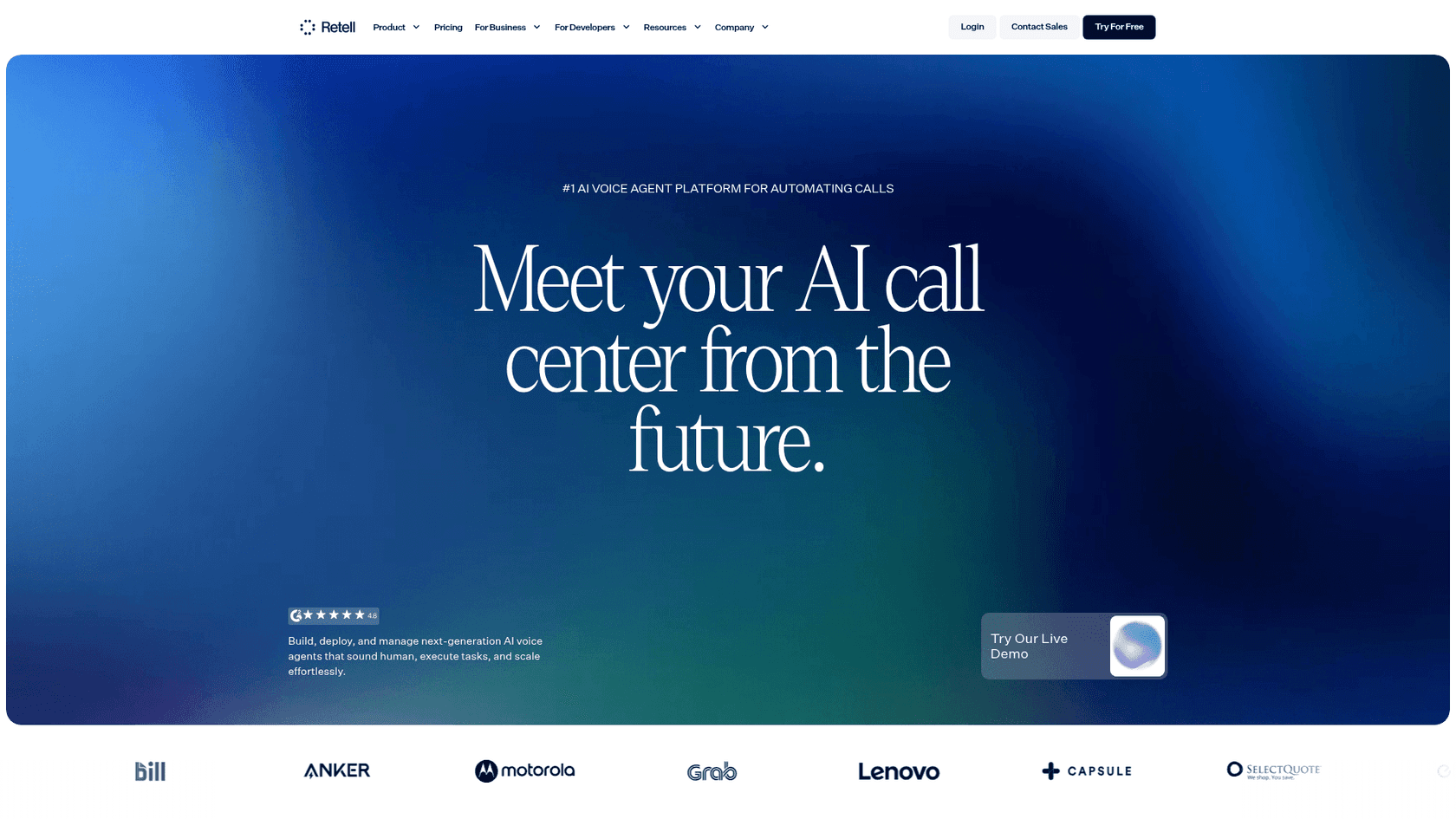
Retell AI is a voice agent platform that gets that what happens after the call is just as important as the call itself. It’s fantastic at turning messy conversations into structured, usable data. Its post-call analysis, sentiment tracking, and summaries are perfect for support and sales teams, and you can dig into the details in my Retell AI pricing breakdown.
6. Cognigy: best of the AI voice companies for large enterprises
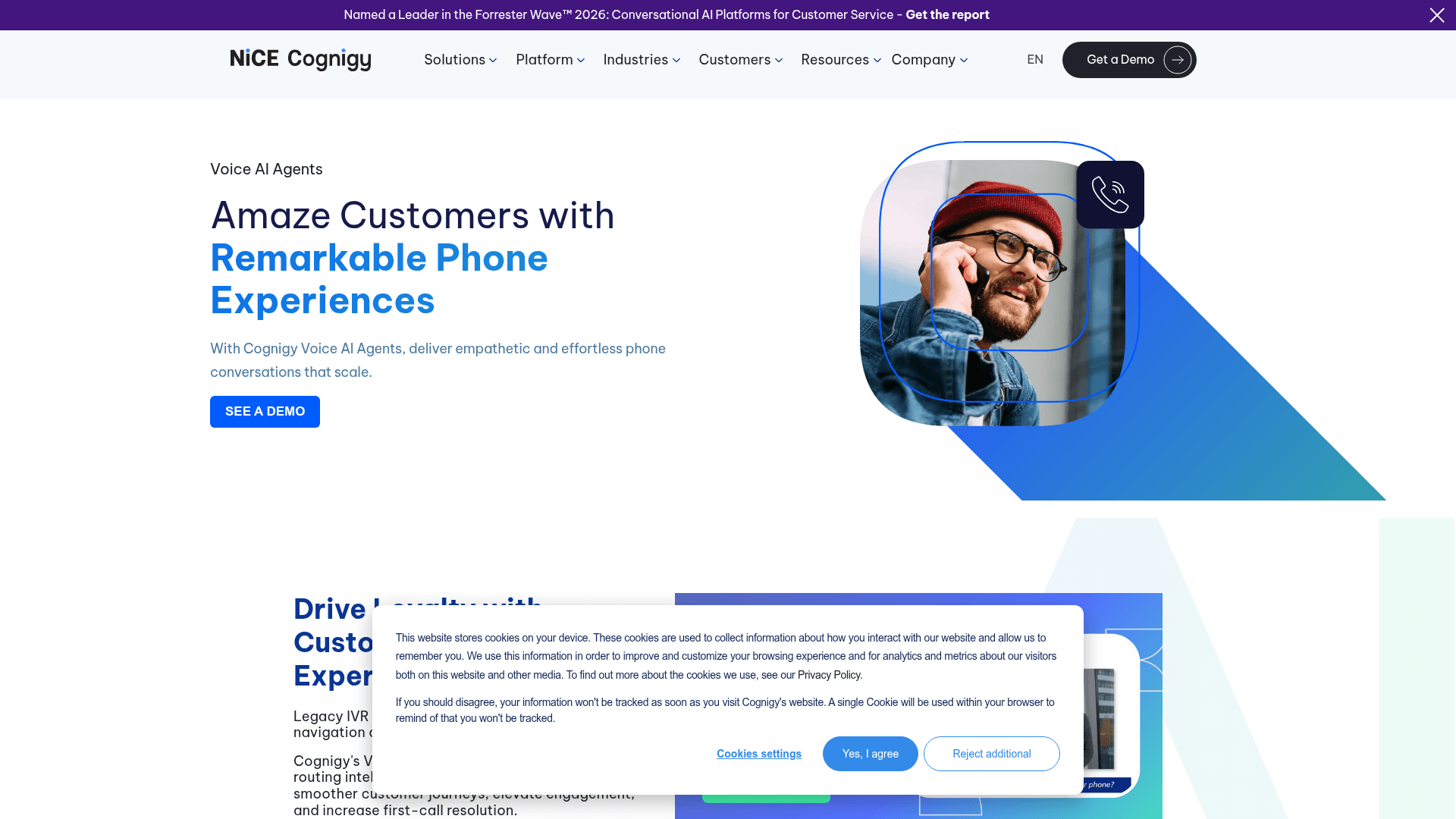
Cognigy is an enterprise-grade beast. It’s built for large, complex contact centers in regulated industries like banking, healthcare, and telecommunications. It’s designed to handle massive call volumes and integrate deeply with legacy phone systems that smaller startups don’t even touch, which also makes it a fit for conversational AI in finance.
7. Hume AI: best of the AI voice companies for emotional intelligence
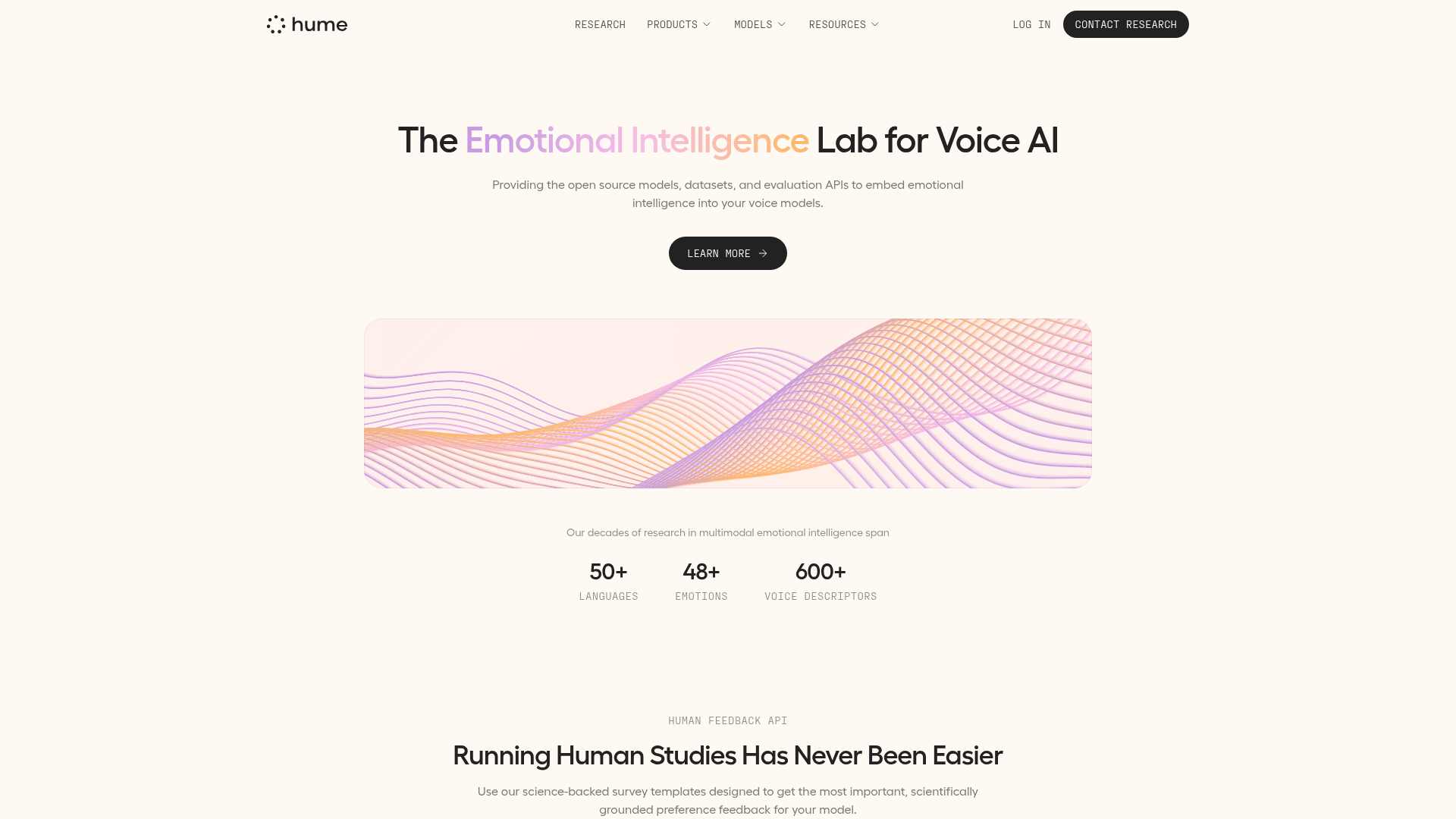
Hume AI is on the cutting edge of this tech. It’s less of a business tool and more of a research-driven platform focused on creating what it calls an "Empathic Voice Interface." Its models can understand and generate incredibly nuanced emotional tones, making it the most realistic-sounding AI voice I’ve ever heard. You can even give it instructions like "sound a bit more sarcastic."
A critical question before choosing from AI voice companies: Is a voice agent right for your support team?
Voice AI is undeniably cool, but let's be honest: a lot of these projects fail. They get bogged down in technical details, go way over budget, and end up creating a frustrating experience for customers. Before you jump in, it's worth asking if voice is really what your team needs right now.
I've seen a few common traps that teams fall into.
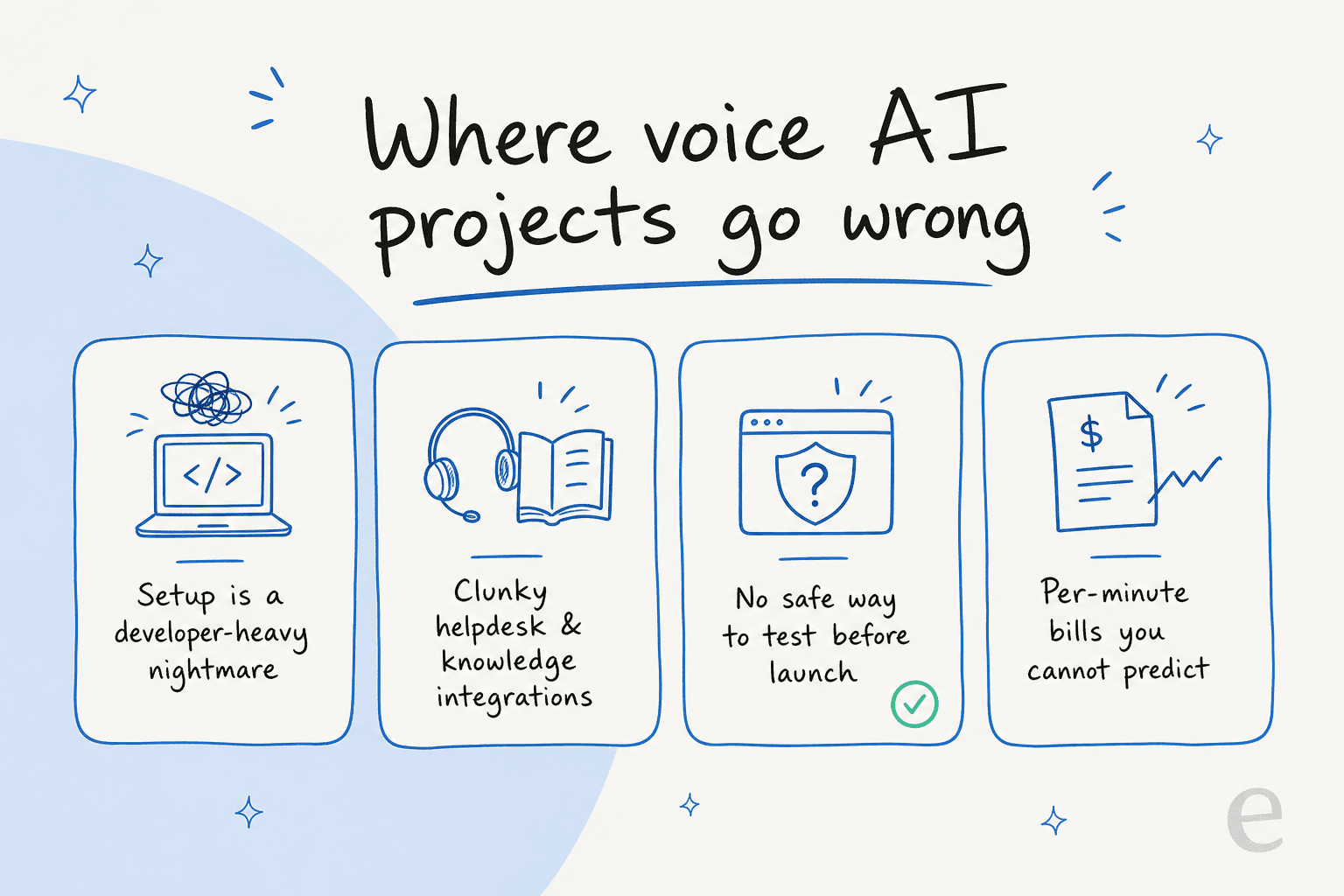
The setup from many AI voice companies is a nightmare
Many platforms require developers, long implementation cycles, and a ton of technical know-how to get right. It’s not always a simple plug-and-play solution.
Integrations from some AI voice companies are clunky
Getting a voice agent to talk to your helpdesk or pull information from your knowledge base can be a real headache. This often leads to disconnected workflows where the AI doesn't have the context it needs to be helpful.
With many AI voice companies, you have no control
Many tools have rigid automation rules and don’t give you a safe way to test things before you unleash them on your actual customers. You’re kind of just hoping for the best, with no clear escalation path when the agent gets stuck.
The costs from AI voice companies are all over the place
Paying per minute or per call makes it nearly impossible to budget. A busy month could lead to a shockingly high bill that you didn't see coming.
For a lot of support and IT teams, the real goal isn't just voice automation, it's effective automation. It’s about solving problems quickly, accurately, and affordably. What if there was a better way to do that without all the headaches of a voice-first system?
The better alternative to AI voice companies for support automation: eesel AI
This is why it's worth considering a different approach, especially for support teams. A tool like eesel AI focuses on automating support where most of it actually happens: in text-based channels like your helpdesk and Slack. I spend my days in those channels, and the honest truth is that most of what customers need never had to be a phone call in the first place.
Here’s why it’s often a smarter approach:
Go live in minutes, not months While many AI voice companies require lengthy sales calls and custom setups, you can get eesel AI working with your Zendesk or Slack in under 5 minutes. It’s truly self-serve, so you can try it out without any commitment.
Work with your tools, not against them Instead of forcing you to build new workflows, eesel AI connects easily with your existing helpdesk and knowledge sources like Confluence or Google Docs. There's no need to rip out and replace everything you're already using.
Test with confidence Instead of just crossing your fingers and hoping your voice agent works, eesel AI lets you run a simulation on thousands of your past tickets. This means you can see exactly how it will perform and calculate your potential ROI and resolution rate before a single customer ever interacts with it.
Keep control with transparent pricing Forget paying per minute. eesel AI uses one fixed monthly price, from $299/month for 500 credits (1 credit per ticket or chat, however long), with no per-seat fees and no surprise per-minute bills, so your costs stay predictable as your support volume grows. You get fine-grained control over exactly which tickets get automated and which get passed to your human agents.
If your real goal is resolving more tickets without a runaway bill, start with the channels you already own. Try eesel free, connect your helpdesk, and simulate it on your past tickets before you ever go live.
Frequently asked questions
How do I choose between all the different AI voice companies when they all seem to promise the same thing?
Focus on your specific needs and technical skill level. No-code platforms like Lindy are best for quick, all-in-one automation, while developer-focused tools like Vapi offer maximum control and customization for technical teams. If you only need text support, an AI customer service chatbot is often the faster win.
Do I need a developer on my team to actually use a solution from one of these AI voice companies?
Not always. Many platforms like Synthflow and Lindy are specifically designed to be no-code so that business users can build and launch agents. However, more powerful and customizable options like Vapi or Hume AI will require coding expertise.
What’s a realistic budget for working with AI voice companies, and how can I avoid surprise costs?
Costs can range from a predictable monthly subscription around $50 to complex usage-based models that charge per minute. To avoid surprises, clarify the pricing model upfront and always factor in potential third-party costs for language models. A flat support automation platform is easier to budget than per-minute voice billing.
Can the top AI voice companies create an agent that actually sounds human and not like a robot?
Absolutely. The technology has advanced significantly, and providers like Hume AI and ElevenLabs specialize in creating realistic, emotionally nuanced voices. Many all-in-one platforms now offer very natural-sounding conversations as well.
Are agents from these AI voice companies smart enough to integrate with our CRM and other tools?
Yes, the more advanced solutions are built for this. A good AI voice agent can automatically update your CRM with call notes, send follow-up emails, and trigger workflows in other business systems. The same is true for text: an AI agent can resolve tickets end to end and hand off cleanly when needed.