

The AI world feels like it's dominated by two big names right now: OpenAI's ChatGPT and Anthropic's Claude. Businesses are understandably eager to put these tools to work, but picking the right one isn't as straightforward as you might think. While both are impressive, they have different personalities, strengths, and weaknesses, especially when you try to apply them to something specific like customer support.
This guide will break down the whole ChatGPT vs. Claude discussion. We’ll compare what they can do, where they shine in business, and where they fall flat. Our goal is to help you figure out which tool is better for your daily grind and, just as importantly, when you should be looking at a specialized AI platform instead.
ChatGPT vs. Claude: What are ChatGPT and Claude?
Let's get the techy bit out of the way. At their heart, both ChatGPT and Claude are Large Language Models (LLMs). Think of them as incredibly complex AI systems that have been trained on a staggering amount of text, all so they can understand and chat with us in a way that feels human.
ChatGPT, from OpenAI, was the one that really blew up and got everyone talking about AI. It’s known for being a jack-of-all-trades. Powered by OpenAI's GPT-6 and GPT-5.6 model families, it can whip up an email, generate images, or help you with some deep research.
Claude comes from Anthropic, a company started by folks who used to work at OpenAI. Their big idea was to build an AI that was safer and better at having natural, helpful, and honest conversations. The current lineup, Claude Fable 5.1, Opus 5.5, Sonnet 5.5 and Haiku 4.5, builds a reputation for being particularly good at creative writing and handling tricky coding tasks. One of its standout features is a massive "context window," which lets it read and analyze incredibly long documents (we're talking book-length) all at once.
A head-to-head comparison: ChatGPT vs. Claude for common business tasks
So, which one should you open up when you sit down to work? Honestly, the "best" model really depends on what you're trying to get done. Let's see how they stack up against each other for a few common jobs.
Creative and technical writing
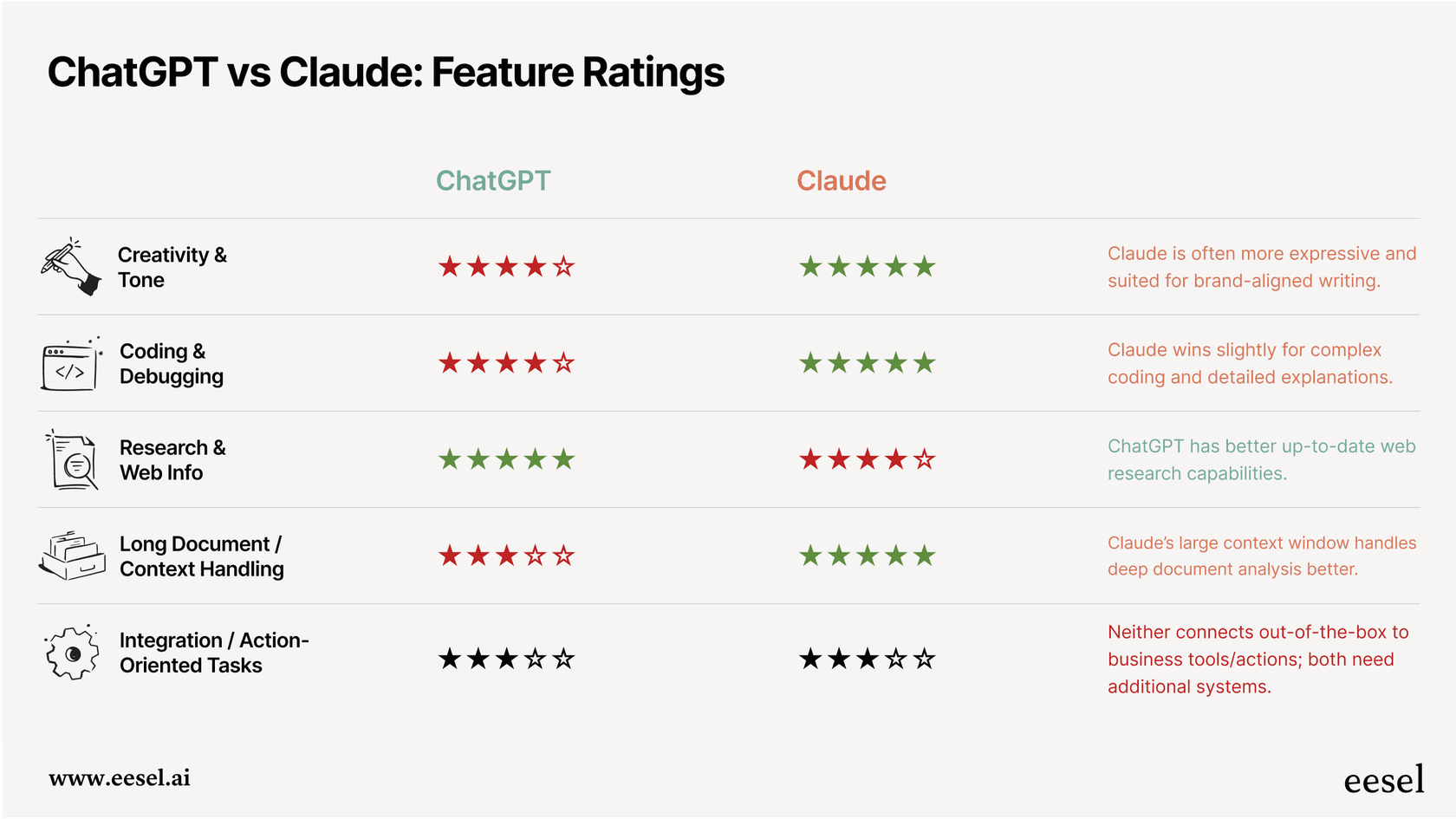
When it comes to writing, a lot of people lean towards Claude. Its writing just tends to feel a bit more expressive and natural, less like it was written by a robot. It’s great at adopting a specific tone of voice, which is perfect for drafting marketing copy or long-form content that needs a bit of personality.
That's not to say ChatGPT is bad at writing, not at all. It's incredibly fast and flexible, which makes it perfect for getting a first draft on the page, generating structured content like outlines, or summarizing a long article when you're in a hurry. The writing can sometimes feel a little generic, but it’s a reliable workhorse.
Verdict: Go with Claude for nuanced, brand-aligned writing. Use ChatGPT for speed and general-purpose drafting.
Coding and development
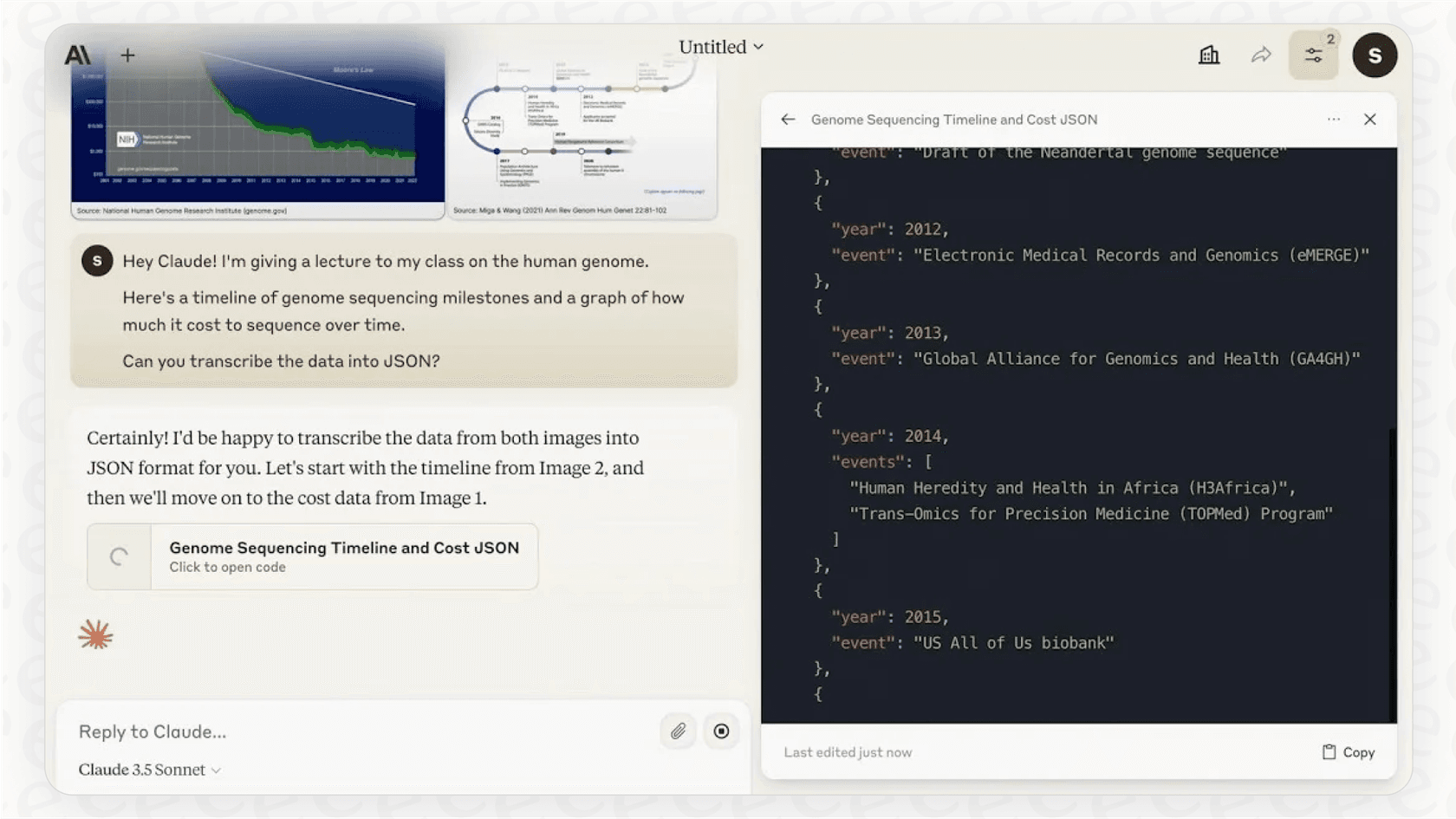
For developers, the choice is a little more clear-cut. Claude consistently gets high marks on coding tests and benchmarks. It’s often better at giving detailed explanations for code and a real help when you’re trying to debug a tricky problem. It also has a neat feature called "Artifacts" that gives you a live preview of code snippets, which is a huge time-saver for front-end developers.
ChatGPT is still a solid coding assistant, though. It's great for generating boilerplate code, writing simple scripts, or answering general programming questions. You can also find custom GPTs in its marketplace that are already set up for specific programming languages or frameworks.
Verdict: Claude has the edge for serious development work and complex problem-solving.
Research and analysis
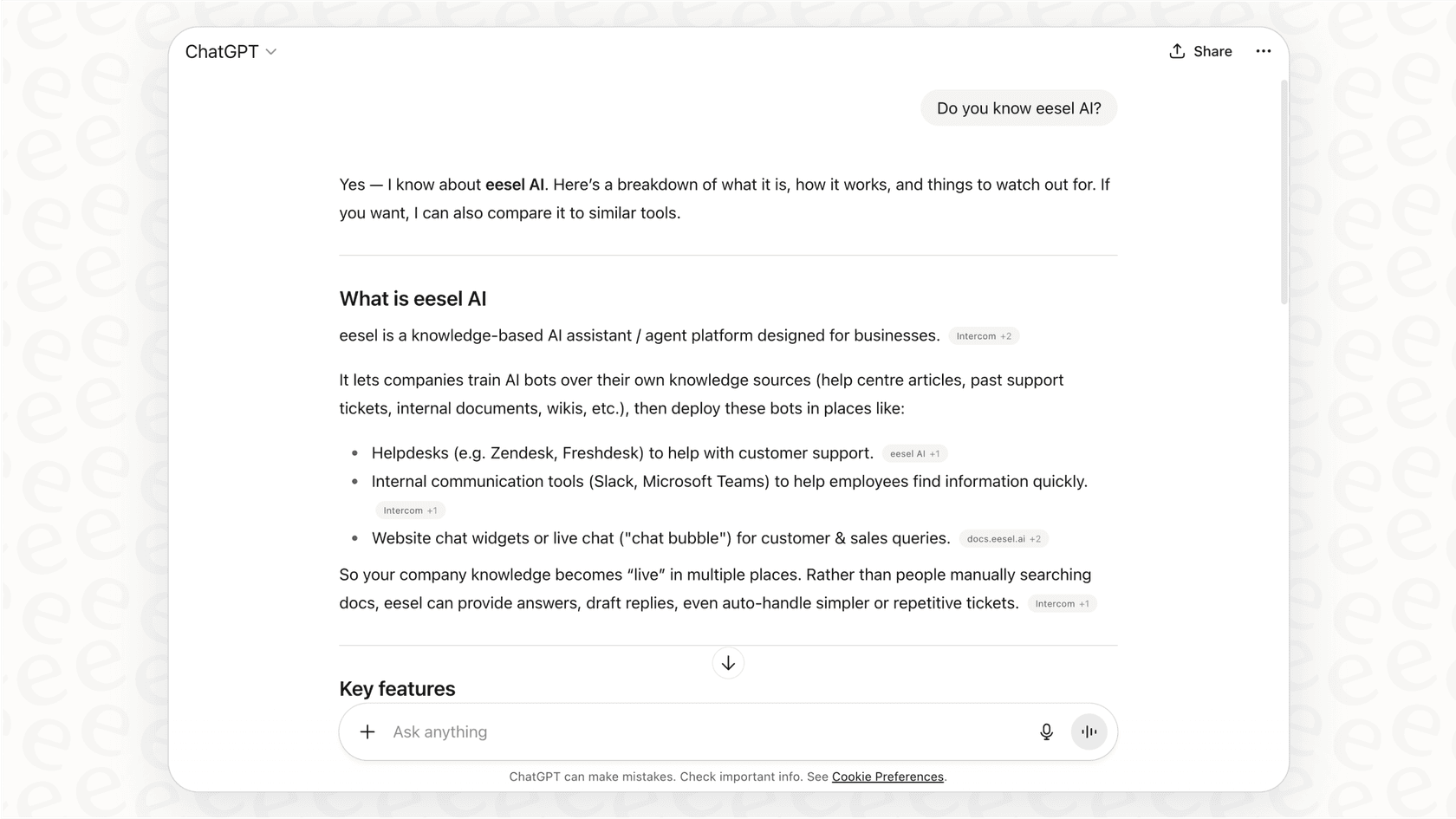
This is where the tables turn. ChatGPT has the ability to browse the web directly and has a "Deep Research" feature, giving it an advantage for finding up-to-the-minute information. It's better at finding and citing its sources, which is pretty important for any work that relies on facts.
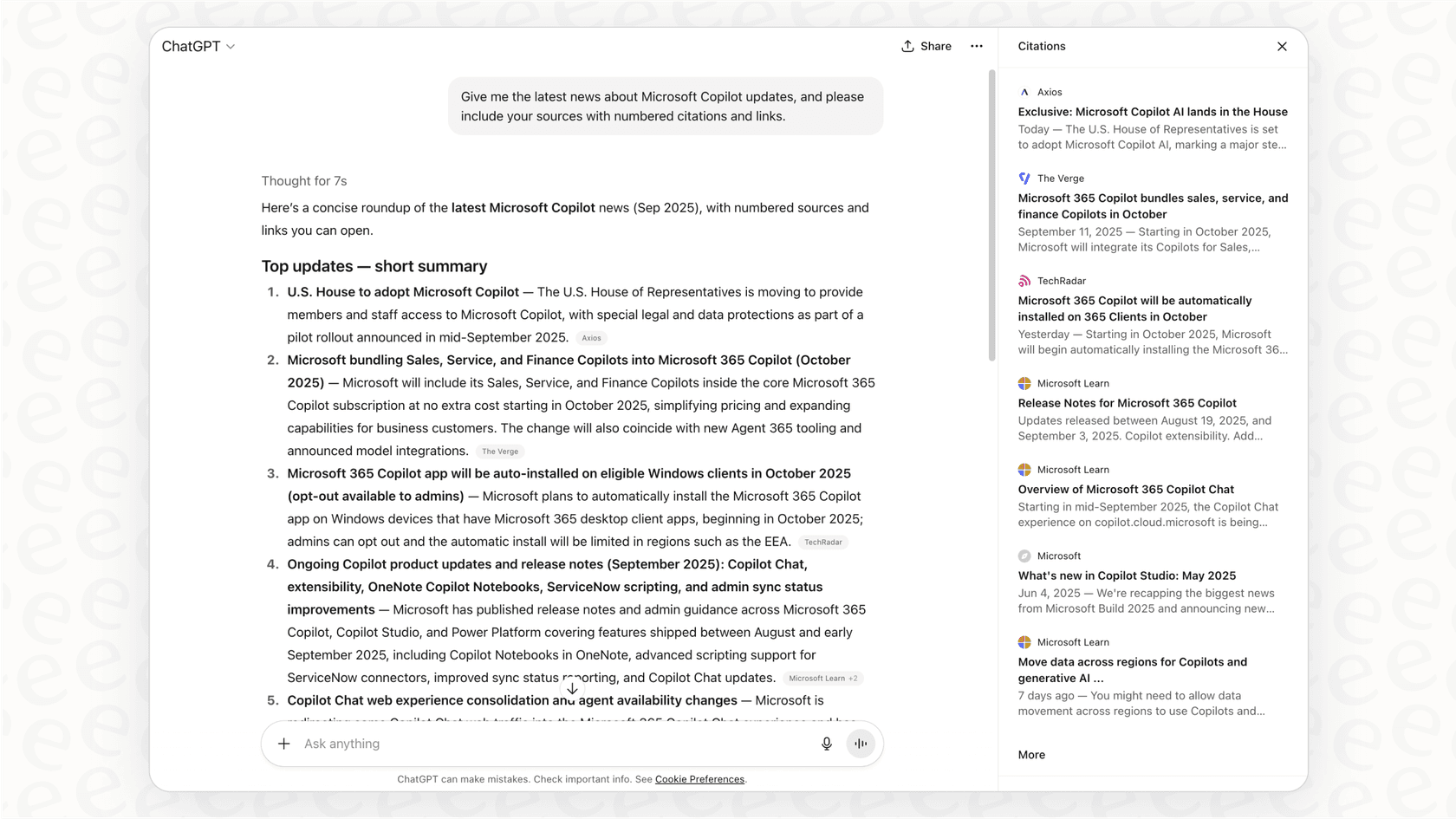
Claude's superpower, again, is its massive context window. Some versions can handle up to 1 million tokens of text at once. To put that in perspective, that’s like feeding it a 700-page book and then asking questions about it. For comparison, OpenAI lists a 256K-token context window for ChatGPT Plus reasoning models, roughly 320 pages of text. This makes it the undisputed champ for analyzing huge documents you already have, whether that’s a pile of research papers or a dense legal contract.
Verdict: Use ChatGPT for real-time web research. Pick Claude for deep analysis of existing documents.
| Feature | ChatGPT | Claude | Winner |
|---|---|---|---|
| Creative Writing | Versatile, fast drafts | More natural, expressive | Claude |
| Coding | Good for boilerplate | Superior for complex tasks & debugging | Claude |
| Web Research | Strong, with citations | Web search on every plan; Research on Pro and above | ChatGPT |
| Document Analysis | Capable | Best-in-class (large context window) | Claude |
| Image Generation | Yes (ChatGPT Images; Sora was retired in April 2026) | No photos or illustrations; builds diagrams and charts | ChatGPT |
Why general models like ChatGPT or Claude fall short for customer support
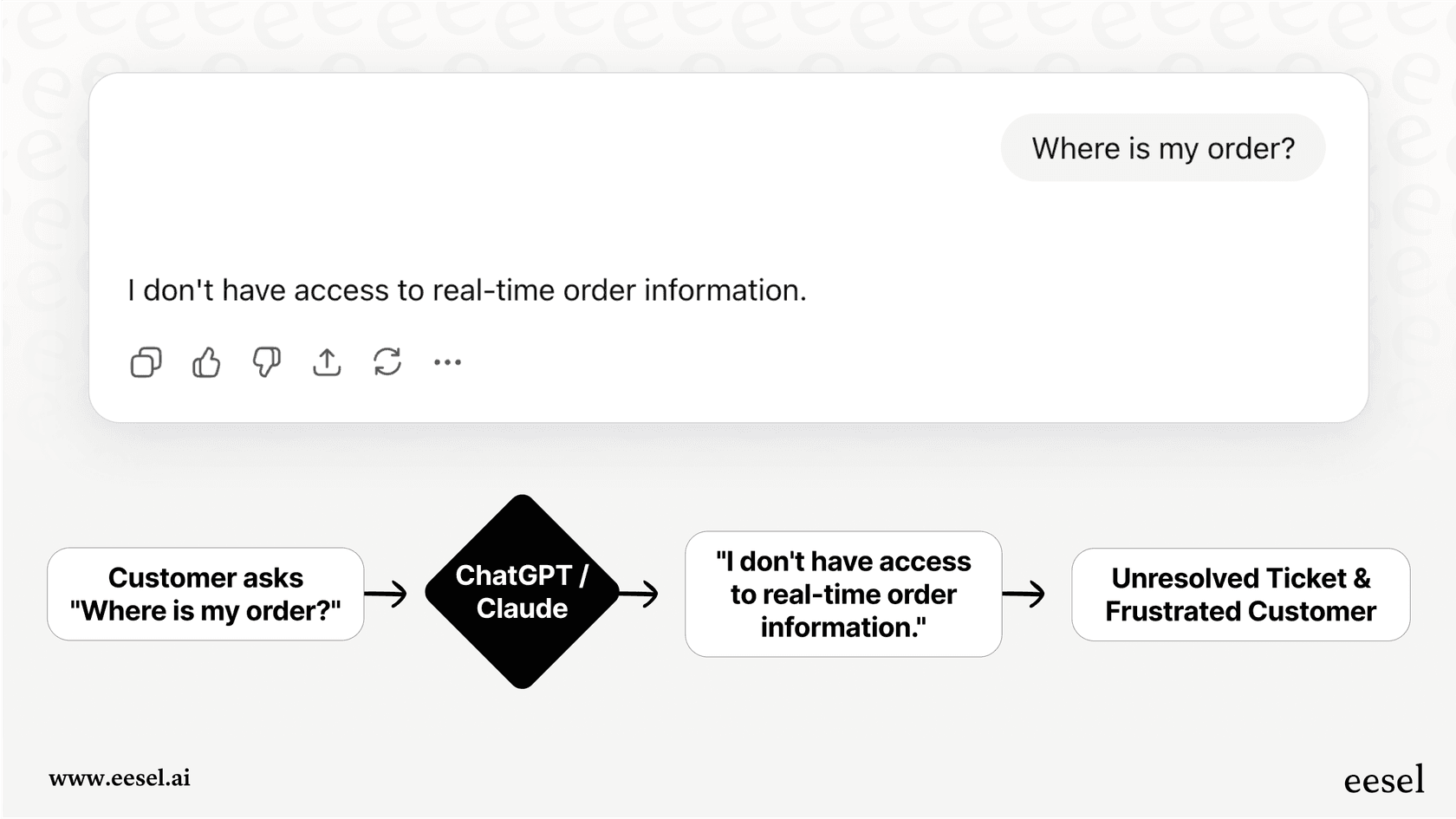
Okay, so you might be thinking, "Great, I'll just plug one of these into my customer support workflow." Not so fast. While ChatGPT and Claude are amazing general tools, they hit a wall when you apply them to a specialized, high-stakes job like customer support. The problem is simple: they're designed to be jacks-of-all-trades, but customer service needs a master. They just don't have the connections, workflows, or controls to provide a reliable, on-brand support experience.
They don't connect to your tools
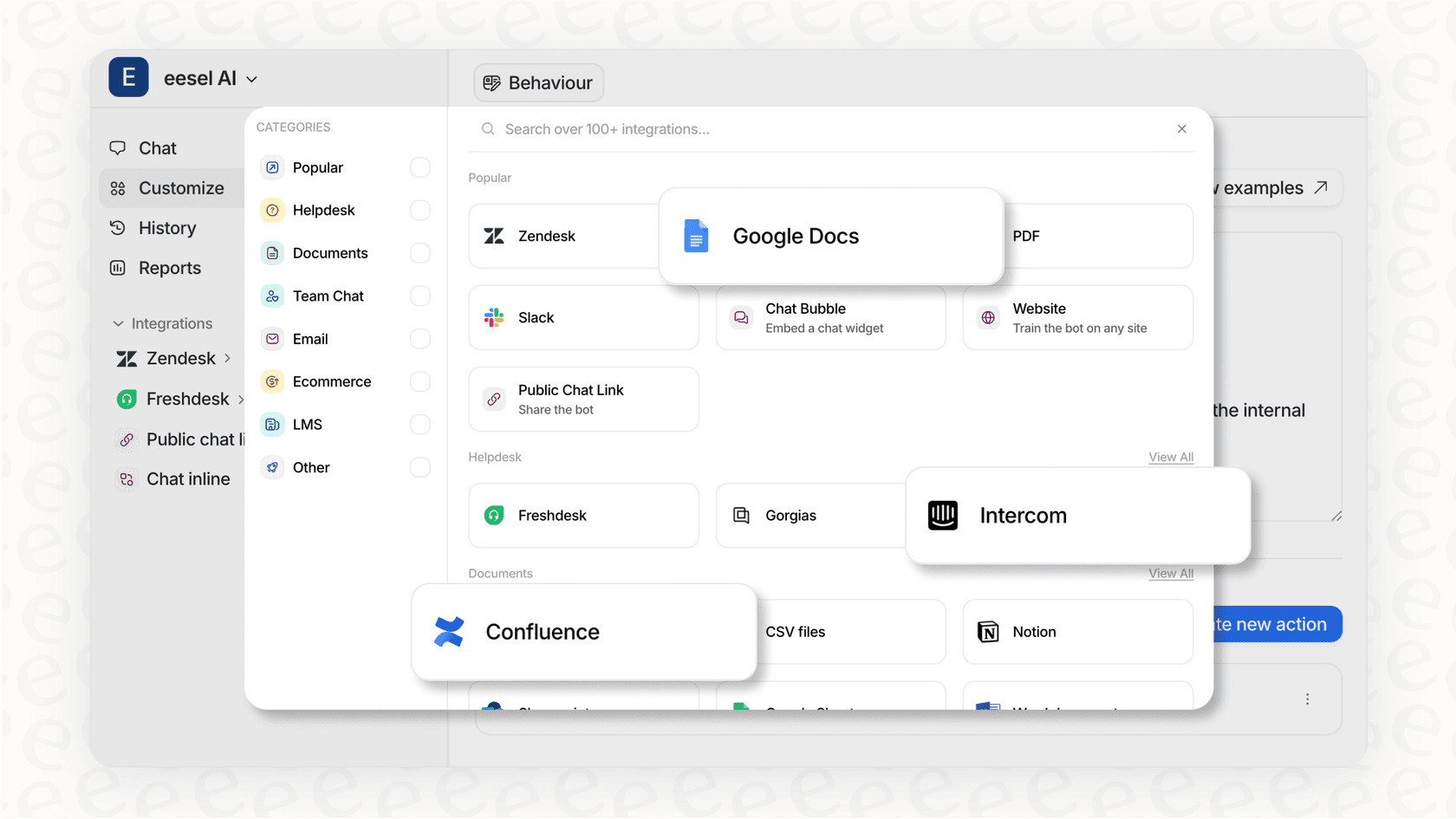
The biggest hurdle is setup. ChatGPT (through apps) and Claude (through connectors) can link to services such as Google Drive and Slack, but neither comes configured for support work out of the box: a helpdesk queue, an order lookup in Shopify, or your team's Confluence wiki kept in sync. Someone on your team has to build, permission and maintain each link, and most customer issues need information from another system.
A specialized platform is built for exactly this. For example, eesel AI has one-click integrations with the tools you already use. It slots directly into helpdesks like Zendesk, Freshdesk, or Intercom, so you don't have to change your team's entire process.
They can't take action
A support agent’s job is more than just answering questions. They have to do things: tag a ticket, escalate it to a different team, or close an issue. In a chat plan, a general model's default output is text; acting inside your helpdesk means connecting apps and building permissions around it.
This is where a tool like eesel AI stands apart with its customizable workflow engine. You can tell the AI exactly what actions to take, from simply triaging a ticket to making complex API calls that update customer information in your systems. This is what real automation is all about, it's about doing, not just talking.
They don't know your business
Think about it: general models are trained on the public internet. They have no idea about your company’s unique voice, your return policy, or the context from thousands of past support chats. This almost always leads to generic, unhelpful, and sometimes just plain wrong answers.
eesel AI gets around this by learning from your own knowledge. It connects to your historical support tickets, help center articles, and internal docs in places like Google Docs or Notion. This means every answer is accurate, personalized, and sounds like it’s coming from you, right from the start.
You can't test them safely
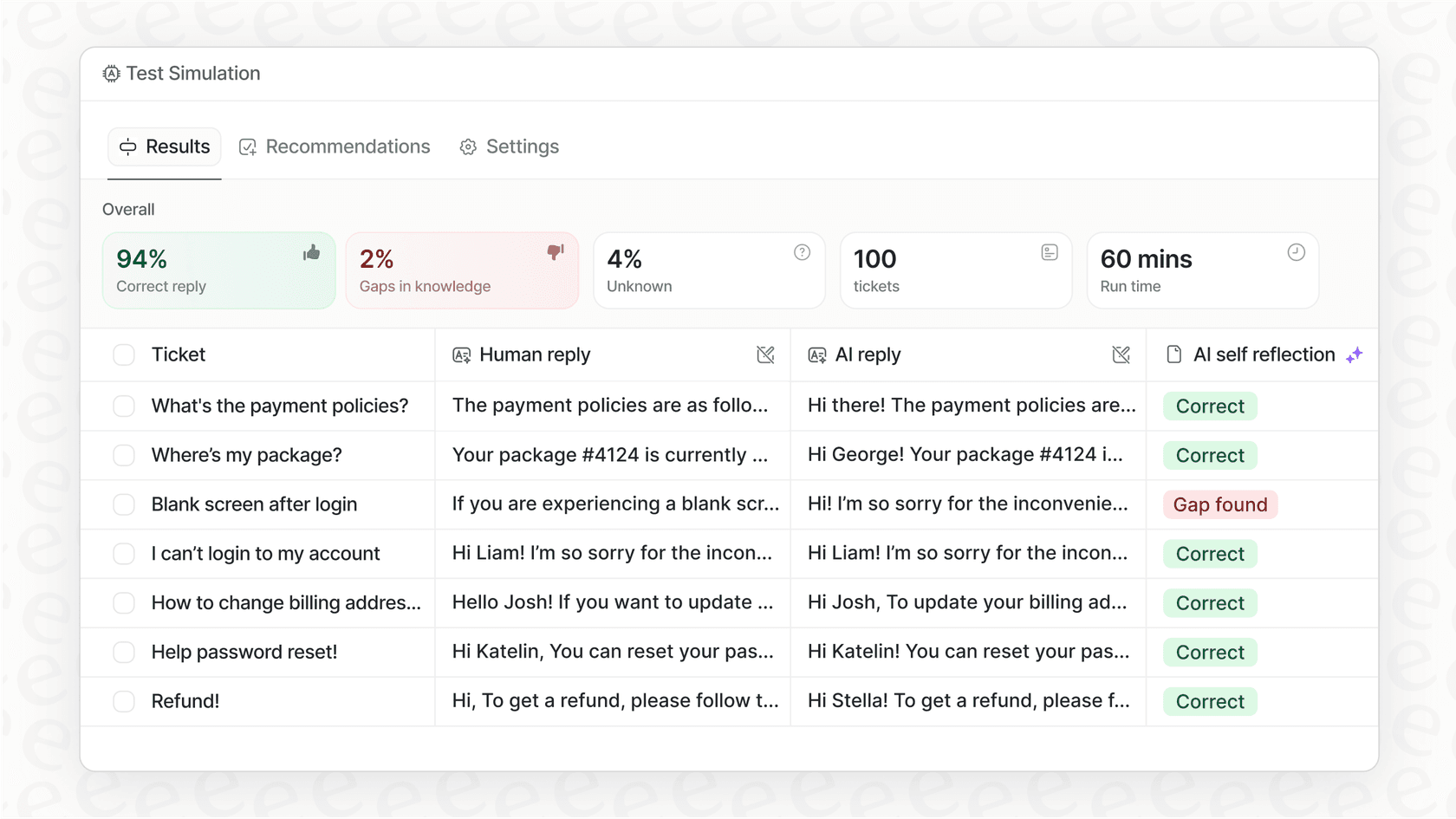
Unleashing an untrained AI on your live customers sounds like a nightmare, right? It's a huge risk to your brand. Chat plans don't include a built-in way to replay your past tickets and measure resolution rate before launch, so you would have to build that evaluation yourself.
That’s why eesel AI's simulation mode is so important. It lets you test your entire AI setup on thousands of your own past tickets in a completely safe environment. You get real data on how many tickets it can resolve and can tweak its behavior before a single customer ever talks to it.
Get to know the pricing
At first glance, the $20-per-month price tag for ChatGPT Plus or Claude Pro seems like a steal. But for a business, that price hides a much bigger cost: the lack of a real return on your investment.
You're paying for a tool that can't actually solve customer problems on its own. To make it do anything useful, you'll need to sink a lot of developer time into building custom integrations, and those costs add up fast.
eesel AI has a more straightforward pricing model. You pick one fixed monthly plan sized to volume, from $299 a month for 500 credits (1 credit per ticket or chat, however long), and there is a free plan with 100 credits and no card. There is no per-seat fee, so the bill stays predictable as your team grows.
Choosing the right tool for the job
Let's wrap this up. For everyday tasks like drafting an email, brainstorming ideas, or getting a quick answer to a question, both ChatGPT and Claude are brilliant tools for making you more productive. Claude often wins for creative writing and coding, while ChatGPT is the go-to for real-time research.
But when it comes to a vital business function like customer support, a general tool just isn't going to cut it. The lack of integrations, workflow automation, and specific business knowledge will create more headaches than it solves.
Pro Tip: It’s all about using the right tool for the job. Use general AI for general tasks, but invest in a purpose-built platform when you need to automate something important and complex.
Beyond ChatGPT vs. Claude: Take your support automation to the next level
If you're serious about using AI to resolve tickets, free up your agents' time, and make customers happier, it's time to look beyond the basic chatbots.
eesel AI offers a simple, controllable, and deeply integrated platform to automate your frontline support. You can be up and running in minutes, test everything with confidence, and bring all your knowledge sources together into one smart AI agent that works perfectly with your existing tools.
Ready to see how it works?
- Start a free trial to see how eesel can learn from your knowledge base.
- Book a demo with our team to check out the simulation mode in action.
Frequently asked questions
For just writing daily emails and short documents, what's the simple answer in the ChatGPT vs. Claude debate?
For general speed and efficiency in drafting emails or outlines, ChatGPT is a fantastic workhorse. If you need the writing to have a more specific tone or a creative, natural feel, Claude often has the edge.
If I need to analyze a long PDF report, how does the ChatGPT vs. Claude comparison shake out?
Claude is the clear winner here due to its massive "context window," which allows it to process and analyze book-length documents all at once. ChatGPT handles long documents too, but its context window is smaller: 256K tokens on Plus reasoning models versus up to 1M on Claude's larger models.
My team does a lot of coding, so who wins the ChatGPT vs. Claude showdown for developers?
While both are useful, Claude is generally considered superior for complex coding, debugging, and providing detailed explanations. ChatGPT is still great for generating boilerplate code and answering general programming questions quickly.
Is cost the main factor when thinking about ChatGPT vs. Claude for a small business?
The personal plans are similarly priced at around $20/month, so cost isn't the biggest differentiator for general use. The more important factor is which tool's specific strengths, Claude for writing/coding, ChatGPT for research/integrations, better align with your daily tasks.
When it comes to creative marketing copy, who should I lean on in the ChatGPT vs. Claude matchup?
For creative tasks that require a nuanced and expressive voice, Claude is typically the preferred choice. Its outputs often feel more natural and less robotic, making it ideal for brand-aligned marketing content.
For customer support automation, why is the ChatGPT vs. Claude choice less important than a specialized tool?
Both can link to apps and connectors, but neither is set up out of the box to work inside your business tools (like your helpdesk or order database) or act on a customer's behalf; your team has to build that. A specialized platform is necessary because it integrates with your systems to provide accurate answers and perform automated workflows.