
Disclosure: This article is published by eesel AI, a competitor of Decagon. We encourage you to read Decagon's own materials for their perspective.
AI agents have moved from experiment to production infrastructure for enterprise support teams. Decagon is one of the clearest examples of what large-scale deployment looks like: a platform built around autonomous AI agents that resolve customer issues end-to-end across chat, email, and phone.
Founded in 2023 by Jesse Zhang and Ashwin Sreenivas, Decagon has raised $481M total, including a $250M Series D at a $4.5B valuation in January 2026, led by Coatue Management and Index Ventures. It signed 100+ enterprise customers in 2025 alone and appears on the Forbes AI 50 list.
This review covers what the platform does, how it's priced, what the setup process actually involves, and who it's realistically a fit for. Because we're a competitor, read Decagon's own materials alongside this.
What makes Decagon different
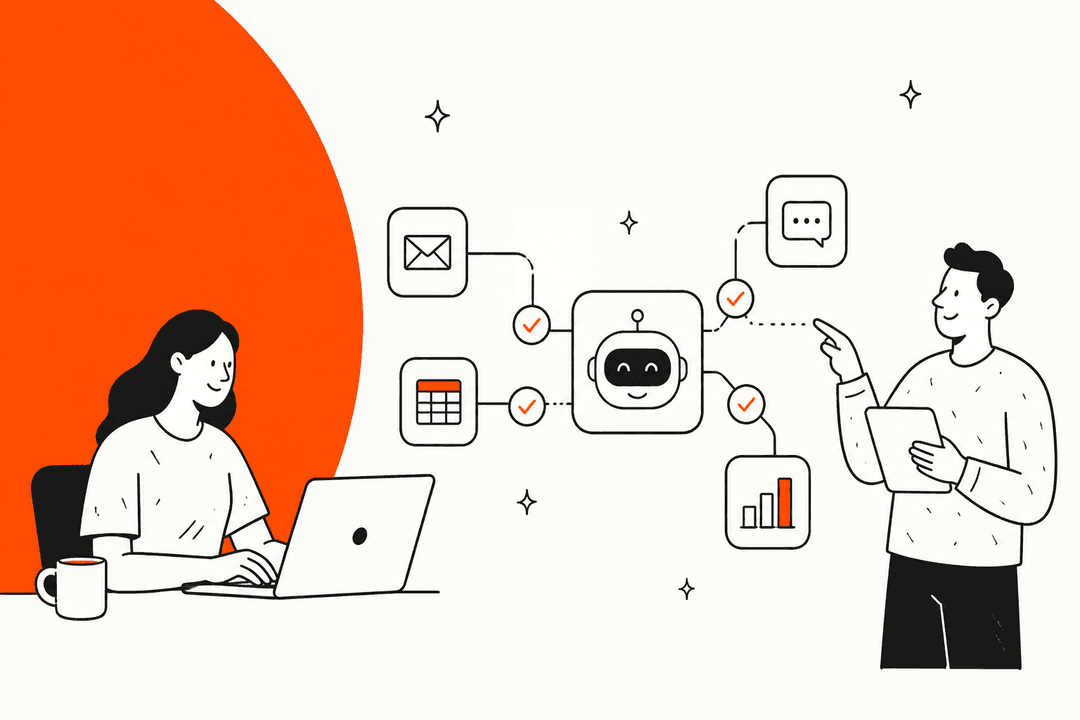
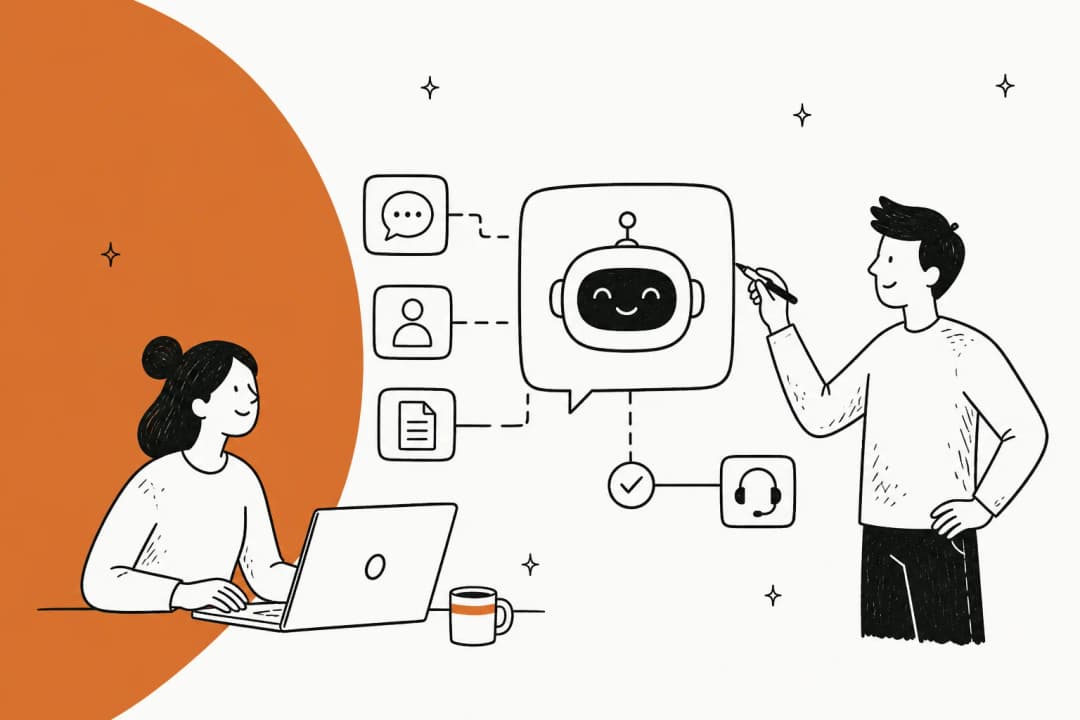
Decagon doesn't build chatbots. The platform is designed to deploy agents that connect to your internal systems and take action: processing refunds, verifying identities, modifying accounts, or generating quotes, without routing through a human. They call this approach the "AI concierge."
The customer list runs across fintech, e-commerce, travel, and SaaS: Chime, Duolingo, ClassPass, Hunter Douglas, Rippling, Hertz, Figma, Dropbox, Notion, Substack, and 30+ others. Published results from case studies include:
| Customer | Result |
|---|---|
| Chime | 70% resolution across chat and voice |
| Duolingo | 80% deflection rate |
| ClassPass | 10x deflection increase; 24/7 chat scaling |
| Hunter Douglas | $1M revenue from fully AI-handled conversations |
| Rippling | 32% deflection increase |
Decagon at a glance
| Criteria | Decagon |
|---|---|
| Pricing | Not publicly disclosed; requires a sales call |
| Pricing model | Per-conversation or per-resolution |
| Key features | AOPs, voice agents, proactive outbound agents, Agent Workbench, analytics |
| Ideal user | Large enterprises with high support volume and in-house engineering capacity |
| Implementation | Vendor-led rollout; dedicated Agent Engineers required; no published timeline |
| Integrations | Custom API integrations, CRM, ticketing, knowledge base |
Decagon features in depth
Agent Operating Procedures (AOPs)
AOPs are Decagon's core differentiator. Rather than building decision trees or writing code, CX teams write agent instructions in plain English. Decagon's system compiles these into executable, auditable workflows with guardrails. A typical AOP might read: when a customer reports a billing discrepancy, verify their identity, check transaction history, and issue a credit if the issue matches a known pattern, all without a human in the loop.
The model separates business logic (owned by CX teams) from technical implementation (owned by engineers). CX teams can update agent behavior without waiting for an engineering cycle; engineers maintain security and integration stability.
Transparent observability is the audit layer on top of that: Decagon traces how and why the agent made each decision, from model calls and workflow triggers to the knowledge articles it referenced, so you can reconstruct how a specific AOP ran for a given customer interaction.
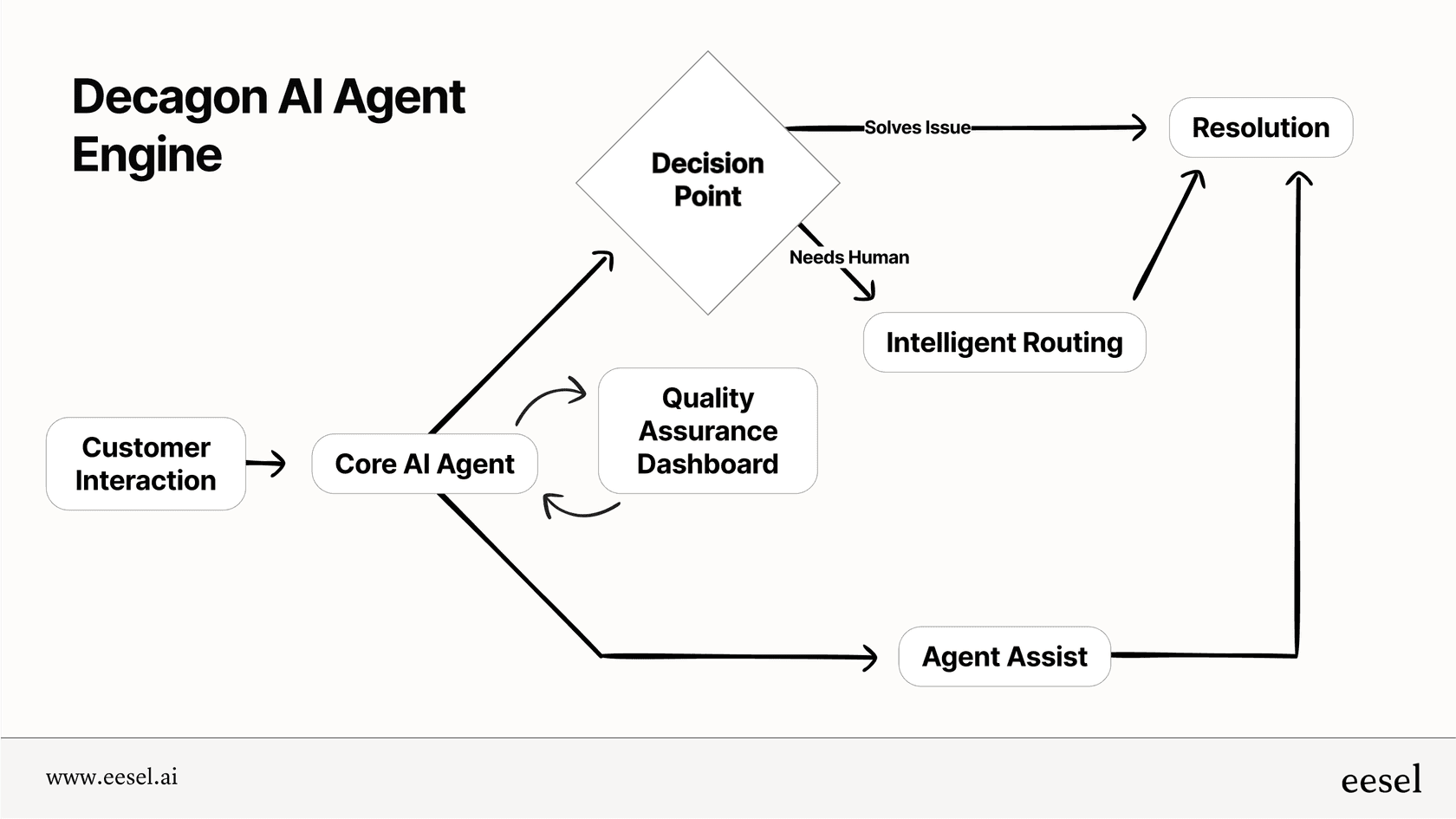
Voice agents and proactive outbound
Decagon Voice (launched 2025) extended the platform into inbound phone support. Voice agents handle natural, multi-turn conversations (not IVR-style menus) and run the same AOPs as chat agents. Chime achieved 70% resolution across chat and voice combined.
The Spring 2026 update added outbound voice capability and persistent user memory. Agents can now initiate calls for follow-ups, payment reminders, renewals, and upsell conversations. They also remember customer context across interactions (previous issues, preferences, account history), so customers don't re-explain themselves. Hunter Douglas used this outbound capability to generate $1M in revenue from fully AI-handled order calls.
Platform tooling
Beyond the agent itself, Decagon includes several supporting tools:
- Agent Workbench: A built-in AI chat assistant for debugging agent issues, referencing the agent's own logs, reasoning, traces, and latency events.
- Agent Versioning: CI/CD-style governance for agent updates: every change is tracked, tested, and deployed systematically.
- Watchtower: Always-on QA monitoring that surfaces performance regressions in production.
- Duet (March 2026): An AI partner tool that helps CX teams draft and refine AOPs with AI suggestions, reducing manual effort.
- Decagon Labs (March 2026): Decagon reports that over 80% of its model traffic now runs on in-house trained models, reducing reliance on third-party APIs.
Setup: the Agent Engineer model
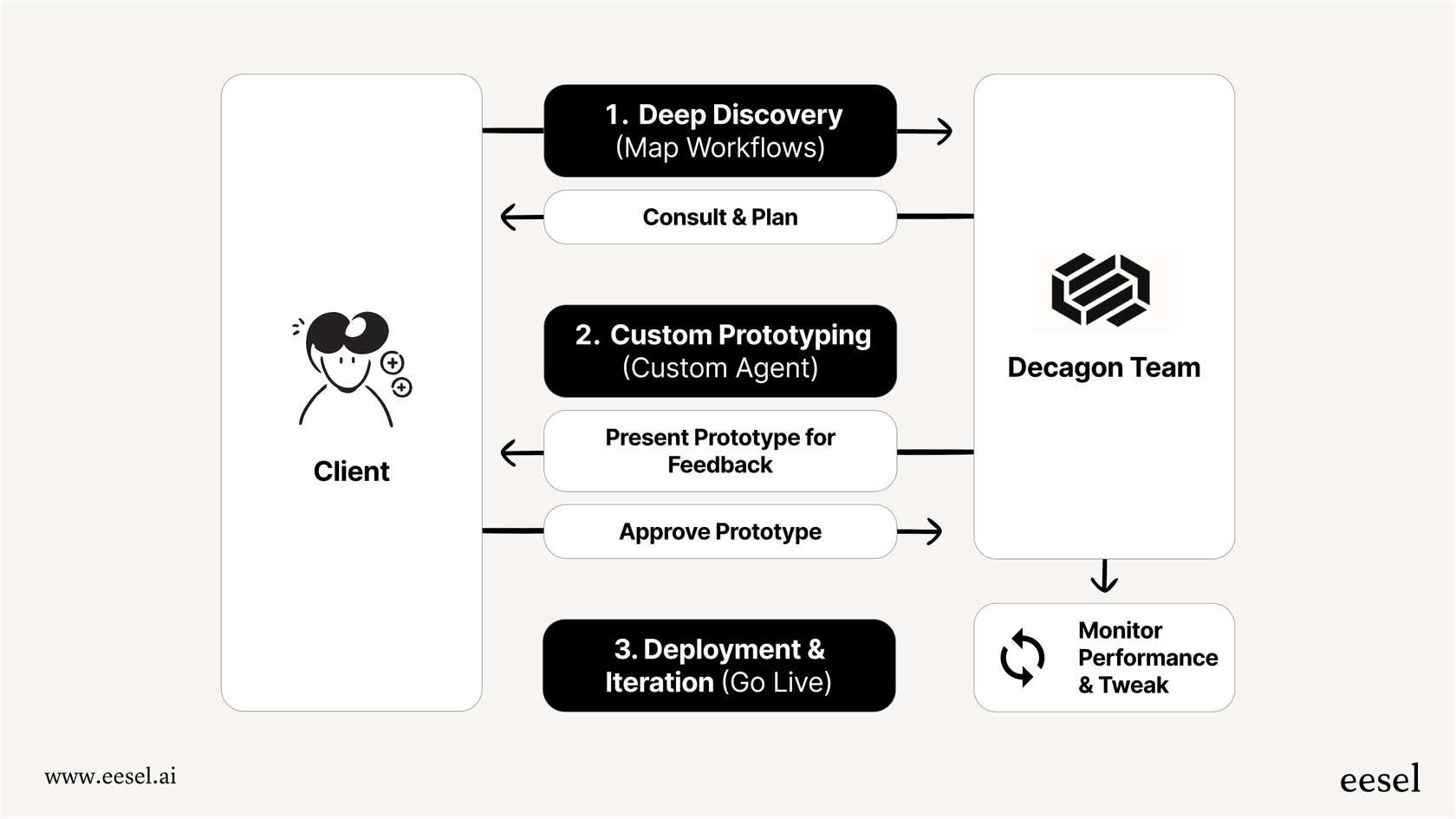
Decagon's setup process is a close partnership between Decagon's team and your internal engineers. The company promotes the role of "Agent Engineer", a dedicated function for building and maintaining AI agents, alongside an "Agent Product Manager" role.
The typical sequence: a discovery phase to map your existing workflows, a prototyping phase where Agent Engineers build and test the agent, then a phased deployment with ongoing optimization. Decagon doesn't publish how long that runs, and the scope is set per customer; its case studies describe results landing within the first weeks of launch, with optimization continuing after that.
What works well: The end result is tightly adapted to your specific systems and business logic. Decagon's implementation team is consistently praised in customer feedback for being responsive and for driving fast time-to-deflection once the agent is deployed.
What to plan for: The model assumes you can allocate internal engineering resources and that you can wait weeks before seeing ROI. Business users cannot update integrations or guardrails themselves; those changes require engineering involvement. Teams that need to move faster, or that don't have an engineering team available, will find this constraint real.
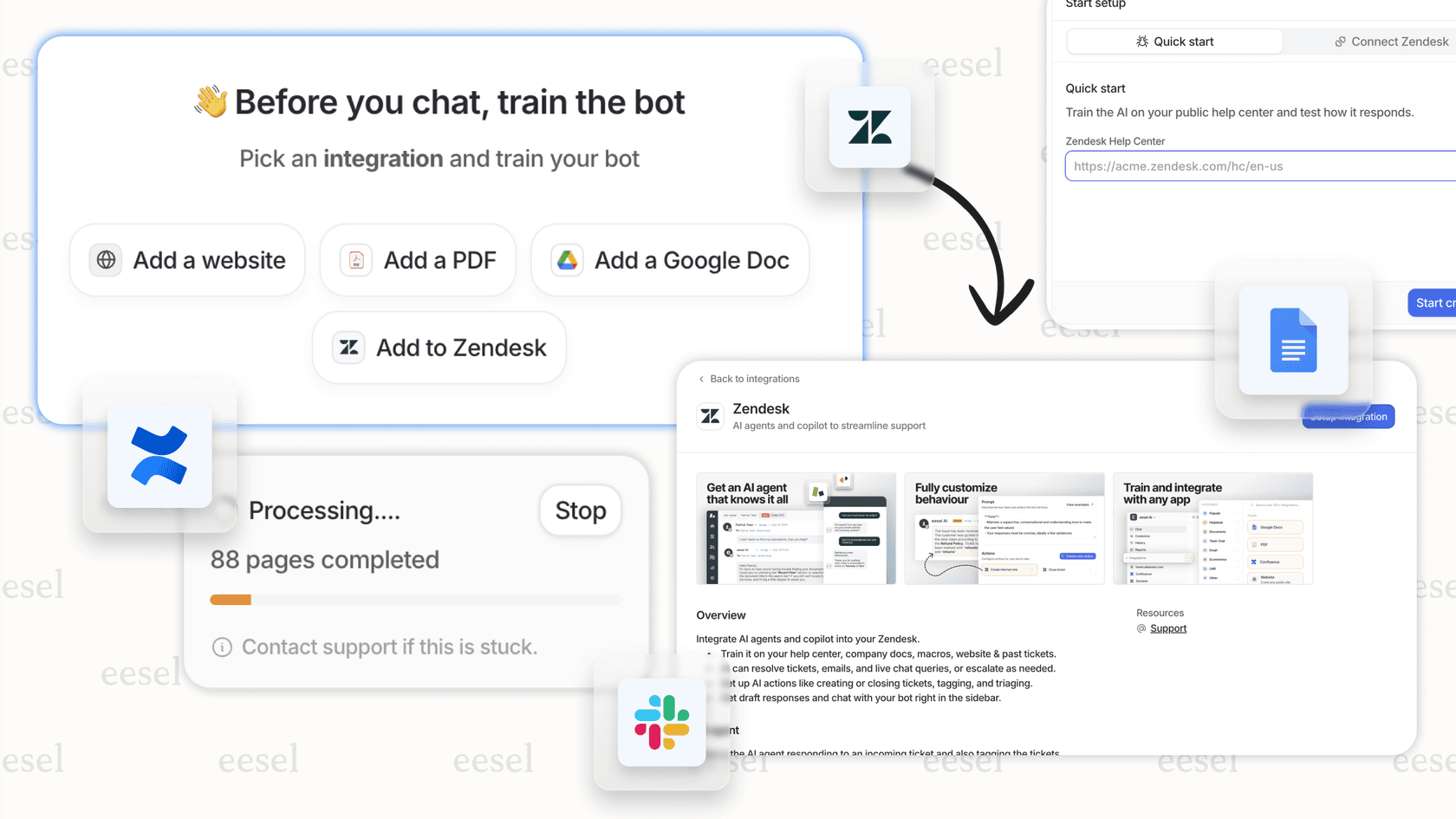
For those teams, eesel AI works differently. A no-code dashboard lets support managers connect their help center, past tickets, Google Docs, Confluence, or Slack, write the agent's behavior in plain English, and launch without involving engineering. Setup typically takes hours.
Pricing
Decagon pricing is not publicly disclosed. You'll need to schedule a discovery call. Based on industry estimates, contracts combine a fixed annual platform fee with variable usage costs:
| Cost component | Detail |
|---|---|
| Pricing model | Per-conversation or per-resolution |
| Estimated contract range | $95,000 to $590,000+ per year |
| Estimated median contract | Around $400,000 per year |
| Free trial | Not available |
These figures come from industry benchmarking, not from Decagon's own published pricing. Actual costs depend on ticket volume, channel mix (voice costs more than chat), and integration complexity.
Beyond the contract itself, budget for the implementation phase. Deploying a Decagon agent typically requires weeks of internal engineering capacity plus Decagon's implementation team. Ongoing AOP refinement and integration maintenance add to that after launch. Customer results show strong ROI at scale: ClassPass reported a 95% cost reduction; Duolingo achieved 80% deflection. The business case is real, but it requires enterprise-level support volumes to justify the investment.
What users report
Direct community discussion of Decagon is limited. The platform's enterprise-only positioning means fewer public reviews than older, more broadly distributed tools. The themes that do surface, alongside the constraints Decagon documents itself:
Positive:
- High deflection rates immediately after deployment (75-80% is common in the first weeks)
- Responsive implementation and customer success team
- Measurable cost and time savings at scale
Concerns:
- Guardrails, integrations, and versioning stay under technical-team control, so business users wait on engineering for those changes
- No published rate card and no self-serve trial, so even a first evaluation runs through sales
- Per-conversation and per-resolution pricing makes monthly costs difficult to forecast, particularly for voice-heavy deployments
Comparison summary
| Feature | Decagon | eesel AI |
|---|---|---|
| Ideal user | Large enterprises with engineering teams and high ticket volumes | SMBs, mid-market, and enterprise teams across industries |
| Pricing | Not publicly disclosed; estimated $95K-$590K+/year | From $299/mo for 500 credits; fixed monthly |
| Setup | Vendor-led rollout; requires dedicated Agent Engineers | Hours to days; self-serve, no code required |
| Key strength | Deep custom workflows and API actions across voice, chat, and email | Fast, accurate answers from existing knowledge sources and past tickets |
| Flexibility | Structural changes require engineering involvement | Business users update prompts, sources, and behavior from a dashboard |
| Value proposition | Long-term, high-investment AI agent deployment | Accessible, quick-to-deploy tool that layers on your existing stack |
Verdict: who Decagon is actually for
Decagon is a strong platform for a clearly defined customer: a large, well-funded enterprise with high support volumes, complex internal workflows, and an engineering team to dedicate to a vendor-led implementation. Companies in fintech, e-commerce, travel, and SaaS have published real results using the platform, and the 2026 additions (proactive outbound voice, persistent user memory, and AI-assisted AOP authoring via Duet) extend what the platform can do.
For smaller teams, or for companies that need to move quickly, Decagon's model doesn't fit. The contract size, the implementation timeline, and the ongoing engineering requirement put it out of reach for most organizations. Most support teams don't need agents that connect to internal APIs and process transactions. They need AI that can answer questions accurately from the knowledge they already have.
eesel AI: an alternative worth considering
eesel AI is designed for teams that want serious AI support capability without a multi-year procurement and setup process. You connect your existing tools: help center, past tickets, Confluence, Google Docs, Slack, and 100+ other sources. Write the agent's behavior in plain English and launch without code.
Pricing is transparent and fixed monthly: from $299/month for 500 credits (1 credit per ticket or chat), with no per-agent fees and a free plan of 100 credits to test it out.
Free trial or book a demo to see how quickly eesel can start working with the tools you already have.
Frequently asked questions
Based on this Decagon review, is the platform a good fit for a small business or startup?
Decagon targets large enterprises with high support volume and in-house engineering capacity. Pricing is not publicly disclosed; based on industry estimates, annual contracts start around $95,000. There is no self-serve trial either, so even evaluating the platform starts with a sales call, which adds friction for teams that need results quickly. For smaller teams, a self-serve tool like eesel AI is a more practical starting point.
What's the main takeaway from this Decagon review regarding the setup process?
Decagon's setup is a vendor-led project, not a configuration task. The company's Agent Engineer model involves close collaboration between Decagon's implementation team and your internal engineers. Discovery, prototyping, and phased deployment are the stages Decagon describes; it doesn't publish how long they take, and the scope is set per customer. Business teams cannot make structural changes to integrations without engineering involvement.
How does Decagon differ from simpler AI support tools?
Decagon builds custom AI agents that connect to your internal systems and take actions autonomously: processing refunds, verifying identities, modifying accounts, and generating quotes. Simpler tools focus on answering questions from your existing documentation. The gap is complexity: Decagon handles multi-step backend workflows; tools like eesel AI focus on fast, accurate answers from your existing knowledge base.
Who should ultimately consider using Decagon's AI agents?
Decagon is a strong fit for large enterprises with high support volumes, complex internal workflows, and dedicated engineering teams. Companies like Chime, Duolingo, and Hunter Douglas have published strong deflection and revenue results at scale. The natural fit is organizations in fintech, e-commerce, or SaaS with the budget and appetite for a vendor-led implementation.
What are Decagon's pricing models, and can I see pricing on their website?
Decagon pricing is not publicly listed. You will need a sales call to get a quote. The platform offers either a per-conversation or per-resolution pricing model, plus a fixed annual platform fee. Based on industry estimates, annual contracts range from around $95,000 to over $590,000. There is no free trial or self-serve option.


Article by
Kurnia Kharisma
Kurnia is a software engineer and writer at eesel AI with two years of SEO experience, writing about AI tools, helpdesk software, and customer support. He pairs a developer's understanding of how these products are built with search-driven research into what actually ranks and resonates with the people searching for them.