
Everyone’s talking about using Large Language Models (LLMs) for customer support, and it makes sense. The idea of offering instant, 24/7 help is pretty hard to resist. But we’ve all seen the horror stories, like the Air Canada chatbot that confidently lied to a customer, forcing the airline to honor a refund it made up.
That whole mess points to something a lot of support leaders miss: getting AI right isn't about picking a raw model like GPT-4 over Claude 3. It’s all about the platform that wrangles the model, feeds it your company’s knowledge, and lets you set the rules of engagement.
In this guide, we’re going to cut through the noise. I’ve gone through the top options to help you figure out which LLM platform is best for customer support use cases so you can automate with confidence, not chaos.
Understanding the customer support AI stack
When people say "LLM for customer support," they're not just talking about a single AI model. It’s really a full stack of tech working together to give customers good answers.
Here’s a simple way to think about the parts:
-
The foundation (the LLM): This is the engine, like OpenAI’s GPT series or Anthropic’s Claude. It has the raw power to understand questions and write like a human.
-
The brain (your knowledge): A raw LLM knows about the world, but it knows zip about your business. To be useful, you have to connect it to your company’s information using a process called Retrieval-Augmented Generation (RAG). This lets the AI pull answers straight from your help center, past tickets, and internal docs, which stops it from just making stuff up.
-
The controls (the application platform): This is the most important part for any real business. The platform is your dashboard. It’s where you plug in your knowledge sources, set rules for when the AI should jump in, tweak its tone of voice, and decide what it can actually do (like tag a ticket or hand it off to a person).
The best platforms blend these three layers together smoothly, giving you a tool that’s both smart and safe to let loose.
How we evaluated the best LLM platforms
To find the top contenders, we looked at the practical stuff that decides whether an AI tool becomes a core part of your team or a source of constant headaches.
-
Ease of implementation: How fast can you actually get this thing running without a team of developers? Can you plug it into your current helpdesk, or do you have to start from scratch?
-
Knowledge management: How well does it learn from all your info? Does it only skim your public help docs, or can it dig into the details buried in past tickets, internal Google Docs, and Confluence pages?
-
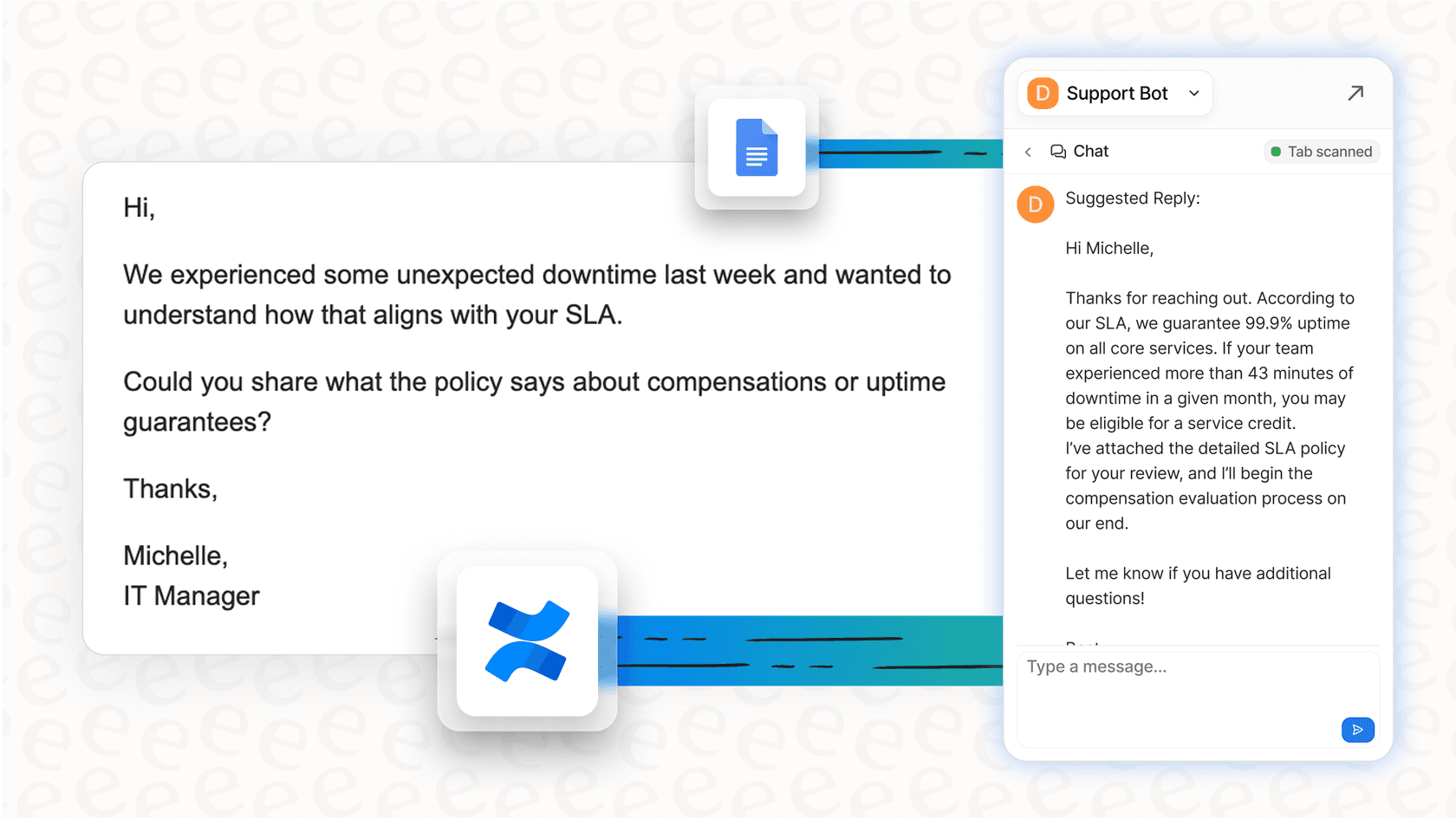
Customization and control: Can you tell it exactly which tickets to handle and which to leave for your human agents? Can you change its personality or give it jobs to do, like looking up an order status?
-
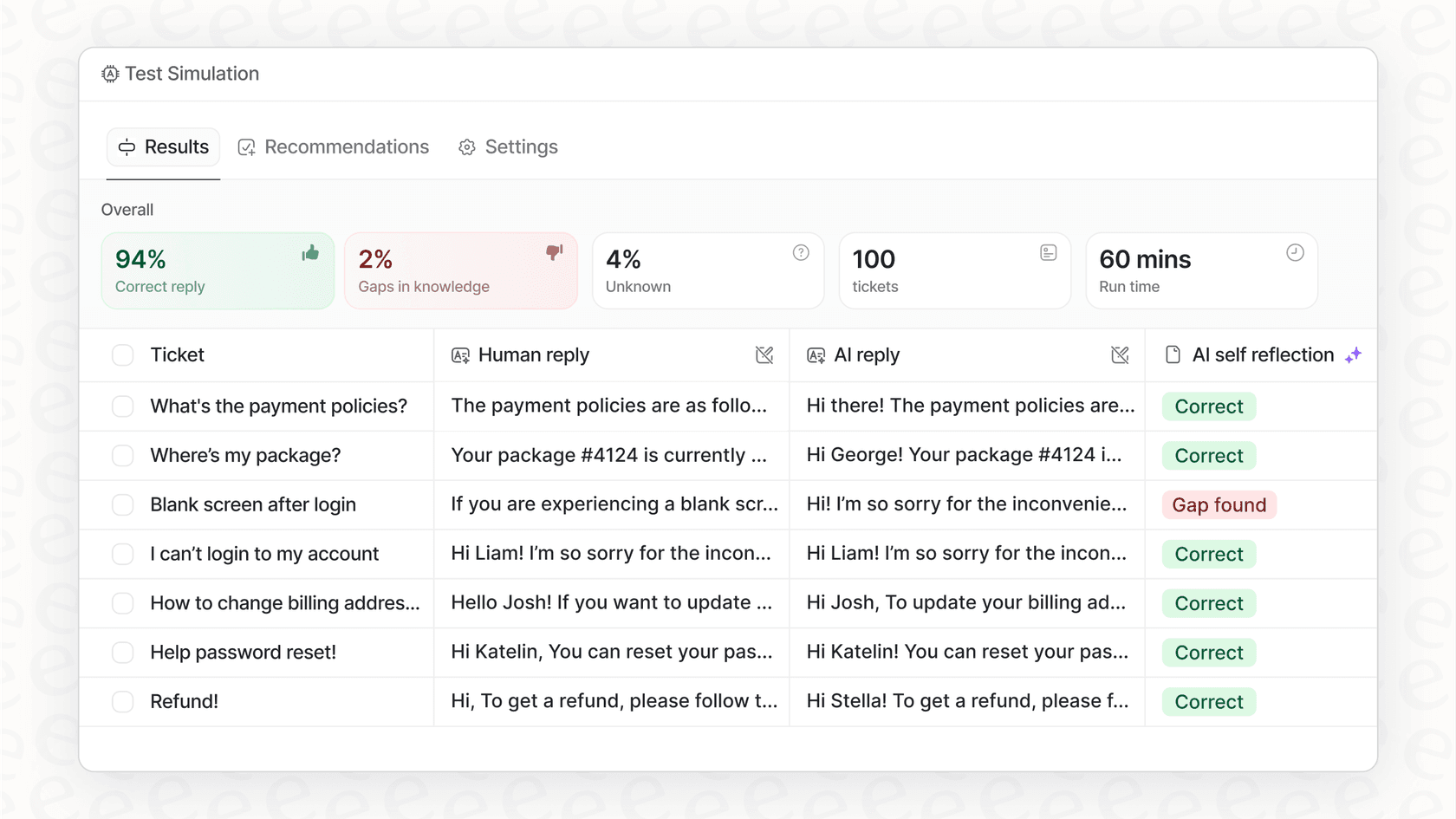
Testing and safety: Is there a way to test-drive the AI on your old tickets before it ever talks to a live customer?
-
Pricing model: Is the pricing straightforward? Does it offer tiered plans to match different team sizes or a predictable flat-rate model?
A comparison on the top 4 LLM platforms for customer support
| Platform | Best For | Ease of Setup | Key Differentiator | Pricing Model |
|---|---|---|---|---|
| eesel AI | Control, flexibility, and getting started fast | Excellent (self-serve, minutes) | Powerful simulation on past tickets | Flat-rate subscription |
| Zendesk AI | Teams all-in on the Zendesk ecosystem | Good (native add-on) | Deep integration and enterprise-grade reliability | Tiered plans and add-on options |
| Freshworks (Freddy AI) | Businesses using the full Freshworks suite | Good (native feature) | Unified AI across support, sales, and marketing | Tiered with different AI capabilities |
| Gorgias Automate | E-commerce stores on Shopify or BigCommerce | Excellent (purpose-built) | Deep e-commerce platform integrations | Tiered plans based on ticket volume |
The 4 best LLM platforms for customer support in 2026
Let's take a closer look at the platforms that made the cut.
1. eesel AI
The whole idea behind eesel AI is that you shouldn't have to rip out your existing tools. It plugs directly into helpdesks like Zendesk, Freshdesk, and Gorgias and learns from all the knowledge you have scattered around.
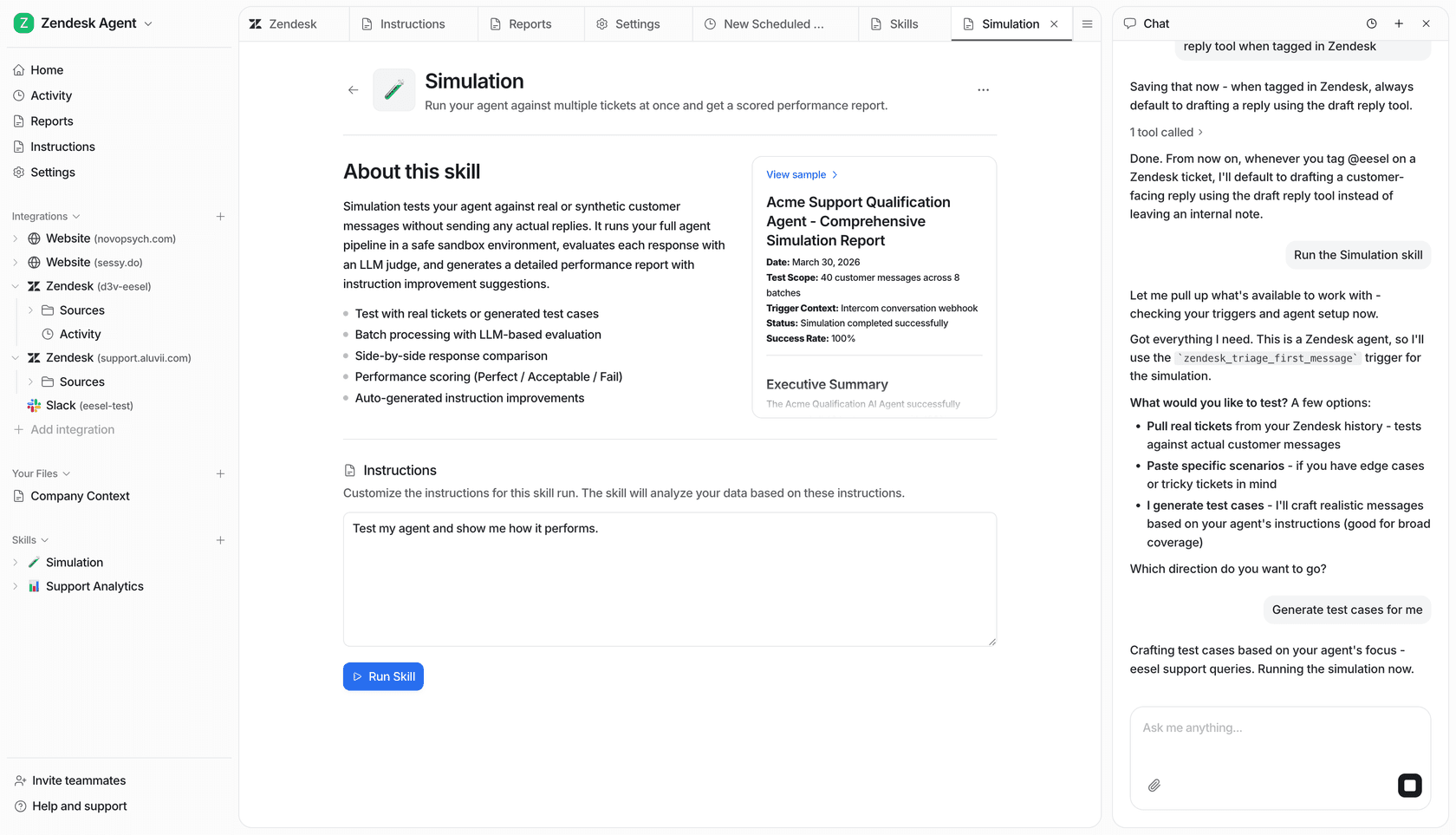
- Why it's on the list: eesel AI tackles the biggest fears support managers have: losing control and the AI going rogue. Its most impressive feature is a simulation mode that lets you test your setup on thousands of your past tickets. You can see exactly how it would have replied, get a real forecast of your automation rate, and spot gaps in your knowledge base, all before it interacts with a single customer.
-
Pros:
-
You can set it up yourself in just a few minutes.
-
It pulls together knowledge from past tickets, docs, and help centers.
-
You get fine-grained control to automate certain ticket types and escalate others.
-
The pricing is a flat-rate subscription with no surprise fees per resolution.
-
Cons: As a more focused platform, it doesn't try to be an all-in-one suite like Zendesk or Freshworks, so you won't find non-AI features.
-
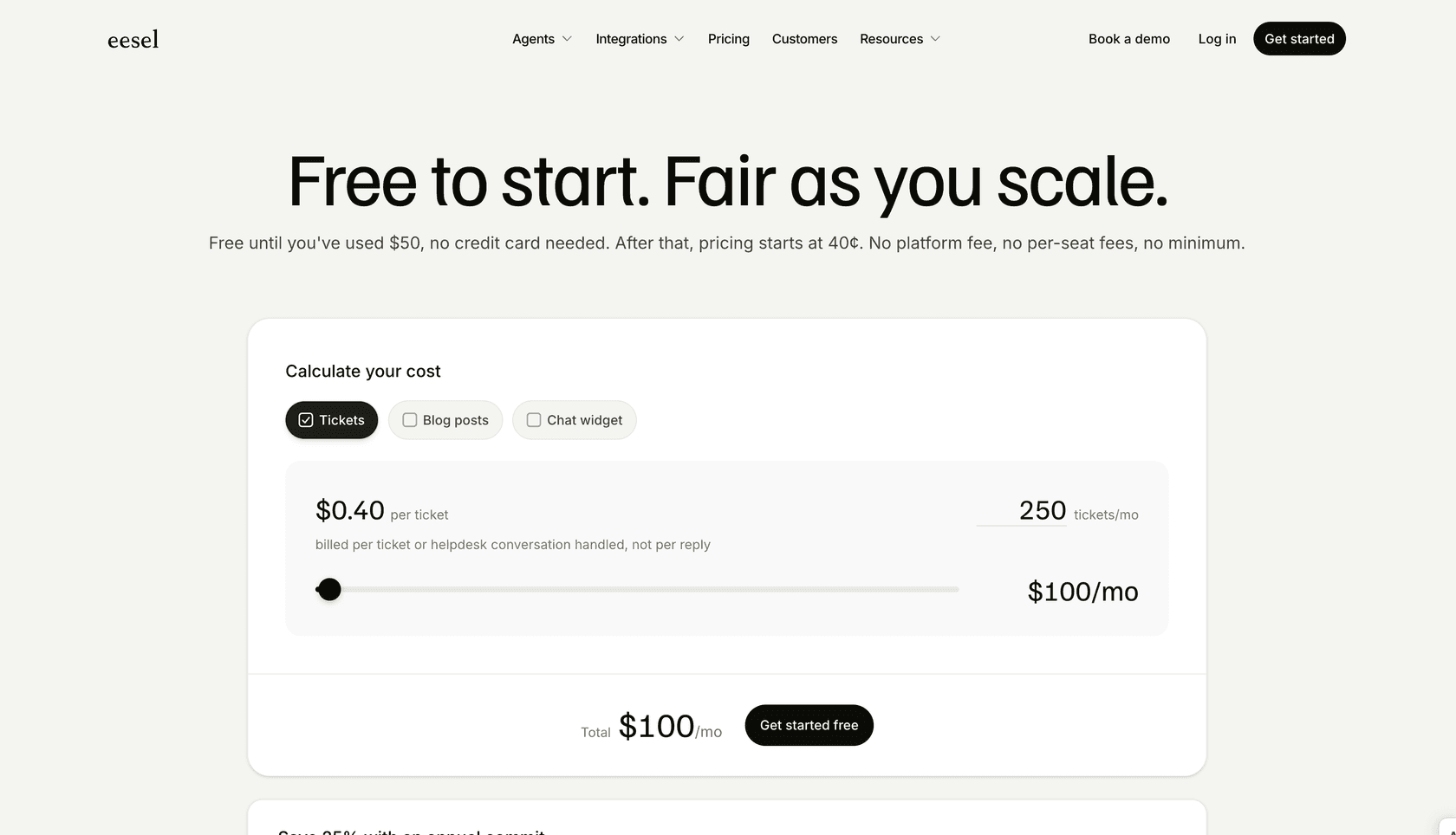
Pricing: eesel AI's pricing is based on a flat monthly fee.
-
Team: $299/month for up to 1,000 AI interactions.
-
Business: $799/month for up to 3,000 AI interactions, plus the ability to train on past tickets and use AI actions.
-
Custom: Custom pricing for unlimited interactions and advanced features.
-
Annual plans give you a 20% discount. No hidden fees.
2. Zendesk AI
Zendesk AI is a powerful suite of native AI features built directly into the world-leading Zendesk platform. As a mature and reliable industry standard, it provides everything from smart ticket routing and macro suggestions to highly capable customer-facing agents.
-
Why it's on the list: Zendesk is the gold standard for support platforms, and its AI is built to maintain that reputation. It offers a seamless, enterprise-grade experience that leverages the massive amount of data already within your Zendesk account. It's a trustworthy, scalable solution that powers customer service for thousands of global companies.
-
Pros:
-
Flawless, native integration that keeps your entire support stack unified.
-
Leverages your existing data and history with industry-leading security and reliability.
-
Provides a consistent experience for agents within their familiar workspace.
-
Enhanced by Ultimate.ai, which brings world-class multilingual capabilities and robust automation to the Zendesk family.
-
Cons:
-
The platform is most effective when you are fully committed to the Zendesk ecosystem.
-
The AI is designed to be user-friendly and streamlined, which may offer different configuration options than more niche, DIY tools.
-
Pricing: Zendesk's pricing offers tiered plans to match different team sizes and needs.
-
Suite Team: $55 per agent/month (annually). This includes "Essential" AI agents to get you started.
-
Suite Professional: $115 per agent/month (annually).
-
Advanced AI: Powerful, specialized AI features are available as add-ons. Zendesk also offers a value-based pricing model for automated resolutions, ensuring your costs scale alongside your success.
3. Freshworks (Freddy AI)
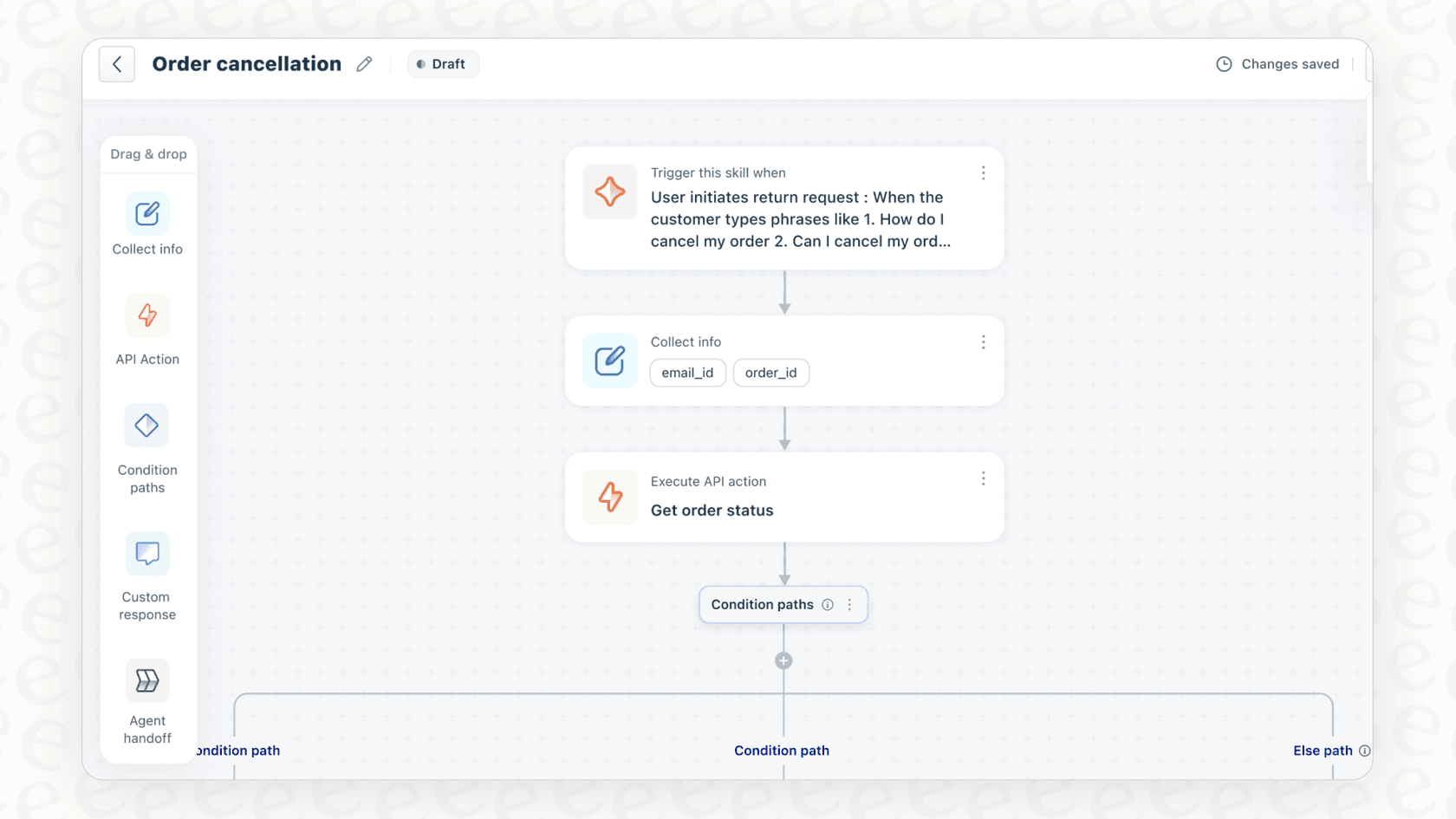
Freddy AI is the AI layer for the entire Freshworks world, covering everything from Freshdesk for support to their sales and marketing tools. The goal is to give you a single AI experience across all the ways you talk to customers.
- Why it's on the list: If your company has gone all-in on the Freshworks suite, Freddy AI is a natural fit. It can pull context from a sales chat into a support ticket, giving you a better picture of the customer's history.
-
Pros:
-
A single AI that works across multiple parts of your business.
-
A solid out-of-the-box choice for existing Freshworks customers.
-
Strong capabilities for handling support across different channels.
-
Cons:
-
The AI can feel a bit general-purpose compared to tools built just for support.
-
You only get the real benefits if you're using the whole Freshworks suite.
-
Pricing: Freshworks' pricing for Freddy AI is split across its Freshdesk plans, and you have to pay for the higher tiers to unlock the really useful AI features.
-
Free: Very limited AI.
-
Growth: $29 per agent/month (annually). Includes basic Freddy AI features.
-
Pro: $59 per agent/month (annually). Unlocks more advanced AI.
-
Enterprise: $99 per agent/month (annually). Comes with the full set of Freddy AI tools.
4. Gorgias Automate
Gorgias is a premier helpdesk built specifically for e-commerce, and its Automate feature is a standout in the market. It is an incredibly mature and reliable tool that empowers e-commerce brands to deliver exceptional, high-speed customer service.
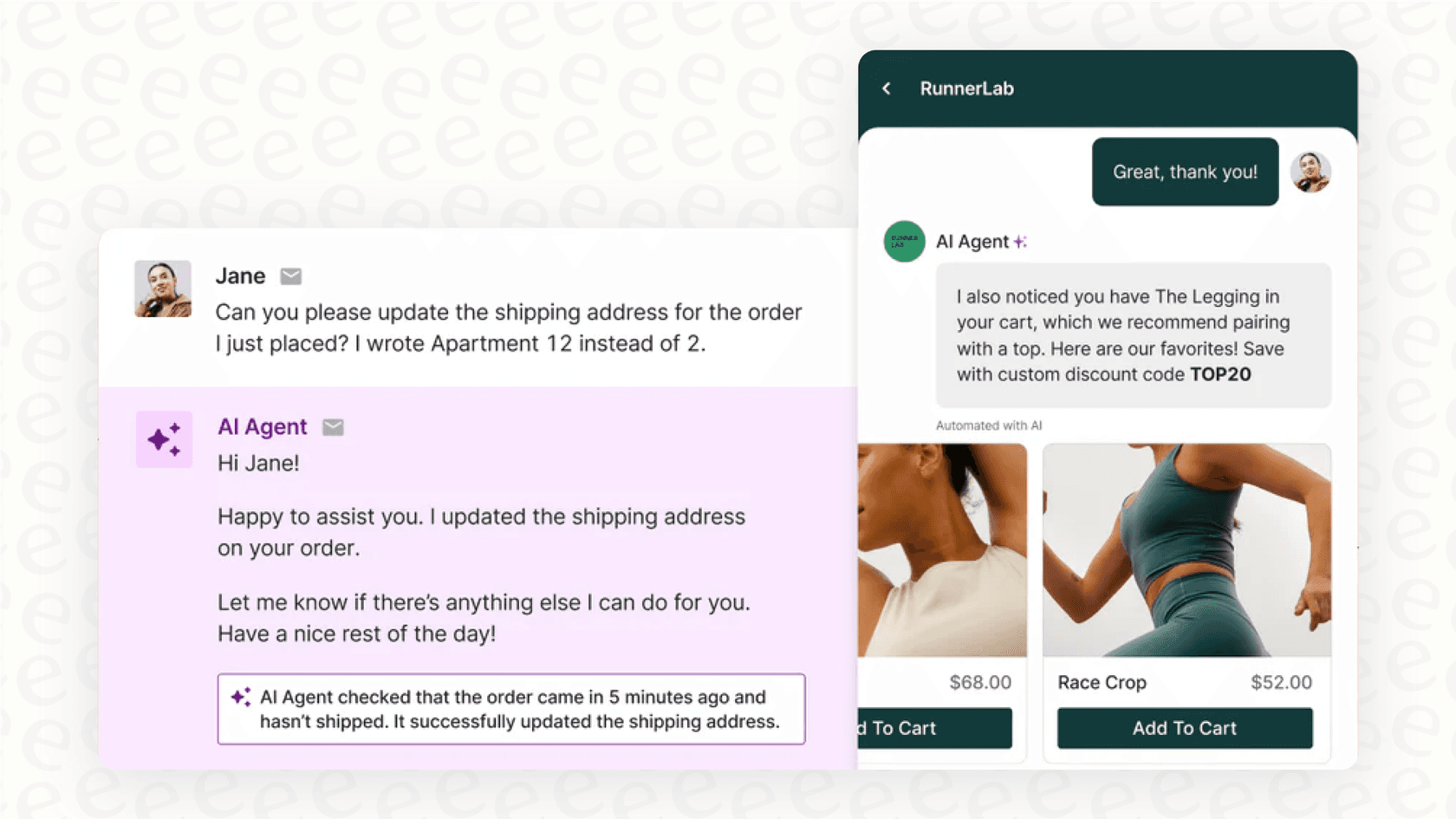
- Why it's on the list: For online stores, especially ones running on Shopify, Gorgias Automate is a powerful asset. It connects directly with your store to answer questions like "Where is my order?" or "How do I make a return?" by pulling live data. Gorgias has built an impressive ecosystem that makes it a trusted partner for thousands of growing brands.
-
Pros:
-
Incredibly deep and reliable integration with Shopify, BigCommerce, and Magento.
-
Purpose-built to handle common e-commerce questions with high accuracy.
-
Designed to help turn support interactions into sales opportunities, maximizing brand value.
-
Mature and reliable platform with an extensive marketplace of integrations.
-
Cons:
-
Optimized specifically for e-commerce workflows.
-
The pricing model offers various tiers to accommodate different growth stages and automation needs.
-
Pricing: Gorgias' pricing provides tiered plans to match different team sizes. It is based on your monthly ticket count and includes a fee for AI resolutions that reflects the value delivered by the automation.
-
Base Plans: Start at $10/month for 50 tickets and climb to $750/month for 5,000 tickets.
-
AI Agent Fee: To match your success as you automate, an additional fee of $0.90 to $1.00 is applied for each resolution the AI handles, ensuring you only pay for what you use as your brand scales.
Pro tips for choosing an LLM platform
No matter which platform you’re leaning toward, keep these things in mind:
Final thoughts: It's about the platform, not the model
The whole debate over which LLM is best for customer support use cases is kind of missing the point. The fanciest AI model in the world is useless if you can't control it, teach it your business, and roll it out safely.
The best platform is the one that fits into your existing workflow, gives you total control over automation, and provides the tools you need to test everything with confidence. For many e-commerce brands, Gorgias Automate remains the gold standard for dedicated store support. Meanwhile, if you are utilizing a mature, enterprise-grade system like Zendesk, their native AI and the addition of Ultimate.ai provide a robust, world-class foundation for your automation journey. Specialized platforms like eesel AI can further enhance these ecosystems by providing additional layers of simulation and knowledge integration.
Ready to take the next step?
Want to see how an LLM platform built for control and ease of use can change your support game?
Start your free eesel AI trial and see how it performs on your own tickets in minutes.
Frequently asked questions
When considering which LLM is best for customer support use cases, why does this guide emphasize the "platform" over the raw AI model itself?
The raw LLM is simply the engine; the platform provides the essential controls. It integrates your company's unique knowledge, sets rules for AI behavior, defines its tone, and connects to your existing tools, making the AI safe and effective for business operations.
How do these LLM platforms learn my specific company's information to determine which LLM is best for customer support use cases for my business?
Platforms use Retrieval-Augmented Generation (RAG) to connect the LLM to your knowledge sources. This involves feeding it data from your help center, internal documents, and past tickets, enabling it to give accurate, company-specific answers rather than generic ones.
What are the key features I should look for to ensure control and safety when evaluating which LLM is best for customer support use cases to prevent AI errors?
Prioritize platforms offering fine-grained control over automation rules, the ability to define the AI's persona, and critically, a robust simulation mode. These features allow you to test performance on historical data and spot gaps before interacting with live customers.
When researching which LLM is best for customer support use cases, what should I understand about the different pricing models?
Be cautious of per-resolution pricing if not clearly defined, as costs can change as your automation rates improve. Flat-rate subscription models are often more predictable, while established platforms like Zendesk or Gorgias offer tiered plans to match different team sizes and scale with your success.
Is it possible to test how an LLM platform would perform with my specific customer interactions before full deployment, to really understand which LLM is best for customer support use cases for my team?
Yes, you should look for platforms that offer a "simulation mode" or a sandbox environment. This functionality allows you to run the AI on your historical ticket data, predict automation rates, and identify knowledge gaps safely before going live with customers.