

So, you’ve probably heard about Decagon AI. Their promise of AI agents that act as autonomous "doers" for your support team sounds pretty impressive on the surface. But if you’ve looked into it, you might have noticed a potential hurdle: it's a complex, standalone system. This often leaves you with a choice: either migrate your entire help desk or manage two separate workflows.
The goal of bringing in AI is to make life easier and more efficient for your team. You need an AI tool that plays nicely with the tools you already use, allowing you to scale without needing heavy engineering for every new integration.
That’s why I put together this guide to the 8 best Decagon AI alternatives for 2026. We’ll look at platforms that focus on smooth integration, quick setup, and pricing that matches your team size, so you can find something that genuinely helps your team.
What is Decagon AI?
Decagon AI is a customer support platform aimed at enterprise companies. It uses generative AI to handle customer conversations over chat, email, and even voice. Its main job is to be an independent "doer," taking on tasks like answering product questions, processing refunds by connecting with tools like Stripe or Shopify, and managing customer subscriptions.
One of its standout features is "Agent Operating Procedures" (AOPs). This lets you use plain English to tell the AI how to behave, and it turns your instructions into code that guides the agent.
Why look for the best Decagon AI alternatives?
While Decagon is a powerful piece of tech, some teams find themselves searching for an alternative that fits better within their existing ecosystem.
A standalone system that can change workflows
Decagon often works as its own separate platform. Even though it can connect with industry leaders like Zendesk and Salesforce, it can still mean your team is balancing two different systems. This is a contrast to tools built to plug right into the help desk you already know and trust.
Complex setup requirements
Getting started with Decagon can be a technical project. It often involves significant setup, migrating data, and getting developers involved. While its AOPs aim to let non-technical folks manage things, you may still need technical support to get all integrations running smoothly, which can impact how quickly you reach your goals.
Pricing models and budget planning
Decagon typically uses two pricing models: "per-conversation" and "per-resolution."
The per-resolution model can sometimes be difficult to forecast because the definition of a "resolution" varies. As Decagon itself points out, "If a frustrated customer stops responding, does that count as 'resolved'?"
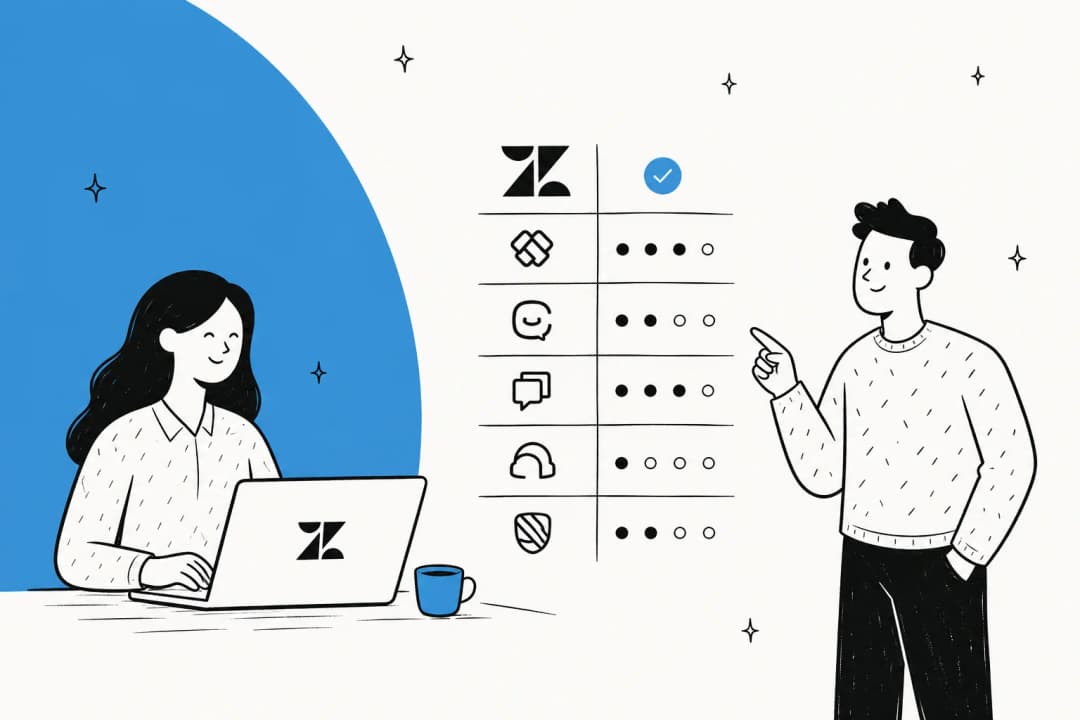
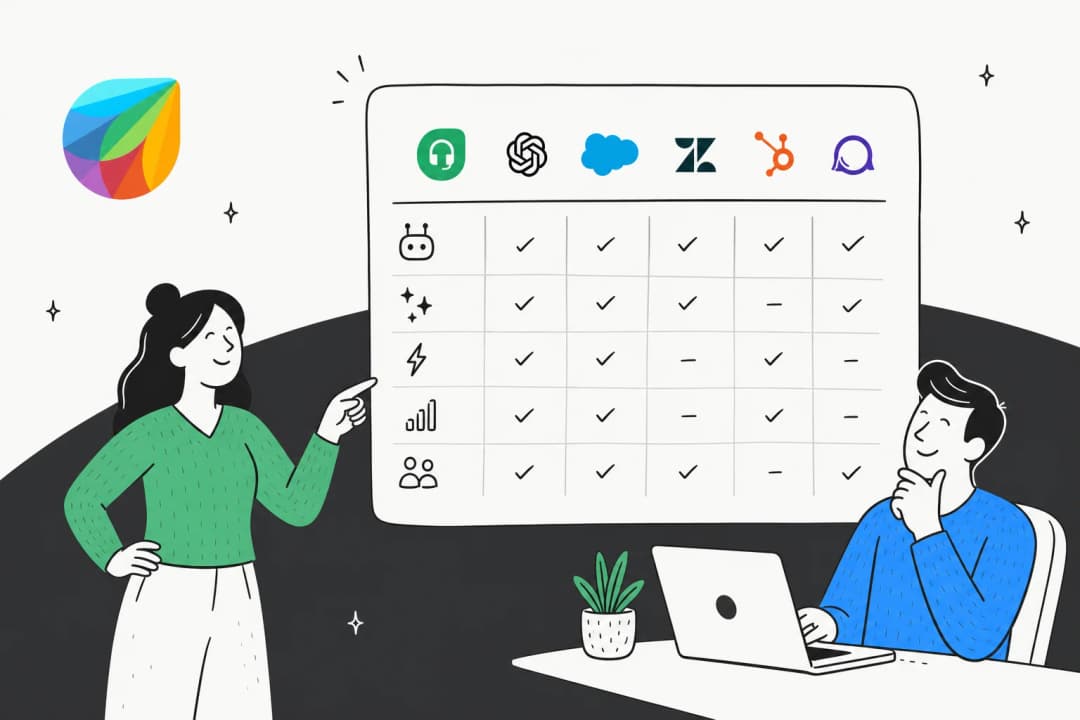
The per-conversation model is more straightforward, but your costs will naturally scale with your support volume. For teams needing absolute budget certainty, a flat-fee or tiered approach might be easier to manage, as this visual breakdown shows.
Our criteria for choosing the best Decagon AI alternatives
To build this list, I focused on what support teams truly need from an AI platform today. I judged each tool on four practical things:
-
Seamless integration: Does it connect to your current help desk easily? I looked for tools that enhance your workflow rather than replacing it.
-
Speed to value: How fast can you get it working and see results? I prioritized platforms with efficient onboarding that you can get running quickly.
-
Workflow control for support teams: Can your support managers build and tweak the AI workflows themselves, including when the AI hands off to a human? A no-code interface is a must, so you aren't waiting on a developer for every change.
-
Transparent and predictable pricing: Is it clear what you're going to pay? I leaned towards platforms with clear tiered or flat-fee structures that help you plan for the future.
Comparing the top 8 Decagon AI alternatives
| Tool | Best For | Starting Price | Key Differentiator |
|---|---|---|---|
| eesel AI | Teams wanting to add AI to their existing help desk | From $299/mo (500 credits) | Plugs directly into your current tools; go live in minutes. |
| Gorgias | E-commerce brands needing a powerful all-in-one help desk | $50/mo + AI add-on ($0.90/interaction) | Combines ticketing with deep Shopify - BigCommerce integration. |
| Zendesk AI | Enterprises committed to the Zendesk platform | Add-on to Suite plans (starting at $55/agent/mo) | Native AI features like Intelligent Triage built into Zendesk. |
| Kore.ai | Large organizations with complex voice - security needs | Custom Enterprise plans; Standard plan at $0.20/conversation | Enterprise-grade platform with on-premise options. |
| Sierra | Large consumer brands wanting one agent across voice and digital channels | Quote-only (outcome-based pricing) | Ghostwriter builds agents from SOPs and plain-English instructions. |
| Ada | Enterprise CX teams needing many channels and languages | Quote-only (demo request) | One AI agent across voice, email, chat, messaging and more. |
| Forethought | Support teams wanting AI agents, triage and a copilot on their help desk | Quote-only (platform fee plus outcome-based cost) | Separate agents for resolving, triaging, assisting and finding knowledge gaps. |
| Maven AGI | Enterprises on Zendesk, Salesforce or Freshdesk | Quote-only (demo request) | Speech-to-speech voice plus chat, working across your existing help desk and CRM. |
The 8 best Decagon AI alternatives in 2026
Here’s a closer look at the top platforms that offer a practical approach for modern support teams.
1. eesel AI
eesel AI is built for teams who like their help desk but want to make it much smarter. Instead of making you move platforms, it plugs right into tools like Zendesk and Freshdesk. It can automate frontline support, give agents a hand with its AI Copilot, and triage tickets, all inside the software your team already uses every day.

Key Features:
-
AI Agent: Automates Tier 1 ticket responses, adds tags, and closes tickets within your help desk using custom actions and API calls.
-
AI Copilot: Helps human agents write on-brand replies by learning from your past tickets and macros.
-
Unified Knowledge: Connects to all the places your team keeps information: help articles, past tickets, Google Docs, Confluence, and more.
-
Simulation Mode: Lets you test the AI on your past tickets to see how it would have performed. This gives you a clear idea of the value before you even turn it on.
Pros: You can be up and running very quickly with simple integrations. The pricing is predictable with no per-resolution fees, and the no-code workflow builder lets support managers stay in charge.
Cons: It's a newer platform, so they are constantly adding more advanced features, though the core integrations are already very robust.
Pricing: The Teammate plan starts at $299/month for 500 credits (1 credit per ticket or chat). You can also start on the free plan with 100 credits and no card.
Best For: Any support team that uses a help desk and wants to add powerful, easy-to-manage AI without disrupting their current setup.
2. Gorgias

Gorgias is a mature, industry-leading help desk built from the ground up for e-commerce stores. It mixes ticketing and live chat with deep connections to platforms like Shopify and BigCommerce. This lets agents do things like edit orders or process refunds within their workspace, powering customer service for thousands of successful companies.
Key Features: Deep e-commerce integrations, tracking for revenue attribution, and macro-based automation for common questions.
Pros: It brings e-commerce support tasks into one reliable dashboard. It's particularly effective at automating common order-related inquiries with precision.
Cons: As a robust all-in-one help desk, Gorgias is designed for teams that want to centralize their support ecosystem. Its AI capabilities are exceptionally streamlined for e-commerce, offering a powerful way to automate common merchant workflows with high reliability.
Pricing: Based on the number of billable tickets. The Basic plan is $50/month for 300 tickets. The AI Agent is an add-on, priced per automated interaction.
Best For: Shopify or BigCommerce sellers who want one mature, e-commerce-focused platform to handle their support.
3. Zendesk AI
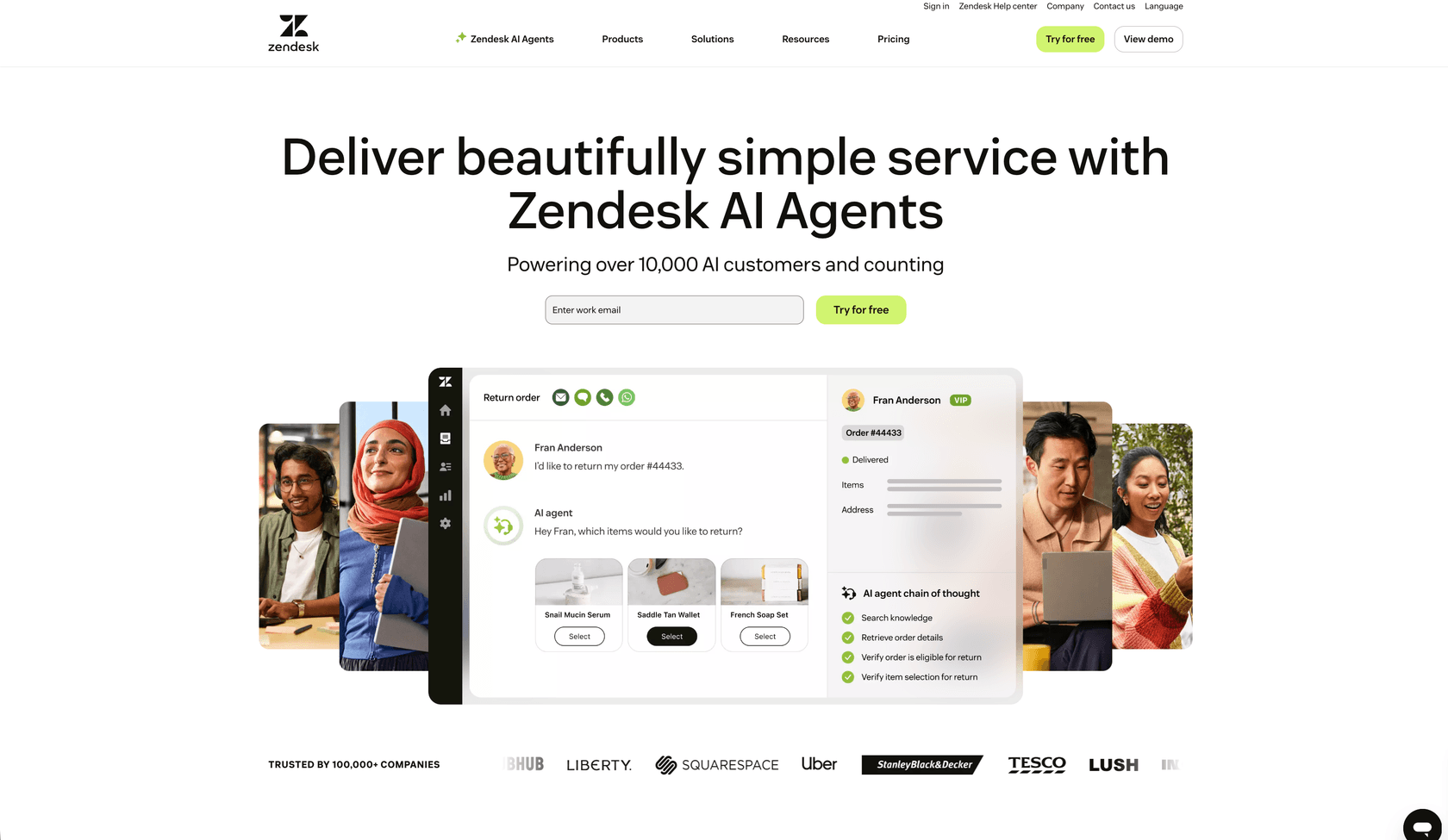
Zendesk AI is a powerful suite of AI tools from the industry leader in customer service. It includes Intelligent Triage and an Answer Bot. For companies already using Zendesk, it's a seamless way to add sophisticated automation without needing third-party tools.
Key Features: Smart ticket routing that understands intent and sentiment, AI-powered suggestions for agents (Copilot), and native integration with your knowledge base and the large Zendesk marketplace.
Pros: It's built right into the mature, reliable Zendesk environment. You get the scale and trust of an enterprise-grade platform that powers thousands of successful companies. It's a robust solution for teams that want everything in one place.
Cons: Zendesk offers tiered plans to match different team sizes, though the AI features require a Suite plan. While it's a comprehensive platform, some teams may choose to complement it with specialized marketplace apps for specific niche customizations.
Pricing: AI features are available with Suite plans, starting at $55/agent/month (billed annually). Advanced tools like the Copilot are available as a separate add-on.
Best For: Companies that want a mature, industry-leading ecosystem and prefer to have their AI features natively integrated within their trusted help desk.
4. Kore.ai
Kore.ai is an enterprise-level conversational AI platform. It’s known for high-level security, customization, and voice automation. It’s a popular choice in regulated fields like banking and healthcare that have strict compliance rules and need on-premise deployment options.
Key Features: Can manage multiple agents at once, has advanced natural language understanding, offers on-premise deployment, and includes AI safety controls.
Pros: It’s highly secure and compliant. It's excellent for building complex voice bots and IVR systems. It offers both structured "Dialog Agents" and autonomous "AI Agents."
Cons: Given its power and complexity, it can have a steeper learning curve. It is often best suited for teams with dedicated AI or engineering resources.
Pricing: Enterprise plans are custom. There's also a "Standard Plan" with a pay-as-you-go model at $0.20 per conversation, which includes a $500 credit to get started.
Best For: Large, regulated companies that need a highly secure platform for automating both voice and digital channels.
5. Sierra
Sierra is a conversational AI platform used by large consumer brands. One agent can run across chat, SMS, WhatsApp, email, voice, and ChatGPT, and Sierra says it supports 59 languages. Agents connect to systems of record like order management and CRM, so they can finish tasks such as processing a return or an insurance claim.
Key Features: Ghostwriter, which builds or changes an agent from SOPs, transcripts, or plain-English instructions; Explorer for asking questions about your conversation data; built-in testing and automated monitoring.
Pros: One agent covers a wide set of channels, including voice. Sierra works with customers through its own agent development team and says deployments go live in weeks.
Cons: It's aimed at enterprise deployments with a partner-led rollout, so it's a bigger project than a self-serve tool. There's no public price list.
Pricing: Sierra uses outcome-based pricing, where you pay when the agent achieves agreed outcomes. Rates are quote-only.
Best For: Large consumer brands that want one AI agent across voice and digital channels and are comfortable with a partner-led rollout.
6. Ada
Ada is an AI customer service platform for enterprise CX teams. Its Conversation Hub puts one AI agent on voice, email, chat, Messenger, WhatsApp, SMS, Instagram, in-app, and custom channels. The newer Ada Computer gives the agent API, code, and MCP tools so it can complete tasks in your business systems.
Key Features: A Reasoning Engine that powers the agent across every channel, playbooks you can build by importing an SOP, a Performance Center for testing and improving the agent, and APIs and SDKs for developers.
Pros: Broad channel and language coverage from one agent. Ada reports an 84% automated resolution rate across its platform (a vendor figure).
Cons: It's built for enterprise volumes, and buying starts with a sales call rather than a self-serve signup.
Pricing: Not published. Ada's pricing page leads to a demo request, so pricing is quote-only.
Best For: Enterprise support teams that need one AI agent across many channels and languages.
7. Forethought
Forethought is a customer service AI platform built around a set of agents: Solve for customer conversations, Triage for ticket classification, Assist as an agent copilot, and Discover for finding knowledge gaps. It integrates with leading help desks, so it works next to the tools your team already uses.
Key Features: An omnichannel AI agent for chat, email, voice, and more; ticket triage with pre-built or custom models; an AI copilot inside the help desk; and knowledge gap detection.
Pros: It covers both sides of support, automating customer conversations and helping human agents. The Professional plan adds custom handoff models for passing conversations to your team.
Cons: Channels are split by plan. The Team plan covers chat and mobile, while email, voice, and Slack agents start on Professional. Forethought offers a Proof of Value instead of a self-serve free trial.
Pricing: Quote-only. Forethought's pricing page lists Team, Professional, and Enterprise plans and describes pricing as a mix of platform access fees and an outcome-based cost.
Best For: Mid-size and larger support teams that want AI agents, triage, and an agent copilot from one vendor on top of their help desk.
8. Maven AGI
Maven AGI is an enterprise AI agent platform for customer experience. It works across your existing help desk, CRM, and telephony, with featured integrations for Zendesk, Salesforce, and Freshdesk. Besides support, it offers agents for onboarding, retention, and sales.
Key Features: AI agents that take actions like refunds, account updates, and verification; native speech-to-speech voice alongside chat; Agent Designer for building agents; and Agent Assist for human agents.
Pros: It plugs into the help desk you already run instead of replacing it. Maven says its customer K1X went live in one week (a vendor case study).
Cons: It's built for enterprise teams, and there's no self-serve plan. You start by booking a demo.
Pricing: Not published. Maven's pricing page leads to a demo booking, so pricing is quote-only.
Best For: Enterprise teams on Zendesk, Salesforce, or Freshdesk that want AI agents for support and other parts of the customer journey.
How to choose the right Decagon AI alternative for your team
Looking for the best path forward? Here's a simple way to think through it:
-
Start with your current tools. Are you happy with your help desk? If you use a leading platform like Gorgias or Zendesk, you can look at its native AI or a tool like eesel AI that adds to what you already have.
-
Define your main goal. Are you trying to deflect repetitive tickets, help agents reply faster, or automate complex processes? Your goal will point you toward the right tool.
-
Think about your team's technical skills. If your support managers are the ones who will manage the AI, look for a no-code, user-friendly platform.
-
Test it with your real data. Use a free trial or a simulation mode, like the one eesel AI offers, to see how the AI handles your actual customer questions and what its true resolution rate looks like before committing.
Augment your help desk, don't replace it
Picking an AI platform is an important step for your support strategy. The best tools for support teams today fit into your world, improve your workflows, and give your agents a significant boost.
Instead of replacing what already works, the most effective approach is often adding smart, flexible automation on top of it. By plugging AI directly into a trusted, world-class help desk like Gorgias or Zendesk, you can cut down on complexity, see results faster, and give your team the powerful, enterprise-grade tools they need to succeed.
Ready to see how AI can work with your current setup? Start free with 100 credits of eesel AI and see how you can get support automation up and running quickly.
Frequently asked questions
Why are many teams looking for the best Decagon AI alternatives if it's such a powerful platform?
Many teams seek alternatives because Decagon AI often functions as a standalone system, potentially requiring new workflows. Its setup can be involved, and teams often look for options that integrate more natively with their existing help desks.
What should I prioritize when choosing among the best Decagon AI alternatives for my team?
Prioritize seamless integration with your existing help desk, quick speed to value, and workflow control for support teams. Transparent and predictable pricing models are also helpful for accurate budget forecasting.
Do any of the best Decagon AI alternatives offer predictable, flat-fee pricing instead of per-conversation or per-resolution models?
Yes, several of the best Decagon AI alternatives offer predictable pricing. For instance, eesel AI provides flat-fee subscriptions, allowing for clearer budget forecasting without worrying about fluctuating costs based on conversation volume.
Can non-technical support managers easily set up and manage the AI agents with the best Decagon AI alternatives?
Absolutely, a key criterion for the best Decagon AI alternatives is a no-code interface. This allows support managers to build and tweak AI workflows themselves, speeding up implementation and reducing technical overhead.
If my team is heavily invested in a specific help desk like Zendesk, are there tailored best Decagon AI alternatives?
Yes, there are options built to integrate deeply with specific ecosystems. Zendesk AI offers native features for Zendesk-committed enterprises, providing a powerful and seamless integration within that world-class platform.
How quickly can a business expect to see value or get set up with the best Decagon AI alternatives?
Many of the best Decagon AI alternatives emphasize speed to value, with some platforms offering self-serve onboarding that can get you up and running very quickly. This allows teams to see the benefits of automation without long implementation cycles.