


So what does Moveworks actually cost?
Here is the honest answer: nobody outside a Moveworks sales conversation can tell you your exact price, because Moveworks does not list one. The pricing page is a "request a custom quote" form. There is no plan grid, no starting price, no free trial, and the old /company/pricing URL now 404s straight into a demo request.
I have spent the last few years putting AI agents onto live support queues, and I have sat through enough enterprise procurement cycles to know what "contact us" usually means: the number is large, it is negotiable, and the anchor you are given first is not the number you end up paying. Moveworks is a textbook version of that motion.
That said, there is exactly one published figure to build from. Moveworks is listed on AWS Marketplace at $150 per user per year for the 1,000-2,500 user band on a 12-month contract. It is the closest thing to a real Moveworks price tag that exists in public, and the rest of this post uses it as the anchor.
How Moveworks prices: per employee, not per ticket
The single most important thing to understand about Moveworks pricing is the billable unit. You are not charged per seat, per ticket, or per resolution. You are charged on your total employee headcount, and usage is unlimited within that license.
That sounds generous until you do the arithmetic. If you have 5,000 employees, you license 5,000 employees, even though a large share of them might open one IT ticket a year, or none. The finance logic Moveworks pitches is that headcount is a number your CFO already budgets against, so it is predictable. The catch is that predictability cuts one way: you pay for the whole company regardless of how much value the AI actually delivers to it.
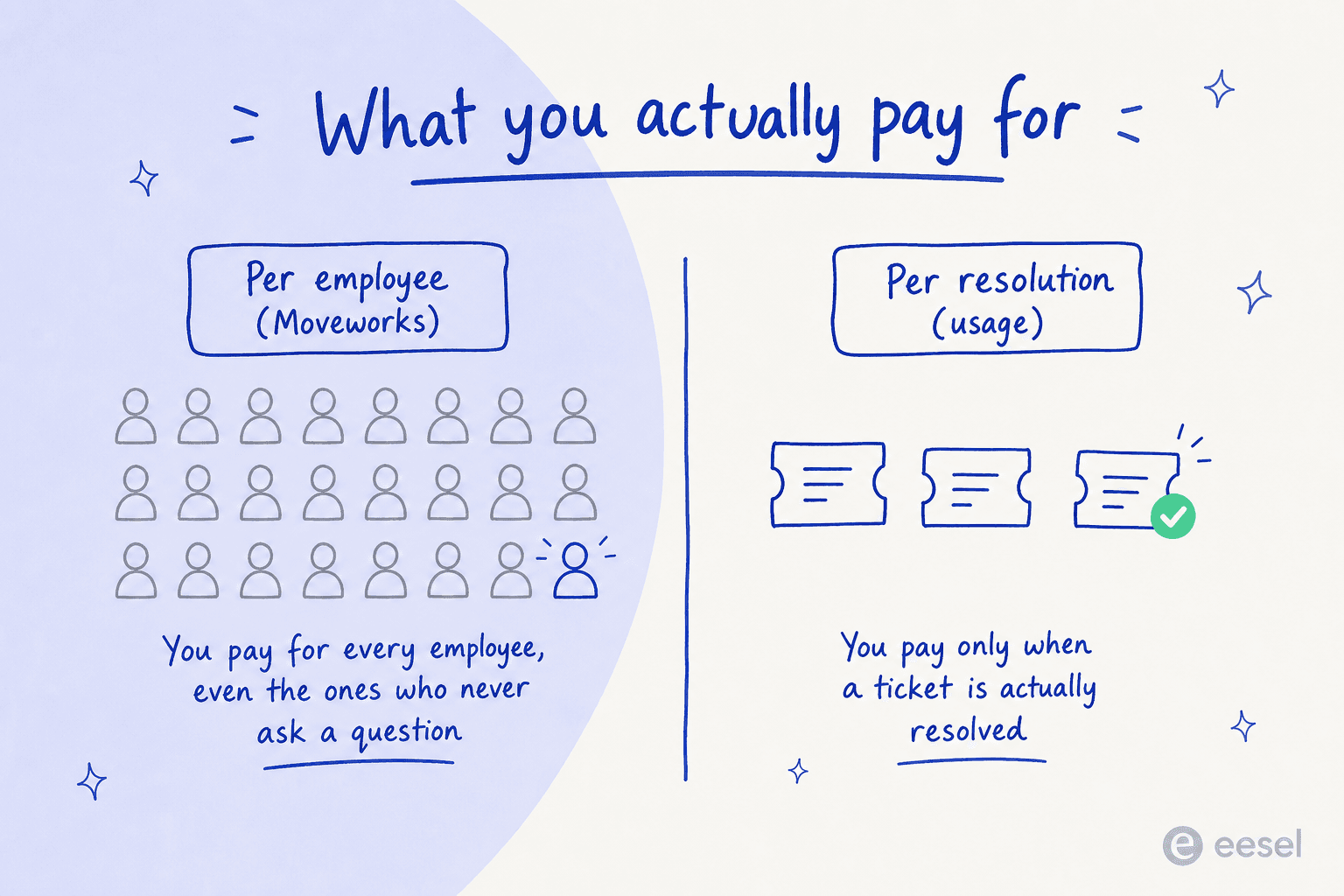
This is the fork in the road for anyone comparing Moveworks against a modern support-AI tool. Volume-based pricing, where the price follows the tickets the AI works on, ties the bill to support demand. Headcount pricing ties the bill to how many people you employ. For a fast-growing company, headcount pricing means your AI invoice climbs every time you hire, whether or not support volume moved at all.
What you actually get for the money
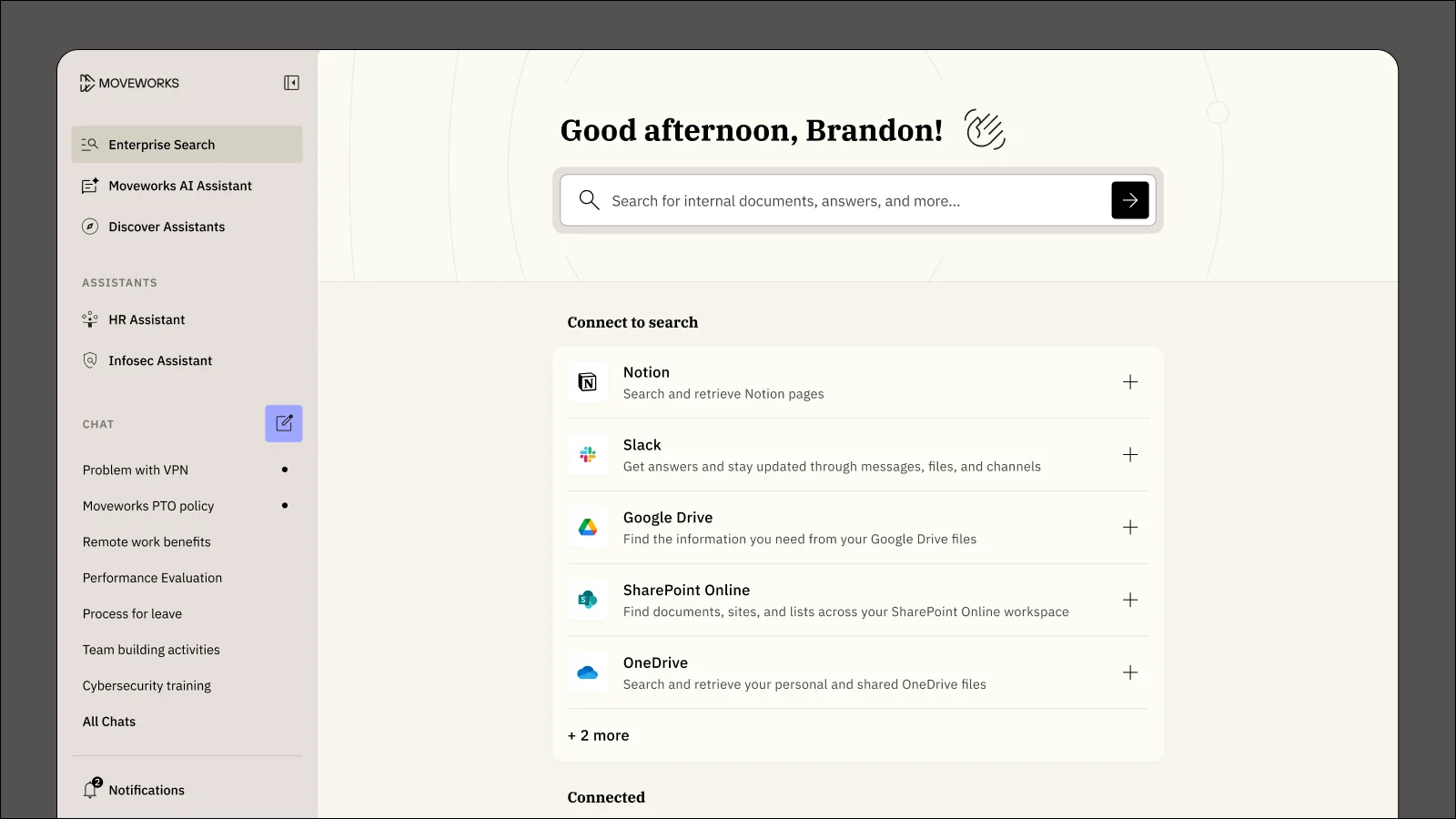
To be fair to Moveworks, it is a serious product, and the license buys a lot. At the center is the Moveworks Reasoning Engine, an agentic system that plans and executes multi-step requests across 100+ enterprise systems rather than just answering questions. Employees type a request in Slack or Microsoft Teams, and it can reset a password, provision access, or route an approval end to end.
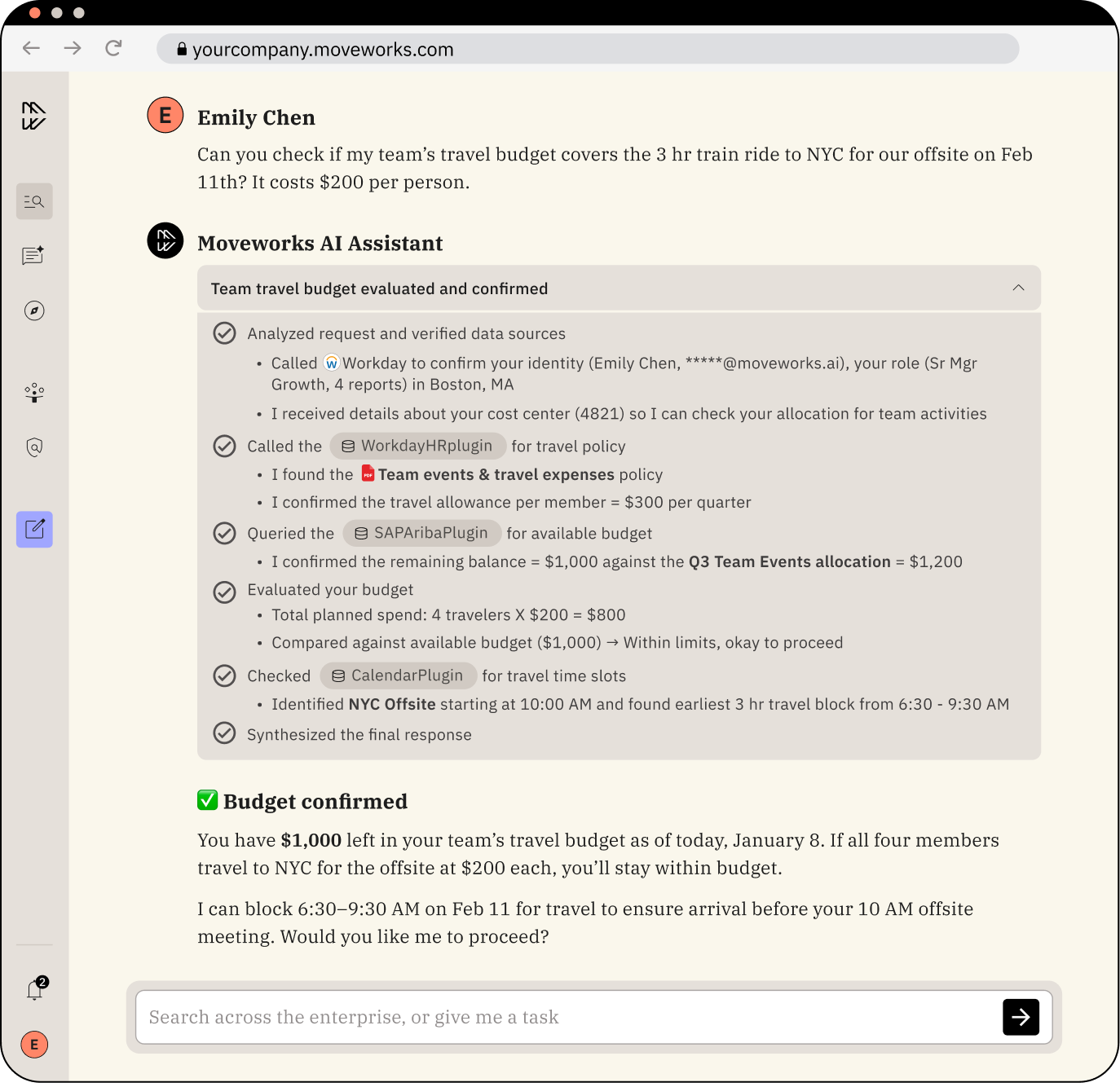
There is also an enterprise search layer that runs agentic retrieval across SharePoint, Confluence, Google Drive, and 50+ content sources, plus an AI agent builder and a marketplace of pre-built agents. The customer proof points are real too: Moveworks says Amadeus cut support-team calls 44% and CVS Health saw a 50% drop in live-agent chats within 30 days of launch. This is enterprise-grade AI for ITSM, not a lightweight chatbot.
The point of this section is not to knock the capability. It is to set up the real pricing question: you are buying a broad, powerful platform, and broad powerful platforms come with a floor and a setup bill. That is where the number gets interesting.
The one published number, and the negotiated reality
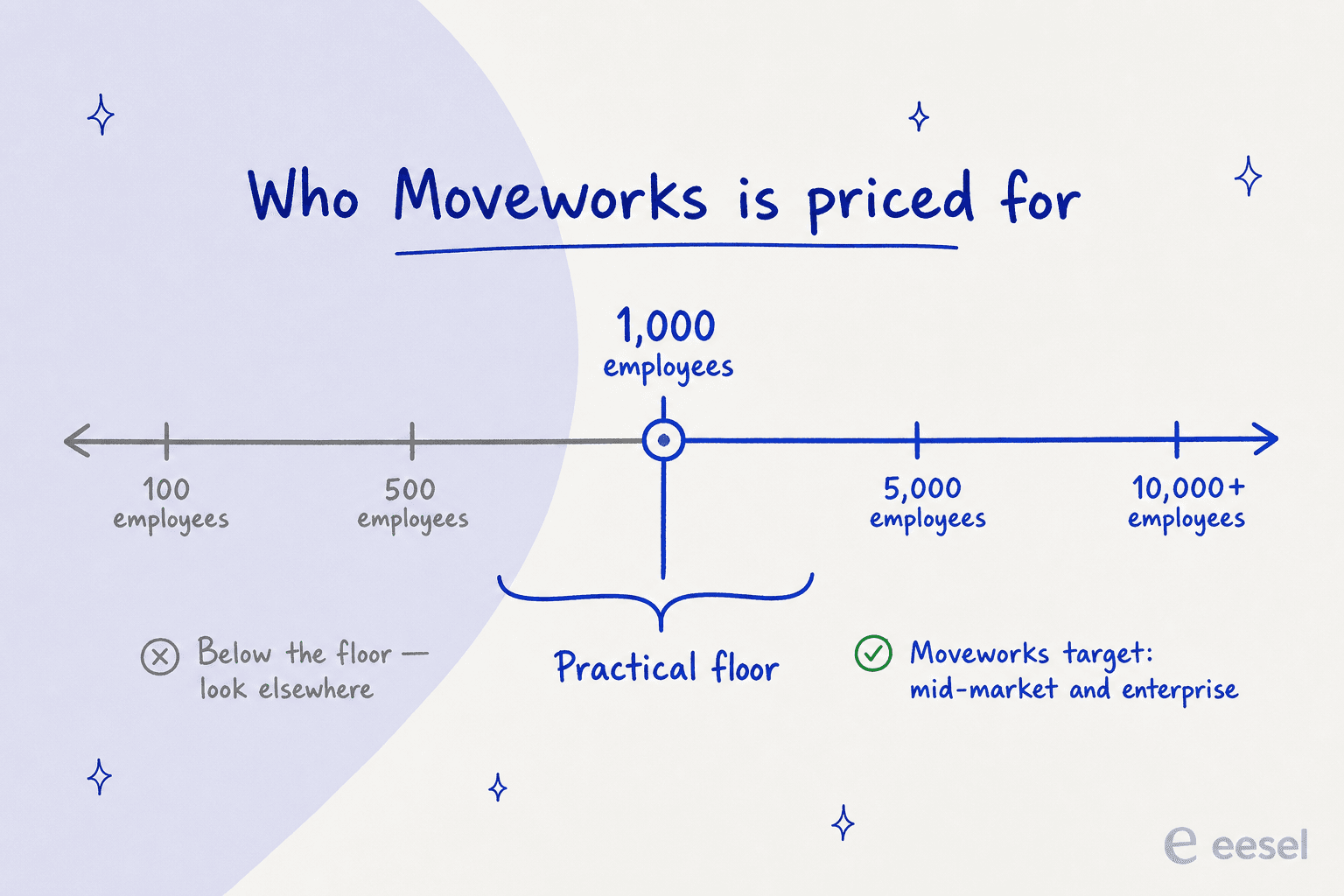
Start with the anchor: $150 per user per year on the AWS Marketplace listing. Multiply that across a 1,000-employee floor and you are already at roughly $150,000 a year for the license alone, before anything else.
In real deals the per-employee rate moves a lot. Larger headcounts and longer commitments push the effective per-employee rate down, while smaller bands, one-year terms, and services-heavy rollouts push the effective rate up well past the marketplace figure. Multi-year contracts are the norm and the main lever buyers pull to bring the rate down. The through-line: the more employees you commit and the longer you sign for, the lower your per-head rate, which is exactly why Moveworks is built for scale and not for small teams.
If you want the community's read on the range, this reviewer sums up the shape of it:
"Moveworks has enhanced our self-service chatbot capabilities, delivering exceptional value with minimal implementation effort... over 80% bot first rate and resolving over 40% of customer issues from the bot."

Worth noting that the reviewer above is a $10B+ enterprise already sitting on ServiceNow and SharePoint, which is the ideal-fit profile. Your mileage narrows fast the further you sit from that shape.
The costs that aren't on the quote
Here is the part that catches teams out. The software license is the bottom of the cost stack, not the whole thing. Moveworks is an enterprise deployment, so the implementation, services, and internal time around it are their own line items, and they are not small.
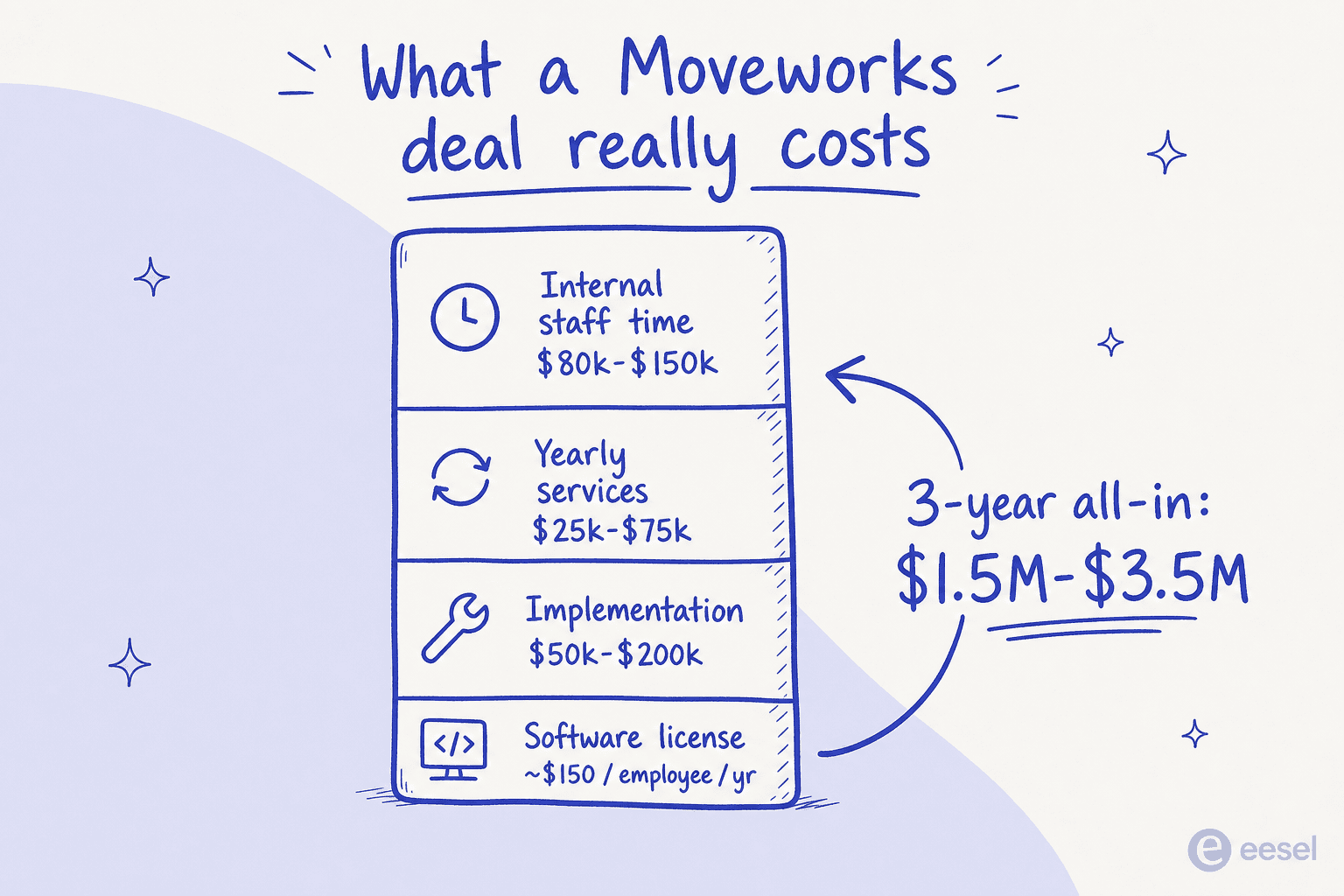
Implementation typically runs a six-figure line item over 8-16 weeks. On top of that there is ongoing optimization and services, the internal staff time to run the rollout and keep the knowledge base clean, change management, and a renewal uplift that commonly lands in the 7-15% per year band unless you negotiate a cap. Stack it all up and a 5,000-employee org can be looking at $1.5M-$3.5M all-in across three years.
None of that is unusual for enterprise software. But it is the difference between the price you hear in the first call and the price your finance team sees over the life of the contract, and it is exactly the number you should model before you sign. The AI agent cost math only works if you are honest about the total, not just the license.
Is Moveworks priced for you?
The fastest way to sanity-check whether Moveworks even fits your budget is to plug in your own numbers. This calculator uses the published $150/user/year AWS anchor for the license, then contrasts it with eesel AI's fixed monthly plans, priced by ticket and chat volume. It is an estimate from public figures, not a quote, but it gets you in the right ballpark.
The gap the calculator exposes is the whole ballgame. Because Moveworks scales with headcount and a volume-based tool scales with ticket volume, the two lines diverge hard the moment your employee count outruns your ticket count, which is true for almost every company.
The ServiceNow acquisition changes the pricing math
You cannot talk about Moveworks pricing in 2026 without talking about ServiceNow. ServiceNow announced its $2.85B acquisition of Moveworks in March 2025, and the deal closed in December 2025. Moveworks is now being folded into ServiceNow's Now Assist agentic portfolio, and that has direct pricing consequences: over time, expect packaging to drift toward ServiceNow-led bundles and SKUs rather than a standalone Moveworks contract.
Current customers are openly nervous about what that does to price and roadmap. This one is the quiet part said out loud:
"Thoughts on ServiceNow buying Moveworks? I'm a current customer of Moveworks and slightly nervous that quality and support will drop. Curious if others are feeling the same / debating moving to another vendor?"

There is a fair counterpoint, and I would be doing you a disservice not to include it:
"ServiceNow invests in what they purchase. It's likely to be fully incorporated and in the release cycles... They are not a company to purchase a company and then bury it or not invest in it."
Both can be true. ServiceNow may well keep investing, and the pricing may still get harder to unbundle from a broader ServiceNow commitment. For a buyer signing a multi-year deal today, the practical takeaway is that you are pricing a ServiceNow roadmap decision, not just a Moveworks product, which is why plenty of teams are now weighing Moveworks alternatives before they commit.
What buyers say about paying for Moveworks
Beyond the acquisition, two themes come up again and again when people talk about the cost being worth it. The first is that the value is real for the right-sized, well-integrated customer. The second is that it is a poor fit outside that profile, and that autonomous replies can still miss on complex tickets, which stings more when you are paying enterprise rates.
"Is this why we put in a ticket for network outage at a site and we got a bullet point reply that told us to 'reset your modem', 'restart the network', and 'limit streaming services'?... No, the massive site does not have a modem and it's not a working method to restart the network."
That is the risk you are underwriting with headcount pricing: you pay for the whole company up front, and the payback depends on the AI reliably resolving the messy tickets, not just the password resets. It is also exactly why I would push any team to test an AI against their own historical tickets before signing, so the resolution rate is a measured number and not a slide.
Try eesel AI
If you read this far and thought "I like the idea, but I have fewer than a thousand employees, or I just want to see a number without a sales call," that is exactly the gap eesel AI fills.
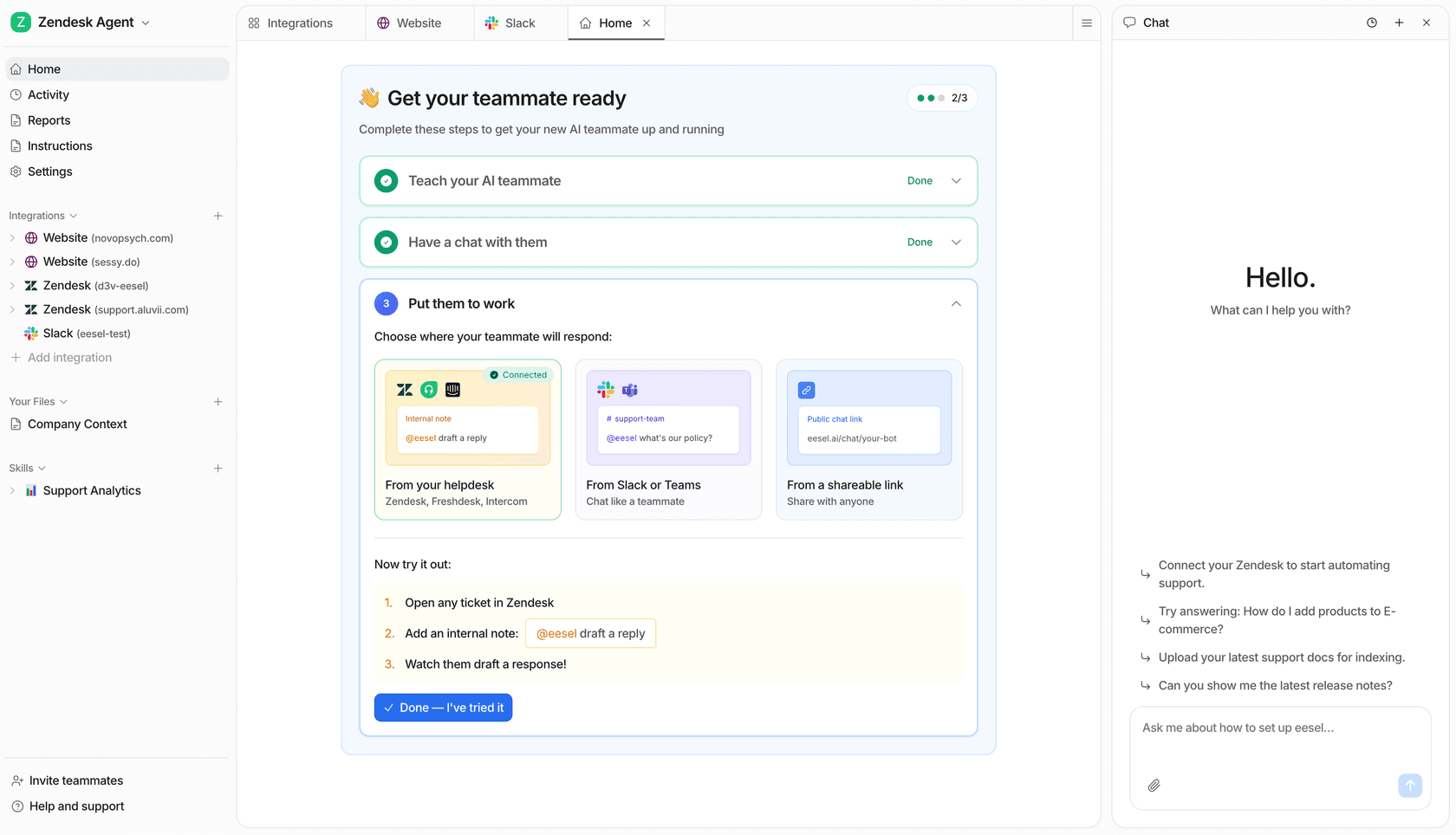
The pricing model is the opposite of Moveworks: one fixed monthly price from $299 for 500 credits (1 credit per ticket or chat, however long), no per-seat fee, no platform fee, and no annual minimum, so a growing headcount does not inflate your bill. It plugs into your existing helpdesk, Slack, or Teams in minutes rather than an 8-16 week implementation, learns from your past tickets, and you can simulate it against your own history before it ever answers a live customer. And you can start for free with 100 credits, without booking a demo. It is not an enterprise ITSM replacement for a 20,000-person org, but for most teams weighing Moveworks against the real cost, it is the number you can actually see.
Frequently Asked Questions
How much does Moveworks cost?
Is Moveworks priced per seat or per ticket?
Does Moveworks have a free trial or free plan?
What is the minimum company size for Moveworks pricing?
How does the ServiceNow acquisition affect Moveworks pricing?


Article by
Rama Adi
Rama is a software engineer at eesel AI with two years of experience writing about B2B SaaS, AI tools, and customer support technology. Based in Bali, Indonesia, he brings a developer's perspective to product comparisons — cutting through marketing copy to what the integrations and APIs actually do.