
Disclosure: This article is published by eesel AI, a competitor of Ada. We encourage you to read Ada's own materials for their perspective.
Picking the right AI automation tool for your support team means weighing a crowded field of options, each promising lower costs and happier customers. Ada has been one of the most prominent names in enterprise AI customer service since 2016, with customers across 85+ countries.
But is Ada actually the right choice for you? This Ada CX review cuts through the marketing to cover its features, pricing structure, real user feedback, and the limitations worth knowing before you commit. The goal is a straight assessment so you can decide whether Ada is what you need, or whether a more modern, flexible tool makes more sense.
What is Ada CX?
At its core, Ada is an enterprise AI customer experience platform built to automate customer service conversations at scale. The company describes itself as "AI-first," meaning its entire system is built around an AI agent rather than a traditional helpdesk with AI features added afterward.
Founded in 2016 and headquartered in Toronto, Ada reports 550+ AI agents deployed globally, 6.4 billion interactions powered, and customers including Monday.com, Pinterest, Square, and Cebu Pacific.
It is worth knowing upfront: Ada is built for large, enterprise-level companies. Its demo page used to say so outright, naming a floor of "at least 300,000 annual customer service conversations." That line is gone as of August 2026, and the live form's lowest volume bucket now starts at zero. The enterprise focus still shapes everything about the platform, from its features to its price tag.
Ada CX features
Ada has built a substantial feature set around its core AI engine. Here is what each piece actually does.
The Unified Reasoning Engine
The engine driving Ada's AI is the Unified Reasoning Engine, launched in February 2026. Ada describes it as a patent-pending, single AI brain that operates consistently across all customer service channels. The architecture is dual-reasoning: immediate responses handle fast, simple queries in real time, while background processing runs complex, multi-step tasks without blocking the customer conversation.
Ada's Chief Product and Technology Officer, Mike Gozzo, described the release this way: "Customers will see a significant step improvement across the board with this new engine, allowing them to realize a more accurate and deeper resolution rate, even for the most complex inquiries."
The Reasoning Engine also powers Ada's multilingual coverage, with consistent behavior maintained across all supported languages and channels. Ada's own figures differ by surface: 42 languages natively on voice, and knowledge in 60.
Channel support and integrations
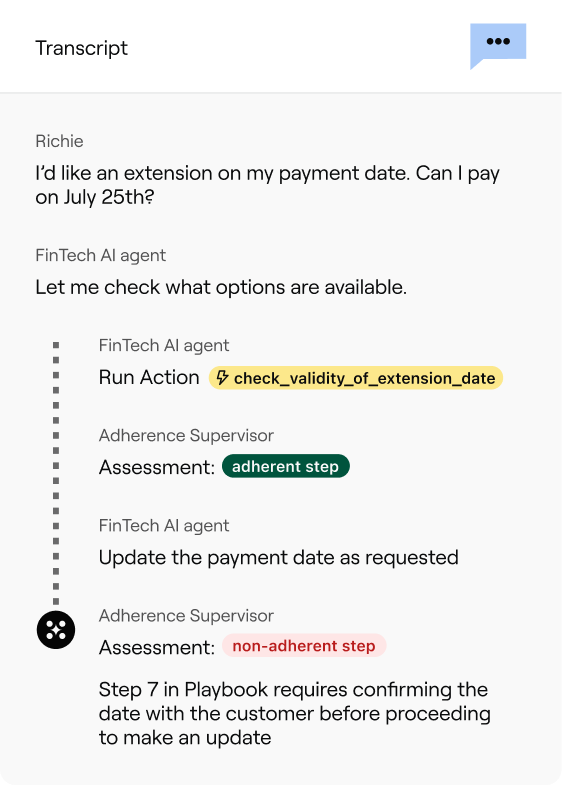
Ada's ACX Platform deploys AI agents across eight or more channels: voice, web chat, email, WhatsApp, SMS, Facebook Messenger, Instagram DMs, in-app messaging, and custom API integrations. Its integrations directory lists 25 business systems, including Zendesk, Salesforce, ServiceNow, and Gorgias; Ada publishes no total count of its own.
One real limitation worth knowing: Ada's documented knowledge inputs are a connected knowledge base, a crawl of your public website, articles you author inside Ada, and anything you push through its Knowledge API. There is no first-party connector for Confluence, Notion, SharePoint or Google Docs, and no document upload, so knowledge sitting in those places has to be moved into a connected source or pushed in through the API first.
Playbooks
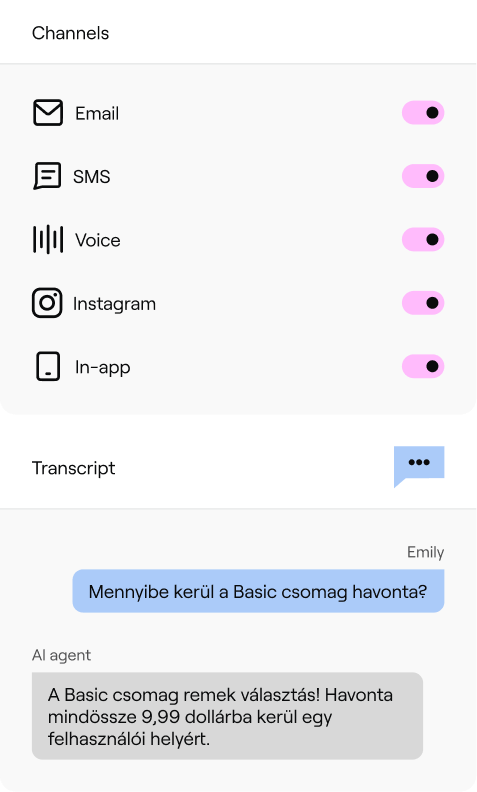
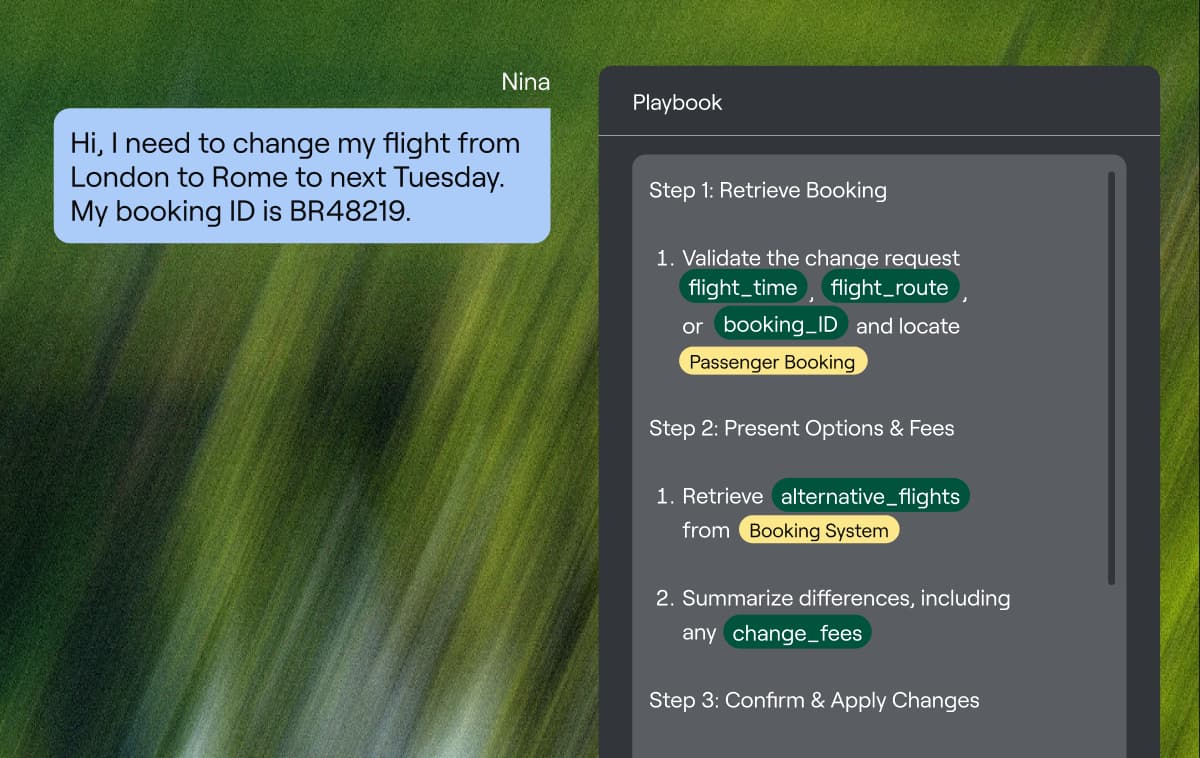
Playbooks are multi-step structured workflows that let Ada's agents execute service operations using real-time data, without hardcoded scripting. A typical Playbook might walk a customer through an address change: retrieve the order, verify it has not shipped yet, collect the new address, update the record, and confirm the change. As of the February 2026 Reasoning Engine launch, Playbooks are available across voice channels as well as chat and messaging.
Coaching
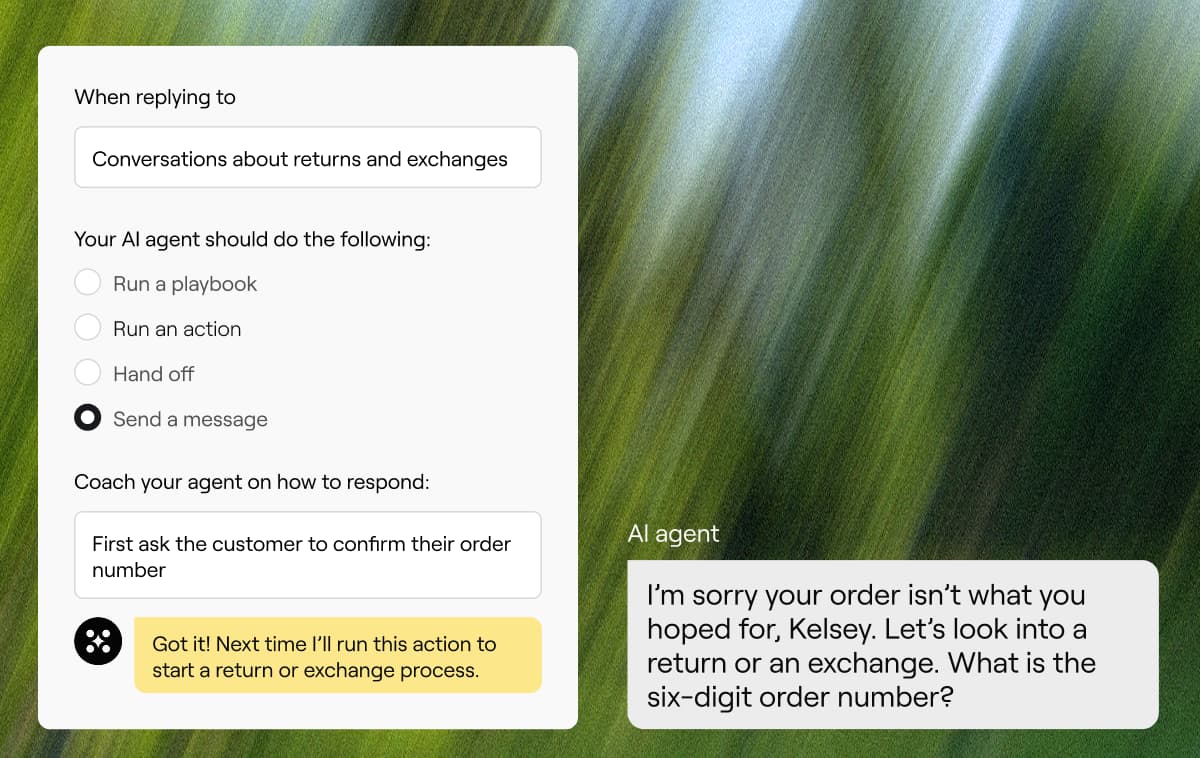
Ada's Coaching feature creates a continuous improvement loop. After each conversation, feedback on whether a workflow succeeded feeds back into the system, and refinements apply automatically to future interactions. G2 reviewers consistently flag this as one of the more useful admin-side features, noting that the platform makes it easy to "quickly see the results of updates" after each coaching session.
Ada CX pricing
Ada's pricing is not publicly disclosed. The company's pricing page does not list any tiers, plan names, or figures, and a custom quote from their sales team is required. Ada is open about how it meters, though: billing is conversation-based by default and resolution-based by exception, and its own pricing explainer models the two side by side at $0.35 per conversation against $1.50 per resolution.
From what operators have shared publicly, large deployments land in the six figures a year. One user in a Reddit thread comparing Ada, Ultimate AI, and Sunco said a company they worked for paid "~300k+ for ADA, it's expensive af." In follow-up replies the same person put that deployment at roughly 150,000 tickets a month, with a 70 to 75% deflection rate.
This makes budgeting difficult without first committing to a sales process, and makes it hard to compare Ada to competitors that publish their pricing upfront.
By contrast, eesel AI keeps its pricing public, with one fixed monthly price (from $299/month for 500 credits, 1 credit per ticket or chat) rather than opaque per-resolution fees. Month-to-month options are available from the start.
What do customers really think?
Customer feedback for Ada splits sharply depending on who you ask. G2, where support operations managers and platform builders tend to leave reviews, rates Ada 4.6 out of 5 across 173 reviews, 76% of them five-star. Trustpilot, which reflects end-user experiences with Ada-powered chatbots, sits at 1.8 out of 5 from a much thinner pool of 20 reviews, only two of which landed in the past year.
On the positive side, G2 reviewers note Ada's clean builder interface for creating conversation flows, strong Zendesk Help Center sync (updates in Zendesk populate Ada automatically), and responsive dedicated account managers for enterprise customers.
The negative feedback surfaces a consistent pattern. G2 reviewers flag pricing opacity as a major friction point, with one review putting it plainly: "Pricing is a big one." The gap between the two scores is largely an audience gap: Ada optimizes well for automation and admin usability, while the Trustpilot pool is mostly consumers who met an Ada bot on someone else's site. Their most recent substantive complaint is context loss between turns, with one reviewer writing that it "repeatedly asks you to resubmit the same information over and over."
Where Ada CX falls short
After digging through the details, four limitations stand out consistently for anyone considering Ada:
-
Pricing is not publicly disclosed. You cannot get a figure without going through Ada's sales team, and the one large deployment an operator has described publicly ran past $300k. Because the meter is per conversation or per resolution, costs scale with volume, which makes budgeting harder to forecast than a per-seat plan.
-
Setup is a project, not a signup. This is not a self-serve tool. Ada publishes no time-to-launch figure; one G2 reviewer put phase 1 at "roughly three weeks," and Ada's implementation team is part of the rollout rather than something you do alone.
-
Knowledge has to arrive as articles. Ada ingests connected knowledge bases, a crawl of your public website, articles authored inside Ada, and Knowledge API pushes. There is no first-party connector for internal wikis like Confluence or shared Google Docs, no document upload, and past support tickets are not a knowledge input. For teams whose knowledge is distributed across many sources, that is extra plumbing.
-
No self-serve trial. There is no free tier and no trial period, so evaluation before signing runs through Ada's sales process and a custom demo. Ada does ship Simulations once you are on the platform, but the test cases are ones you write by hand rather than a replay of your own ticket history.
A modern alternative: eesel AI
If Ada's structure does not fit your team's needs, tools like eesel AI were built to address these specific gaps directly.
Where Ada requires a demo and typically takes months to deploy, eesel AI is truly self-serve. You can sign up, connect your helpdesk in a click, and have a working AI agent running in minutes, without ever talking to a salesperson.
Where Ada requires a custom quote, eesel AI's pricing is public, with straightforward plans and month-to-month options available from the start.
Where Ada's AI is limited to formal help centers, eesel AI learns from a wide range of sources: past tickets, internal wikis like Confluence and Google Docs, and dozens of other integrations. This means answers draw on your team's actual institutional knowledge, not just what made it into a polished article.
Before you go live, eesel AI's simulation mode lets you test the AI against thousands of your own historical tickets, so you get a real performance prediction and can tune the agent before any customer interaction.
| Feature | Ada CX | eesel AI |
|---|---|---|
| Setup | Sales-led, implementation team involved | Self-serve, ready in minutes |
| Pricing | Not publicly disclosed, custom quote required | Transparent, public plans |
| Knowledge Sources | Connected KBs, website crawl, API pushes | Tickets, wikis, docs, and more |
| Trial | No self-serve trial | Free simulation on your own data |
Is Ada CX the right choice for you?
Ada CX might work well for a large enterprise with substantial conversation volumes, a significant budget, and the bandwidth for a guided multi-week deployment. If you need to automate a high volume of straightforward, repetitive questions and your team has the resources for an extended rollout, it can deliver on its resolution-rate claims.
For most teams, though, the combination of undisclosed pricing, a sales-led rollout, and knowledge that has to be reshaped into articles first creates real barriers. Before committing to a multi-year contract, it is worth checking out more modern and transparent tools that give you more control and deliver results much faster.
Get started with a smarter AI today
Stop guessing whether an AI tool will actually work for your team. With eesel AI, you can see exactly how it will perform on your real customer questions before you spend a dime.
Frequently asked questions
What are the typical costs associated with Ada CX, and what is its pricing model?
Ada's pricing is not publicly disclosed, so a custom quote from their sales team is required. Ada bills by conversation by default and by resolution as an exception, and its own pricing explainer models those at $0.35 per conversation against $1.50 per resolution. The one large deployment an operator has described publicly ran past $300k a year.
How complex is the implementation process for Ada CX?
Ada publishes no time-to-launch figure. One G2 reviewer put phase 1 at roughly three weeks, and Ada's implementation team is part of the rollout. There is no self-serve trial or free tier, which means buyers go through a sales process before evaluating the platform on their own data.
Can the Ada CX AI learn from all internal knowledge sources?
Ada's Reasoning Engine answers from ingested knowledge articles: connected knowledge bases, a crawl of your public website, articles authored in Ada, and Knowledge API pushes. Past support tickets and uploaded documents are not inputs, and there is no first-party connector for Confluence or Google Docs, so that content has to be moved into a connected source first.
What is the general sentiment from real users about their experience with Ada CX?
Feedback splits by audience. G2, where support operations managers and platform builders leave reviews, rates Ada 4.6 out of 5 across 173 reviews. Trustpilot, which reflects end users' direct chatbot experiences, sits at 1.8 out of 5 from 20 reviews, with recurring complaints about context loss between conversation turns.
Is Ada CX suitable for businesses of all sizes?
Ada is built for large enterprises. Its demo page used to name a floor of at least 300,000 annual customer service conversations; that line was removed in 2026, though the sales-led, quote-only motion still puts Ada out of reach for most small and mid-size businesses. eesel AI offers transparent plans built for teams of any size.


Article by
Kurnia Kharisma
Kurnia is a software engineer and writer at eesel AI with two years of SEO experience, writing about AI tools, helpdesk software, and customer support. He pairs a developer's understanding of how these products are built with search-driven research into what actually ranks and resonates with the people searching for them.