

The AI world moves at a dizzying speed. One minute you've heard of a new model, and the next, it feels like old news. For anyone trying to actually build something with AI, picking the right large language model (LLM) can feel less like a strategic choice and more like trying to catch a speeding train.
When you need to build something real, you have to cut through the hype and figure out what actually works. Two of the heaviest hitters right now are Google's Gemini and Mistral AI. They come from very different places and have different ideas about how to build powerful AI. This guide will walk you through the Gemini vs Mistral debate, comparing how they perform, what they cost, and how they stack up for day-to-day business use.
Gemini vs Mistral: What are Google Gemini and Mistral AI?
Before we get into the weeds, let's get a quick feel for these two contenders. They aren't just interchangeable AI brains; they have different backgrounds and different goals.
Google Gemini: The powerhouse
Gemini is Google's baby, and it has the full backing of one of the world's biggest tech companies. It’s a multimodal model, which is just a technical way of saying it was designed from the start to understand text, code, images, and video all at once. You’ll find Gemini powering the Google AI Pro and Ultra plans and woven into the Google ecosystem, from Workspace to the enterprise-level Vertex AI platform, which Google has since folded into its Gemini Enterprise Agent Platform.
The main draw for Gemini is its sheer scale. It has access to Google’s enormous datasets and shows impressive skill at tasks that require complex, multi-step thinking. It's built to be a do-it-all AI that can handle pretty much whatever you throw at it.
Mistral AI: The challenger
On the other side, we have Mistral AI, a Paris-based company that shot to fame by focusing on efficiency and open-source models. While they do offer paid commercial models, they're well-known for their "open-weight" models such as Mistral Large 3 and Small 4. (Mistral's docs now list Mistral 7B and Mixtral 8x7B among deprecated and retired models.) Open weights mean they release the core model files, letting developers tweak, fine-tune, and run the models on their own servers.
Mistral has built a solid reputation among developers for making models that punch way above their weight class. They deliver strong performance without demanding a warehouse full of GPUs. Their answers are often described as concise and direct, which makes them a favorite for business workflows where you just need a reliable answer, no extra chatter needed.
Gemini vs Mistral: Performance and capabilities
So, how do they actually do? The "best" model really comes down to what you’re trying to accomplish. An AI that’s brilliant at writing a creative marketing email might not be the right fit for generating clean, production-ready code.
Gemini vs Mistral: Reasoning, accuracy, and "the fluff factor"
Spend five minutes on any developer forum, and you'll spot a common theme: people talk a lot about the vibe of the responses. Users often say that Mistral models get straight to the point. They give you an answer without the conversational warm-ups like "That's a great question!" or other filler that can sometimes bog down responses from bigger models. For a lot of business uses, this direct, "no-fluff" style feels more predictable and trustworthy.
Of course, any model can "hallucinate" or make things up, but Mistral's conciseness can make it feel more dependable for straightforward tasks. Gemini, on the other hand, usually gives more detailed, comprehensive answers. This can be great for brainstorming or when you need a deep dive into a tricky subject, but it can also mean you have to read through more text to find the core answer.
It's also worth remembering that performance can change drastically depending on the task. For example, one head-to-head comparison on OCR accuracy found that Gemini Flash 2.0 was quite a bit more accurate than Mistral's OCR model across a varied set of documents. That test is dated: Google has since shut down Gemini 2.0 Flash, and Mistral now lists OCR 3 as a featured model, so rerun any OCR comparison on current versions. It’s a good reminder that the benchmarks released by the companies themselves don't always reflect real-world performance. You have to test it for yourself.
Task-specific strengths
Let's see how these models fare with a few common business jobs.
-
Coding: Both models are pretty handy for generating code. However, you'll find many developers leaning toward Mistral for production scenarios. Its output is often cleaner and more consistent, which makes it easier to plug into automated workflows. Mistral also has specialized coding models such as Codestral and Devstral 2.
-
Writing & Creativity: This is where Gemini often shines. Its conversational and thorough style is well-suited for creative writing, brainstorming marketing copy, and generating text that feels human. Mistral's default tone tends to be more professional and factual, which is perfect for reports or summaries but maybe not for your next big ad campaign.
-
Document & Data Analysis: Gemini has a huge leg up here because of its massive context window. The context window is basically the amount of information the model can keep in its short-term memory at one time. With Gemini 3.8 Flash able to take 1 million input tokens (roughly 750,000 words), it can chew through incredibly long documents, entire codebases, or hours of video. Mistral's flagship Medium 3.5 has a 256k window, which is large but about a quarter of that.
A head-to-head comparison table
Here’s a quick rundown of their qualitative differences.
| Feature | Google Gemini | Mistral AI | Winner |
|---|---|---|---|
| Response Style | More conversational and comprehensive, can be lengthy. | Concise, direct, and to-the-point; less "fluff". | Depends on Use Case |
| Coding | Strong, general-purpose coding capabilities. | Highly regarded for clean, stable code generation; specialized models. | Mistral (for production) |
| Creative Tasks | Often preferred for brainstorming and human-like writing. | More factual and professional tone by default. | Gemini |
| Document Analysis | Excellent due to massive context window (1M input tokens on Gemini 3.8 Flash). | Smaller context window (256K on Medium 3.5). | Gemini |
| Perceived Trust | Can sometimes feel overly cautious or refuse political queries. | Directness is often perceived as more stable and reliable for business. | Mistral (for business) |
Gemini vs Mistral: Technical specifications and features
For anyone actually building with these models, the technical details are where the rubber meets the road. Here’s how they compare.
Model families and variants
Both Google and Mistral offer a menu of models designed for different needs, letting you balance performance, speed, and cost.
-
Gemini: The Gemini 3 family now runs from Flash-Lite models up to Gemini 3.1 Pro (preview). Gemini 3.8 Flash is the current speed-and-efficiency pick, and Gemini 3.1 Pro is the heavier option.
-
Mistral: Their lineup has more tiers:
- Open-weight models: Mistral Large 3 (Apache 2.0), Mistral Medium 3.5 and Mistral Small 4 are go-to choices for developers who want to host the models themselves or fine-tune them with their own data.
- Reasoning: Reasoning is built into Mistral Small 4, which Mistral describes as a hybrid of instruct, reasoning and coding.
- Specialist models: They also ship models like Codestral and Devstral 2 for code, plus OCR 3 and Voxtral for documents and audio.
Gemini vs Mistral: Context window and knowledge cutoff
The context window is one of the biggest technical differences between them. As we mentioned, Gemini 3.8 Flash's 1 million-token input window is a big deal for anyone working with large volumes of information. Mistral Medium 3.5's 256k window is still very useful, but it's a quarter of the size.
Another thing to keep in mind is the knowledge cutoff, which is the "use by" date on the model's training data. Some of Mistral's models have a slightly older cutoff, but this is becoming less of a problem. Both companies now offer models that can perform live web searches to get you the latest information.
API and developer ecosystems
Both platforms provide a pretty smooth experience for developers. Google's Vertex AI is a massive, enterprise-ready platform with a huge toolbox, lots of integrations, and detailed documentation for building with Gemini.
Mistral's developer platform (the pricing page now calls it Studio) gets a lot of praise for being simple and easy to work with, which fits their developer-first attitude. It's designed to be simple to get started with so you can get up and running fast.
Gemini vs Mistral: Pricing and business application
At the end of the day, the decision often boils down to money and business value. Let's look at how their pricing stacks up and how you can actually use these models in your business without hiring a whole new engineering team.
A breakdown of pricing models
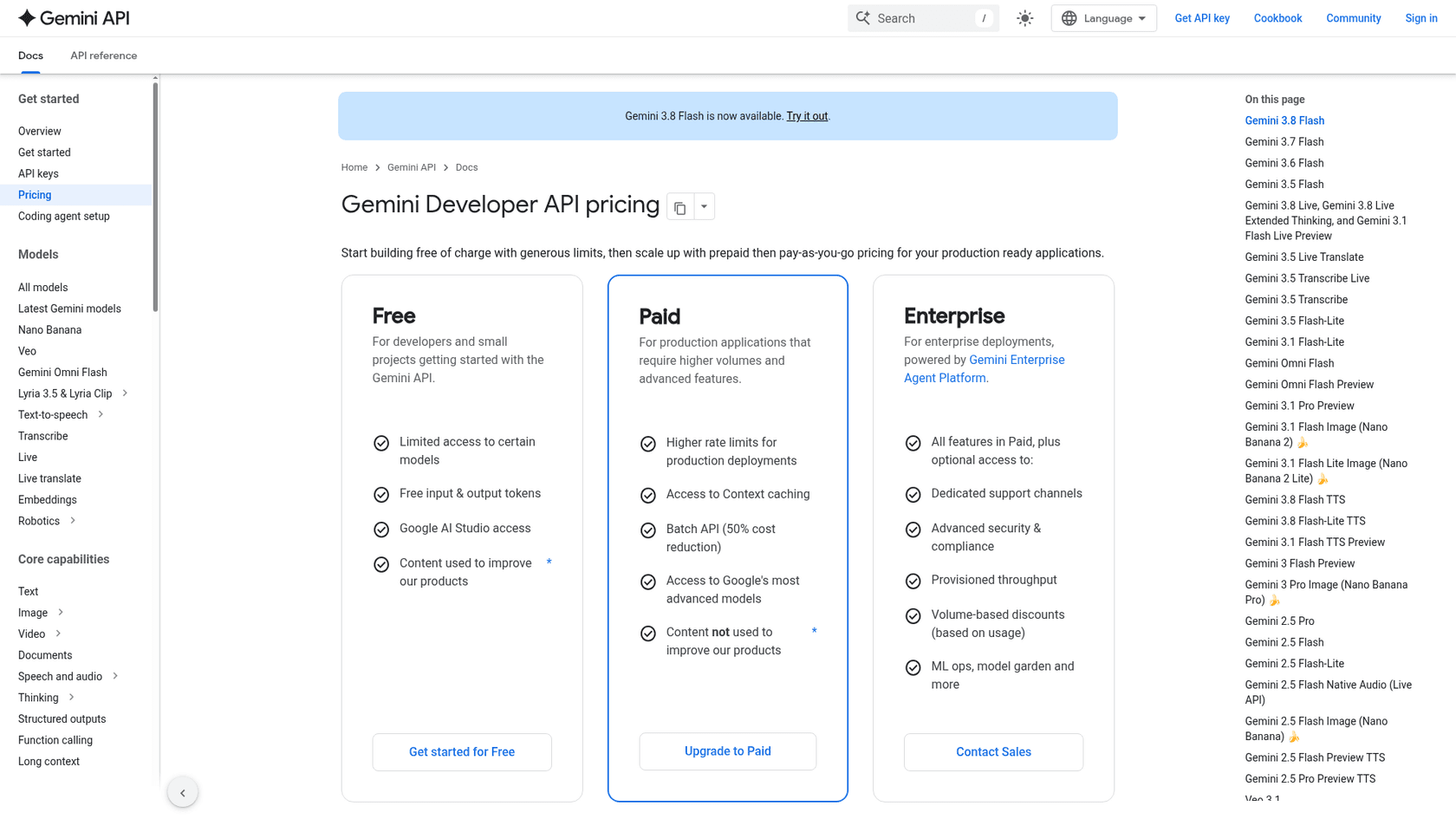
Both companies mainly use a pay-per-token model for their APIs. You get charged for the amount of text you send to the model (input) and the amount of text the model gives back (output).
- Gemini (Gemini API): Google's pricing is pretty competitive, especially for its speedy Flash model. The 3.8 Flash rate is a launch price that doubles on January 1, 2027.
Source: Gemini API pricing, standard tier, checked October 2026
| Model | Input Price / 1M tokens | Output Price / 1M tokens |
|---|---|---|
| Gemini 3.1 Pro (preview, prompts up to 200k) | $2.00 | $12.00 |
| Gemini 3.8 Flash (through Dec 31, 2026) | $0.75 | $3.75 |
- Mistral: Mistral's API pricing is also competitive, and their smaller, efficient models are particularly budget-friendly.
Source: Mistral AI Website, checked October 2026
| Model | Input Price / 1M tokens | Output Price / 1M tokens |
|---|---|---|
| Mistral Medium 3.5 | $1.50 | $7.50 |
| Mistral Large 3 | $0.50 | $1.50 |
| Mistral Small 4 | $0.15 | $0.60 |
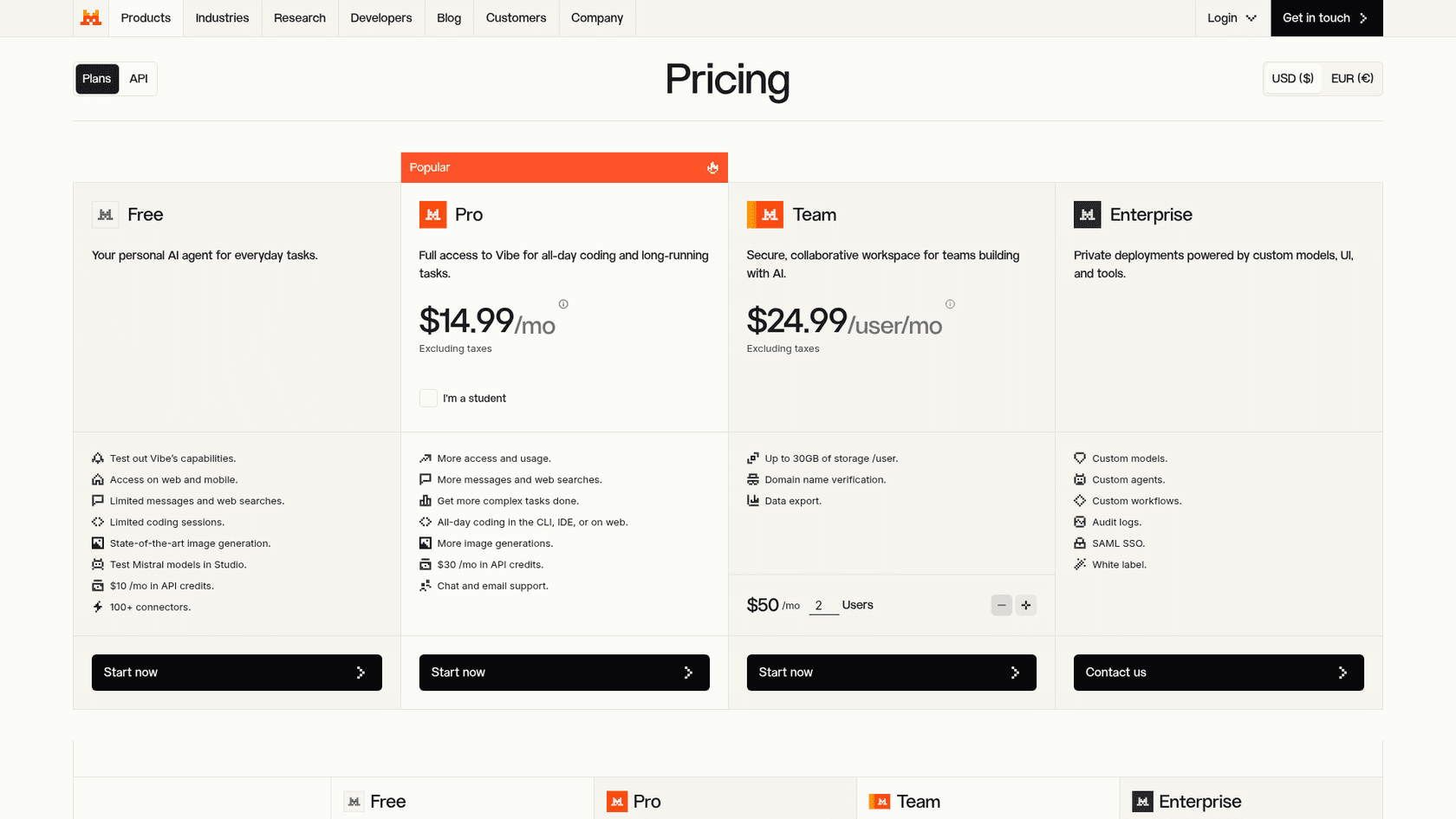
Mistral also sells chat plans under the Vibe name (the successor to Le Chat): Pro is $14.99 a month and Team is $24.99 per user per month. Those plans bundle API credits, $30 a month on Pro and $10 on the Free plan, so you can try the API without a separate bill.
Applying AI models in your business: The easy way
Picking a model and paying for API access is just step one. The real work is turning that raw power into a useful business tool, like a customer support agent that actually helps people. This usually involves a lot of complicated setup:
-
You have to connect the model to all of your company's knowledge, which might be spread across a help desk, internal wikis, Google Docs, and old conversations.
-
You need to build a workflow engine that knows when to escalate a ticket, how to tag it correctly, or when to do custom things like look up an order status.
-
You need a safe way to test everything on your own data before you ever let it talk to a real customer.
That's a ton of heavy lifting, and it's exactly the problem a platform like eesel AI is built to solve. Instead of you spending months building all this plumbing from scratch, eesel AI gives you a self-serve solution that does the hard work for you. It acts as an intelligent layer on top of powerful models from Google and Mistral, making them useful for your business right out of the box.
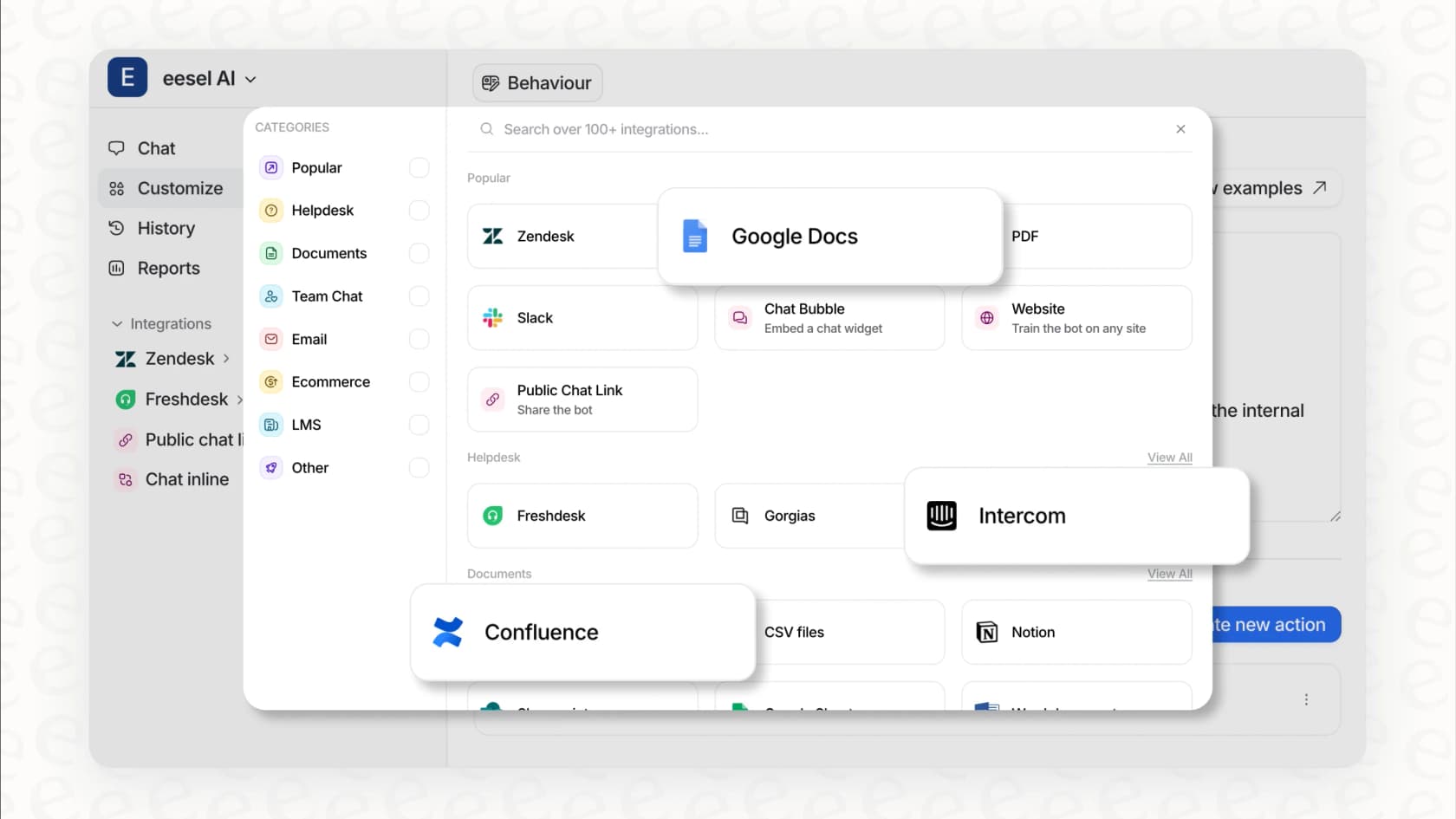
- Instant knowledge unification: eesel AI connects to all your tools with one-click integrations for platforms like Zendesk and Confluence. It learns from your help center, your documents, and even your past support tickets to get up to speed on your business from day one.
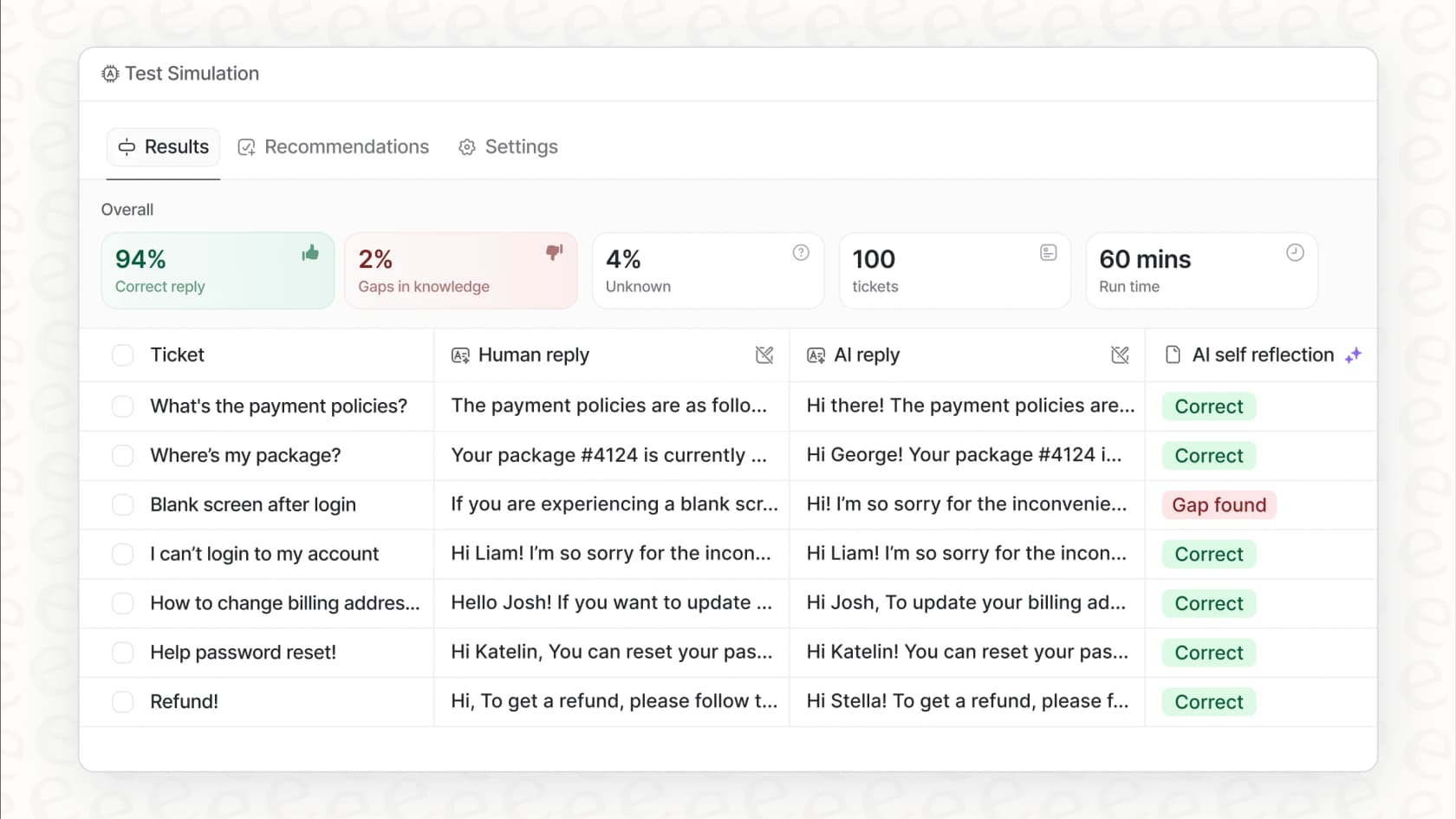
Making the right choice for your needs
So, what's the final verdict in the Gemini vs Mistral showdown? Honestly, there’s no single winner. It all boils down to what you need to get done. Here’s a quick cheat sheet:
-
Go with Gemini if your main job is analyzing huge documents or datasets, if you're already plugged into the Google Cloud ecosystem, or if you need top-notch creative writing and multimodal features.
-
Go with Mistral if you care most about efficiency, cost, and having the flexibility of open-source models you can host yourself. It's also probably the better pick if you need an AI that gives you concise, business-ready answers without the extra fluff.
The best model is always the one that fits the job you need to do. But remember, the model itself is just one piece of the puzzle. The real magic happens when you integrate and use it inside your workflows to solve actual business problems.
Ready to turn the power of these top-tier AI models into real business results? eesel AI gives you the complete platform to build, simulate, and launch AI agents for customer support and internal knowledge, all in a few clicks. Start your free trial today.
Frequently asked questions
For a business prioritizing efficiency and concise responses, which model typically performs better in a Gemini vs Mistral comparison?
Mistral models are often favored for their directness and "no-fluff" responses, making them ideal for business workflows needing reliable and concise answers without extra conversational filler.
When dealing with tasks that require processing extremely large documents or extensive data, which model has a significant advantage in the Gemini vs Mistral discussion?
Gemini has a clear edge here. Gemini 3.8 Flash takes 1 million input tokens through the API, while Mistral Medium 3.5 has a 256k context window, so Gemini can ingest roughly four times as much in one request.
From a cost perspective, which models are generally more budget-friendly for high-volume API usage when comparing Gemini vs Mistral?
Mistral's smaller models are cheap: Mistral Small 4 lists at $0.15 input and $0.60 output per 1M tokens. Gemini 3.8 Flash is $0.75 and $3.75 per 1M tokens through December 31, 2026, before it steps up to $1.50 and $7.50 on January 1, 2027.
If a developer is looking for open-weight models that can be self-hosted and fine-tuned, which option is more relevant in the Gemini vs Mistral landscape?
Mistral AI is well-known for its open-weight models. Today that means Mistral Large 3 (Apache 2.0), Medium 3.5 and Small 4, which give developers the flexibility to host, modify, and fine-tune them on their own servers.
For creative writing, brainstorming, or generating more human-like text, which model is often preferred in the Gemini vs Mistral debate?
Gemini often shines in creative tasks, offering a more conversational and thorough style suitable for marketing copy, brainstorming, and generating text that feels nuanced and human.
How does the integration process differ for businesses without dedicated AI engineering teams when choosing between Gemini vs Mistral?
While both offer APIs, integrating models like Gemini or Mistral effectively often requires significant development. Platforms like eesel AI simplify this by providing an intelligent layer to unify knowledge and launch AI agents quickly, regardless of the underlying model.