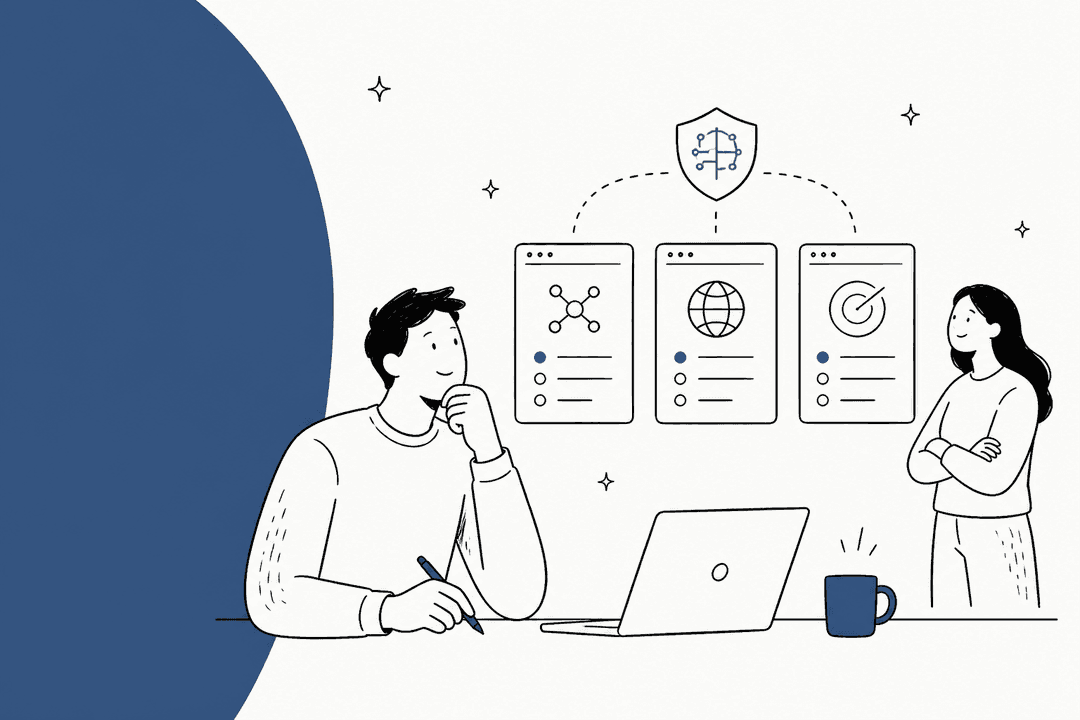


If you're trying to figure out enterprise-grade AI security, you’ve probably run into Robust Intelligence. It’s a serious platform for protecting AI models and making sure they run safely. But when you get to the budget part, you hit a wall: since Cisco folded it into AI Defense, finding clear Robust Intelligence pricing is next to impossible.
This missing price tag makes it tough for anyone to figure out if the tool is a good fit or how to even budget for it. In this guide, we'll unpack what Robust Intelligence actually does, walk through its features, explain why its pricing is kept under wraps, and help you decide if it’s what you need, or if a more straightforward, application-focused AI tool would make more sense.
What is Robust Intelligence?
Robust Intelligence is an AI risk management platform built to secure AI systems for big companies. Cisco acquired it in October 2024, and Cisco describes it as foundational to Cisco AI Defense and Cisco Foundation AI, so you now buy the technology under the Cisco name. Its main job is to eliminate security and safety holes in machine learning (ML) models, from the moment they're being built to when they're live in production.
This isn't a tool for automating customer support or answering employee questions. Think of it more like a security detail for the AI models themselves. The platform is built on two main parts, which Cisco now frames as model and application validation plus runtime protection:
-
AI Validation: This part automatically tests AI models before they go live. It uses a method called algorithmic red teaming to find weaknesses, biases, or security flaws that could be exploited later.
-
AI Protection: Once a model is deployed, this part acts as a real-time firewall. It sets up guardrails to block malicious inputs, stop data leaks, and make sure the model behaves the way it's supposed to.
Basically, Robust Intelligence is for organizations building their own complex AI applications that need to be secure, compliant, and trustworthy, especially in regulated fields like finance or healthcare. The people using it are typically AI developers, security engineers, and compliance officers, not your support managers or IT help desk teams.
A breakdown of features that influence Robust Intelligence pricing
To really get what you're paying for, it helps to look at the core features. These are highly technical and all about the integrity of the AI model, not so much its day-to-day use in a business workflow.
-
Algorithmic AI red teaming: This is a fancy way of saying it stress-tests AI models automatically. It throws thousands of tricky inputs at a model to see where it breaks, simulating attacks like prompt injections and jailbreaking to check the model's defenses. Cisco also credits Robust Intelligence with the industry's first AI firewall, and Gartner named it a 2024 Cool Vendor for AI Security.
-
Comprehensive vulnerability scanning: The platform digs through models, data, and related files to spot a whole range of risks. It groups them into four buckets:
- Abuse Failures: Looking for toxic language, bias, hate speech, or even malicious code generation.
- Privacy Failures: Scanning for potential leaks of personally identifiable information (PII).
- Integrity Failures: Catching things like hallucinations or when the AI just makes stuff up.
- Availability Failures: Protecting against attacks designed to crash or overwhelm the model.
-
Automated guardrail recommendations: After testing a model, the platform suggests specific security policies and guardrails. The AI Protection firewall then enforces these rules once the model is live.
-
Compliance and governance reporting: Robust Intelligence helps companies stick to major AI security standards like the OWASP Top 10 for LLM Applications, NIST AI RMF, and the EU AI Act. It can create reports and model cards automatically to make audits and governance less of a headache.
These features are absolutely critical if you're building a custom AI from scratch. But they solve a very different problem than the one most support and IT teams have. Those teams usually need a ready-to-go application that uses AI, not a toolkit to secure the AI's plumbing. A platform like eesel AI comes with security already baked in, so you can focus on automating your work, not validating algorithms.
The challenge: Finding Robust Intelligence pricing
Alright, here’s the part you came for. After digging through Cisco's pages, third-party sites like Capterra, and industry reports, the answer is simple: neither Robust Intelligence nor Cisco AI Defense publishes a price publicly. The robustintelligence.com site did not load when I checked on 2026-09-28.
The Cisco AI Defense page points everyone to a "Request a demo" button, which is pretty standard for expensive, enterprise-level software.
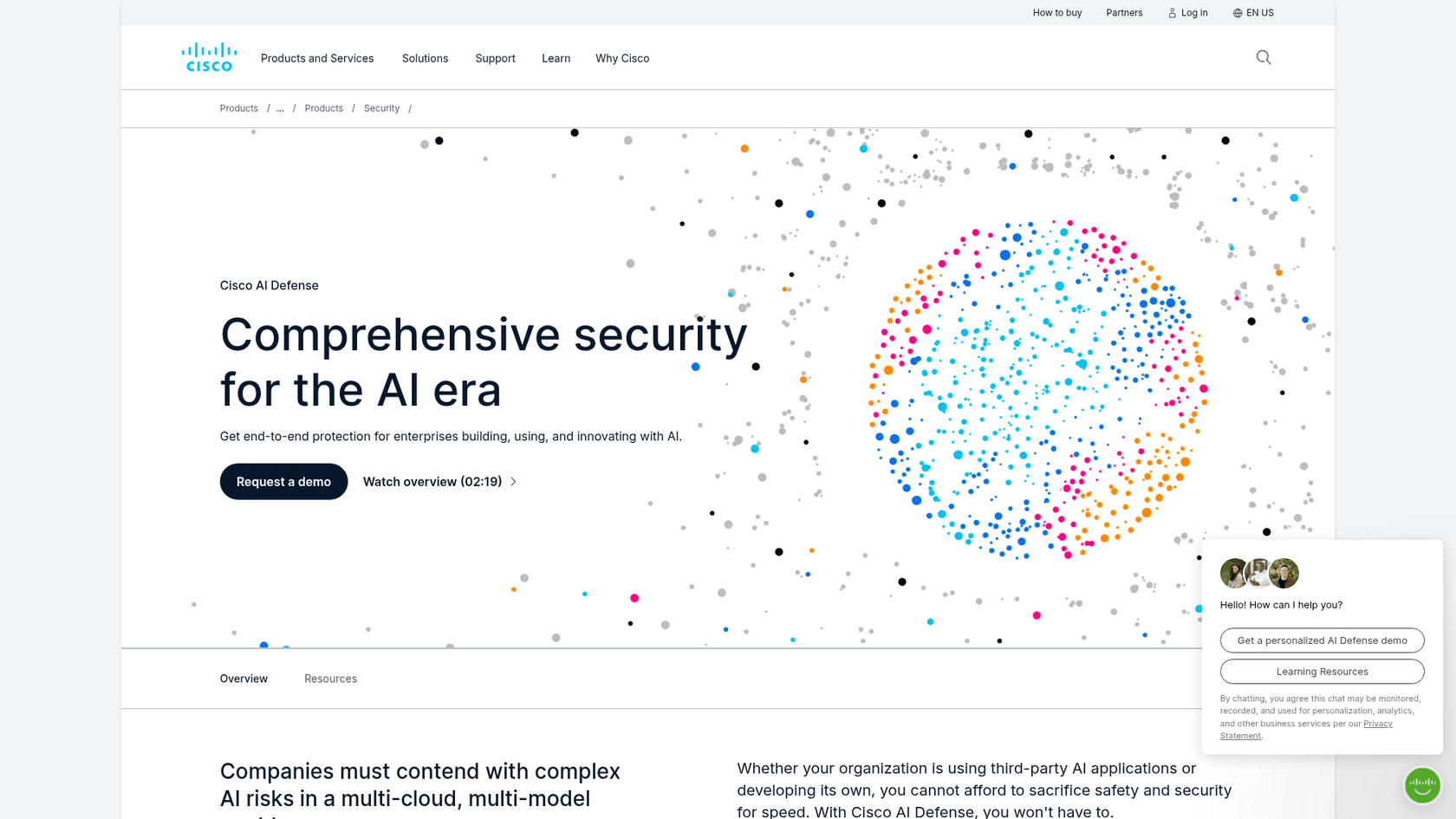
One exception: Cisco's AI Defense Explorer Edition lets AI builders red team their own agents and is listed as free to start, with 50+ attack strategies. I read it as a way to try the red teaming before the enterprise conversation, not as a price list for the full platform.
Why is Robust Intelligence pricing kept secret?
Companies usually keep their pricing quiet for a few common reasons:
-
It’s a consultative sale: The solution is complicated and needs a lot of discussion to figure out the scope, implementation, and final price. The cost likely changes based on how many models you have, how much you use them, and your specific compliance needs.
-
They price on value: The cost is based on the value the customer gets (like risk avoided or compliance met), which is going to be wildly different for a global bank versus a small tech startup.
-
There’s no self-serve option: You can't just sign up with a credit card and get started. It requires a guided onboarding process and integration with a company's existing machine learning operations.
This "call us for a price" model can be frustrating for buyers. You can't easily compare it to other tools, it's hard to budget for, and it usually means you're in for a long sales process before you even get to see the product.
| Pricing Factor | Robust Intelligence |
|---|---|
| Public Tiers | Not available |
| Pricing Model | Custom quote, enterprise-focused (sold as Cisco AI Defense) |
| Free Trial | No for the full platform; Explorer Edition red teaming is free to start |
| Setup Process | Requires demo and sales consultation |
This is a world away from modern, self-serve AI tools. For instance, eesel AI has completely transparent pricing right on its website. It is one fixed monthly price sized to volume: a free plan with 100 credits, then from $299/month for 500 credits, with 1 credit per ticket or chat however long it runs and no per-seat fee. You can sign up, connect your helpdesk, and start testing an AI agent in minutes without ever talking to a salesperson.
Is Robust Intelligence the right tool for you?
Robust Intelligence is a very specialized tool. Whether it’s a good fit for you boils down to the exact problem you’re trying to solve.
When to consider Robust Intelligence
You should look into Robust Intelligence if:
-
You are a large company building and deploying your own custom AI/ML models.
-
Your main worry is the security, safety, and compliance of those models, not just what they do for the business.
-
You have dedicated AI, MLOps, and security teams who can manage a complex AI security platform.
-
You're in a heavily regulated industry where you have to prove your AI models are safe and sound.
When to seek an alternative
You’re probably better off with a different solution if:
-
Your goal is to automate a business function like customer support, IT help, or internal knowledge access.
-
You need something that is super easy to set up and can go live in minutes without needing a developer.
-
You prefer clear, predictable pricing and the option to start with a monthly plan.
-
You want to unify knowledge from your existing tools like Zendesk, Confluence, Slack, and Google Docs to power an AI agent.
If your needs line up with that second list, you aren't really looking for an AI security platform. You're looking for an AI application. And that’s where a solution like eesel AI comes in. It's designed to plug directly into the tools you already use and automate workflows, giving you the perks of AI without the headaches of building and securing models yourself.
A transparent alternative to Robust Intelligence pricing: eesel AI
While Robust Intelligence secures the engine, eesel AI gives you the fully-built car, ready to drive off the lot. It's an AI platform for customer service and internal support that connects to all your company's knowledge, wherever it lives.
With eesel AI, you get a powerful, secure AI solution without the enterprise complexity or hidden pricing. You can be up and running in minutes, not months, and you stay in complete control of your AI agents.
Here’s a quick comparison to make the difference clear:
| Feature | Robust Intelligence | eesel AI |
|---|---|---|
| Primary Use Case | Securing custom AI models | Automating support & ITSM workflows |
| Target User | AI/Security Engineer | Support Manager, IT Lead, Ops Head |
| Setup Time | Months (implied) | Minutes (self-serve) |
| Pricing Model | Opaque / "Contact Sales" | Public credit plans, from $299/month |
| Key Capability | Algorithmic red teaming | Unifying knowledge & simulating on past tickets |
| Integrations | ML platforms & SIEM tools | Help desks, wikis, chat tools (Zendesk, Confluence, Slack) |
The bottom line on Robust Intelligence pricing
Trying to make sense of the AI tool landscape can be tricky. While there’s no public Robust Intelligence pricing, it's pretty clear their solution is built for large companies with technical teams focused on locking down custom AI models. It’s a powerful platform for a very specific, technical problem.
For most businesses just looking to use AI to work smarter and automate support, a more practical, transparent, and self-serve solution is a much better fit. Platforms like eesel AI deliver value right away by plugging into the tools you already use, learning from your data, and getting you results in minutes.
Ready to see what an accessible AI support platform can do for you?
Get started with eesel AI for free and build your first AI agent in under 5 minutes.
Frequently asked questions
Why isn't Robust Intelligence pricing publicly available on their website?
Robust Intelligence now sits inside Cisco AI Defense, which is sold through an enterprise sales model because the solution is complex and highly customized. Pricing is tailored to each client's specific needs, such as the number of models, usage, and compliance requirements, making public tiers impractical.
How can I obtain a quote for Robust Intelligence pricing for my organization?
To get an accurate quote for Robust Intelligence pricing, you request a demo through the Cisco AI Defense page, since Cisco now sells the technology. They will assess your specific needs and provide a custom proposal.
What factors primarily influence Robust Intelligence pricing?
Key factors include the scale of your AI deployment, the number and complexity of models requiring security, the level of integration with your existing MLOps, and specific regulatory or compliance demands. These all contribute to a custom Robust Intelligence pricing structure.
Is Robust Intelligence pricing typically affordable for smaller businesses or startups?
Robust Intelligence is generally targeted at large enterprises with significant AI/ML operations and dedicated security teams. Its consultative sales approach and custom Robust Intelligence pricing model are usually not suited for smaller businesses or startups seeking immediate, self-serve solutions.
How does Robust Intelligence pricing compare to the transparent models of AI applications like eesel AI?
Robust Intelligence pricing is opaque and requires direct engagement with sales for a custom quote, reflecting its highly specialized enterprise focus. In contrast, eesel AI publishes fixed monthly credit plans (a free plan with 100 credits, then from $299/month for 500 credits, where 1 credit is one ticket or chat), allowing for immediate sign-up and self-service.
Can Robust Intelligence pricing include comprehensive support and implementation services?
Yes, given its enterprise nature, Robust Intelligence pricing typically encompasses or allows for the inclusion of extensive support and professional services. These ensure seamless integration and ongoing management within a large organization's existing infrastructure.
Is there an option for a free trial to evaluate Robust Intelligence pricing and features?
I found no public free trial of the full platform. Cisco does offer a separate AI Defense Explorer Edition for red teaming that is listed as free to start, but the full product still goes through a demo and consultation process.


Article by
Rama Adi
Rama is a software engineer at eesel AI with two years of experience writing about B2B SaaS, AI tools, and customer support technology. Based in Bali, Indonesia, he brings a developer's perspective to product comparisons — cutting through marketing copy to what the integrations and APIs actually do.