


What Suno actually is in 2026
Suno is an AI text-to-music app from a Cambridge, Massachusetts team - co-founders Mikey Shulman, Georg Kucsko, Martin Camacho, and Keenan Freyberg - who started the company in 2022 after working on speech and music models at Kensho. You type a prompt like "lo-fi summer night in Lisbon, female vocal, dreamy synths," and 30 seconds later you get a full 2-to-8 minute song with lyrics, vocals, and instrumentation. There's a Free plan that caps you at 10 songs a day, a Pro plan for serious hobbyists, and a Premier plan that unlocks Suno Studio for stem-level editing.
![Suno's Custom Mode showing structured lyrics with [verse]/[chorus] tags, the Style of Music field, and the Title input, as taken from Suno's help center](/_next/image?url=https%3A%2F%2Fcdn-public.eesel.ai%2F355ca1d8-3d7c-4618-973f-22c7b8780d42%2F48a0ef84-d2a4-48f0-9c4c-79c75fe7aa4d%2F2bd3ae2d994148f281927f5b20b27523.webp&w=1680&q=75)
The cleanest one-line framing of Suno's position came from generative-AI educator Andrew Davis on LinkedIn:
"Think of Suno as the Canva of music creation. If you're new to music or just want to create something fun and original without needing technical knowledge, Suno makes it incredibly easy to produce your own track. Fast, simple, and surprisingly powerful. Now, if Suno is Canva, then Udio is Photoshop." Andrew Davis, LinkedIn
That framing explains a lot of what follows. Suno isn't trying to be a granular DAW (yet - that's what Studio is reaching toward). It's trying to make the "from blank page to listenable song" interval as short as possible, and on that one metric it's the clear leader in the category.
A few numbers worth grounding the rest of this review in: Suno is rated 4.9 stars from 363,000+ reviews on iOS and 4.8 stars from 653,000+ on Android, it claims 100M+ total users, and the WMG partnership announced November 2025 makes it the first AI music generator with a major-label licensing deal. The UMG and Sony cases from the original RIAA suit are still active.
Suno pricing 2026
Public Suno pricing is individual-only - there's no team or enterprise tier. All prices below are the annual-billing rate (Suno saves you 20% when you commit yearly). Monthly billing prices ~20% higher.
| Plan | Price (annual) | Credits | Songs/period | Models | Commercial rights | Studio access |
|---|---|---|---|---|---|---|
| Free | $0 | 50/day | ~10 songs/day | v4.5-all only | No | No |
| Pro | $8/mo | 2,500/mo | ~500 songs/mo | v4, v4.5, v4.5+, v5, v5.5 | Yes | No |
| Premier | $24/mo | 10,000/mo | ~2,000 songs/mo | v4, v4.5, v4.5+, v5, v5.5 | Yes | Yes |
A few things the headline table hides:
- Suno's pricing FAQ used to advertise $10 and $30 monthly numbers. As of June 2026, the public pricing page lists $8 and $24 on annual billing, and the Suno FAQ still mentions $10 / $30 figures - likely the monthly-billing reference. Either way, annual is the cleanest path.
- Free credits don't roll over. 50/day means you forfeit whatever you don't burn that day. Pro and Premier monthly credits don't roll over either - only purchased add-on credits persist (and only while your subscription is active).
- Failed and "regen until acceptable" generations still cost credits. This is the loudest recurring complaint in r/SunoAI, and it's the reason the headline 500-songs-per-month figure on Pro is best read as a soft ceiling.
- Commercial rights gate on the plan, not on the song. You can't generate a song on Free and then "upgrade it" to commercial - anything created on Free is non-commercial forever.
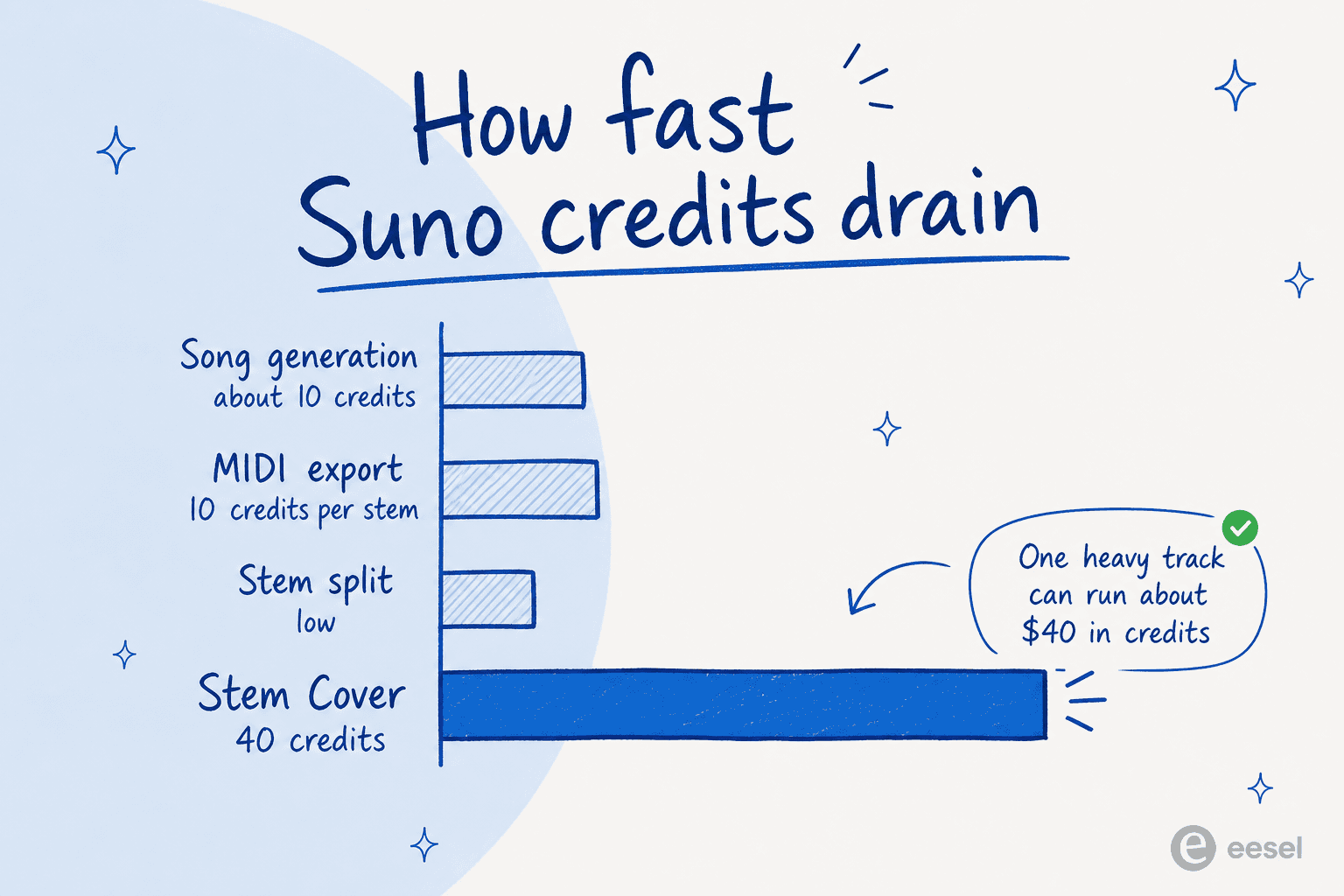
The credit math matters more than the sticker price. A standard song generation runs ~10 credits, Stem Cover (Studio's headline 1.1 feature) costs 40 credits each time you call it, MIDI export is 10 credits per stem, and the Studio's stem regeneration is multiplicative - every alternate take you ask for spends credits whether you keep it or not. Multiple Reddit reports describe single "magnum opus" tracks burning the equivalent of $40 in credits by the time they're finished:
"This person used to be able to produce songs pretty easily, but this last one, their magnum opus, took like 40 dollars to create." r/SunoAI, summarised here
For comparison with adjacent tools, our Leonardo.AI pricing breakdown walks through the same token-economy gotchas in the image-and-video space, and our Midjourney pricing post covers the hours-per-tier model that some users prefer.
What you actually get inside Suno
Suno's surface area expanded fast across 2025-2026. Here's what's on the menu when you log in.
Create: the Simple-vs-Custom split
There are two entry points on the Create screen. Simple Mode is a single prompt box - you type "indie-pop bedroom ballad about getting older," click Create, and Suno makes the lyrics, the style, the structure, and the vocals from that one sentence. Custom Mode breaks the prompt into separate fields: Lyrics, Style of Music, Title, Personas/Voices, model picker, Creative Sliders, and an "Excludes" field for telling the model what not to do.
Custom Mode is where Suno's real expressive power sits. You can paste your own lyrics, drop structure tags like [verse], [chorus], [bridge], [break], [drop], [refrain] to control song shape, and use Creative Sliders to dial Weirdness, Style Influence, and Audio Influence. There's also an Enhance button on the Style field that turns a five-tag style prompt into a full descriptive paragraph the model can chew on.
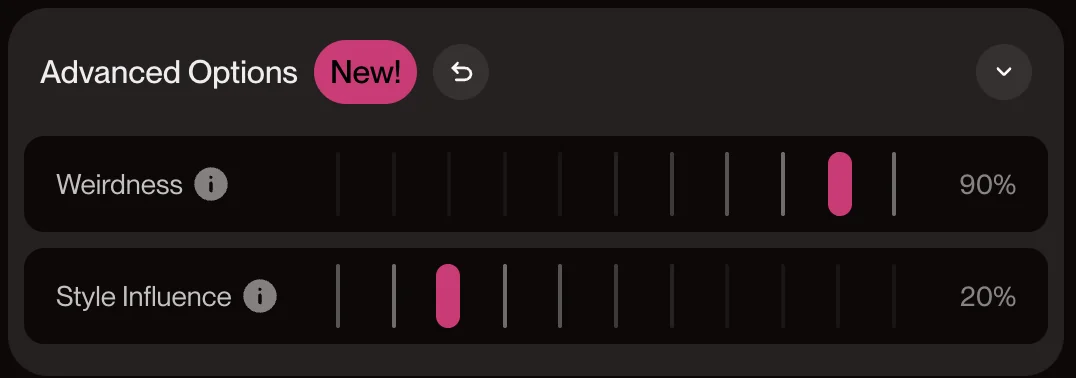
A subtle thing worth pointing out: the v4.5 release shifted Style of Music from a "tag list" model to a "conversational sentence" model. So instead of lofi, jazz, female vocal, low energy, you now get better results writing a sleepy lo-fi jazz number with a breathy female lead vocal, brushed kit, vinyl crackle. The Custom Mode help article is explicit about this and most older Reddit prompt guides haven't caught up yet.
Personas, Voices, and Custom Models
Personas are reusable style profiles - pick a song you've made, save its sonic fingerprint as a Persona, then reuse it as a starting point for the next track. Useful for "I want everything I make this week to sound like that one banger from yesterday."
Voices is the v5.5 successor - it lets you upload 15 seconds to 4 minutes of vocal audio (verified with a spoken phrase to prevent obvious cloning of someone else's voice) and reuse that vocal across generations. There's a hard gate: you must be 18+, geographically gated by region, and Voices only works with the v5.5 model.
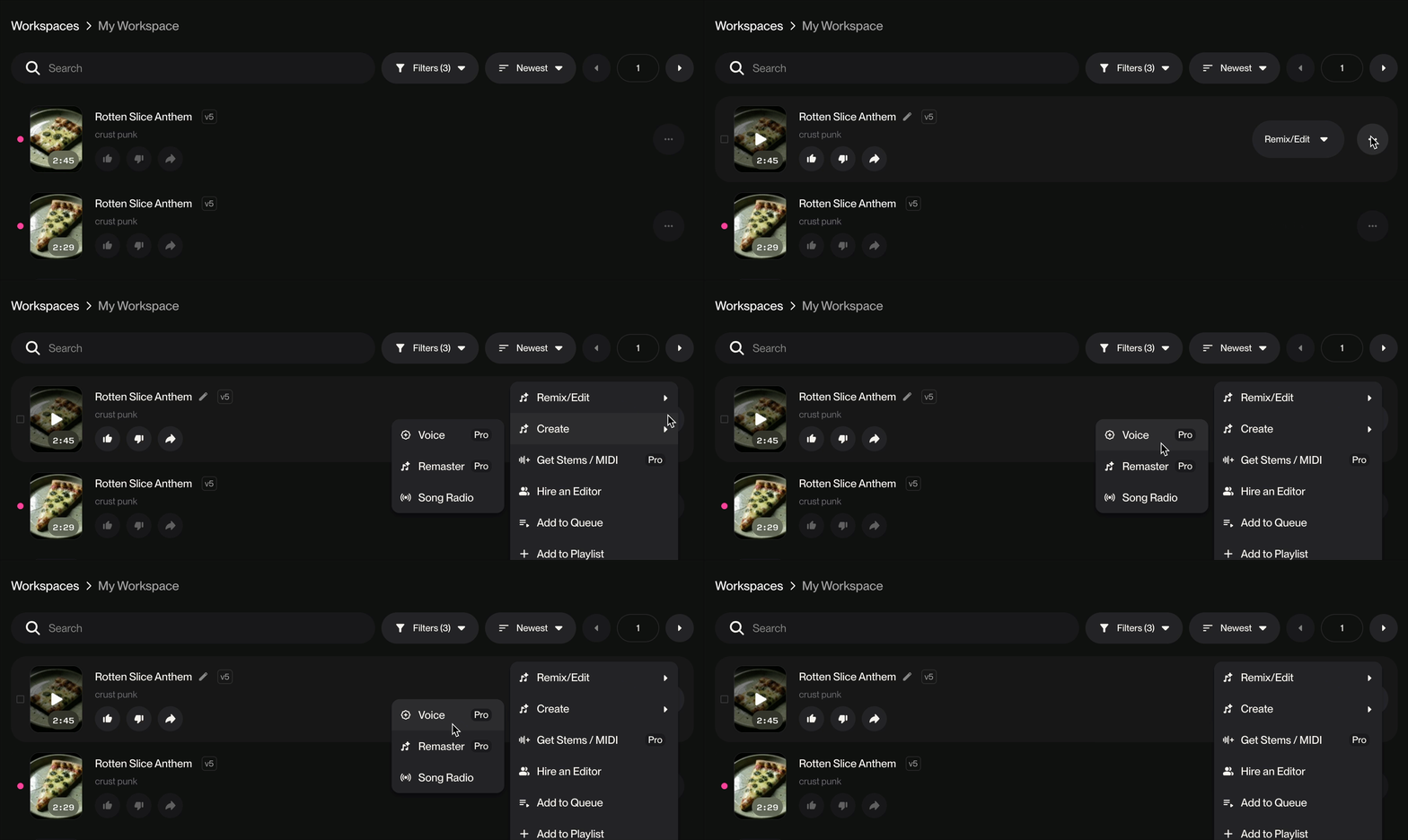
The Persona system is also where the most-repeated 2026 user grievance lives. After the WMG settlement and a related May 2026 model update, multiple users reported that saved Personas suddenly defaulted to a generic genre voice instead of holding the saved one:
"Well, since their latest unknown update 100% broke vocals, Suno is arrogantly useless now. Explain a custom vocal in the style prompt: you get THE generic voice for that genre. Try to use a saved persona: you get THE generic voice for that genre. I swear man... ever since WB bought them out, things have severely became worse!!!" u/Logorifle, r/SunoAI, 28 May 2026
Suno hasn't acknowledged the regression as a bug, which makes the timing - right after the major-label deal - fuel for a separate, less charitable theory.
Custom Models are the third pillar, exclusive to Pro and Premier. Train your own variant of v5.5 by feeding the system at least six songs you actually own (you have to verify ownership), wait 2-5 minutes, and you get a private model that biases toward your sound. You can train up to three, and they stay private. It's the most musician-respecting feature in the app.
Suno Studio: the in-browser DAW
Suno Studio is the Premier-only browser DAW Suno launched in late 2025 and shipped 1.1 (Stem Cover, recording) and 1.2 (Remove FX, Warp Markers, Time Signatures) in early 2026. It's a multitrack timeline, AI stem generation into "Take Lanes," mixing controls (EQ, faders, pan, solo/mute), and an Export menu that emits Full Song WAV, per-clip WAV, or MIDI from any stem at 10 credits per Get MIDI call.
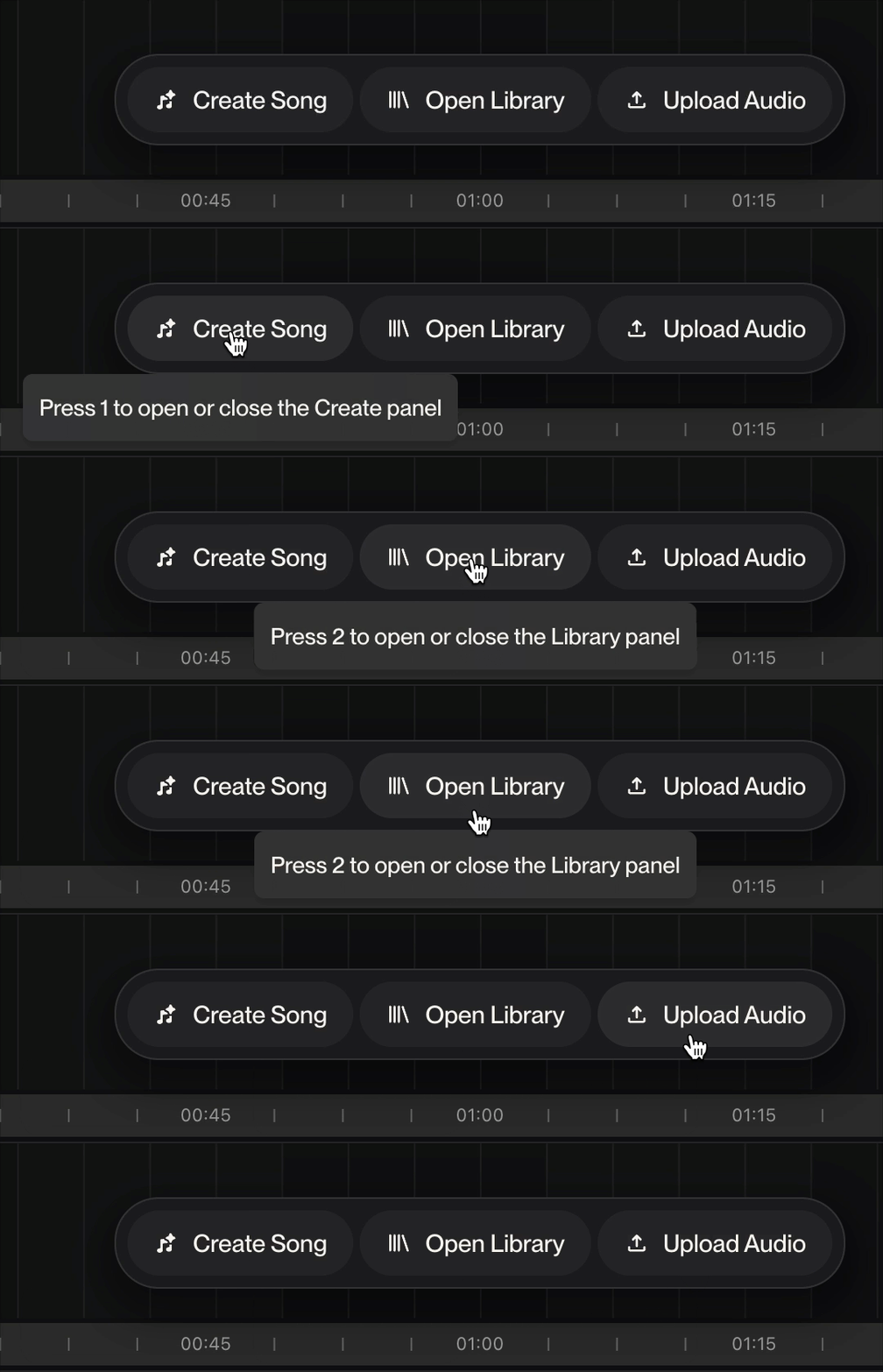
It's browser-only - there's no Studio on mobile, you need Chrome on a desktop or tablet at minimum 768px, and the system requirements call for a CPU that supports SIMD and at least 4GB of RAM. The headline 1.1 feature, Stem Cover, lets you isolate a vocal or instrumental stem and "cover" it with a new performance - same notes, different timbre.
The honest read on Studio is split. On one side, it's the most ambitious thing in AI music software right now - multitrack editing in a browser, with AI-native stem generation, is a real category move. On the other, the current build is rough. A representative comment from the r/SunoAI Studio thread put it bluntly:
"Pre-beta, frankly they should be paying US to use it." r/SunoAI commenter, via Undetectr's Studio review, Oct 2025
And on X, producer Mike Patti's parody handle "Slop Studio Pro" is shorthand for the Studio-vs-prosumer-DAW gap. The 1.2 release added time-signature controls, but Suno's own release notes admit the new time-signature setting "is not yet sent to the generative models" - so it's metadata only for now.
Studio is the right place to be if you want bar-level editing on Suno output. If you're an experienced producer reaching for an Ableton replacement, you'll quickly want your Ableton back.
Song Editor (outside Studio)
Not to be confused with Studio: Song Editor is the Pro-and-up panel that opens on any finished song and gives you Extend, Replace Section, Quick Replace, Fade In/Out, and section markers (verse, chorus, bridge etc.) on a waveform.
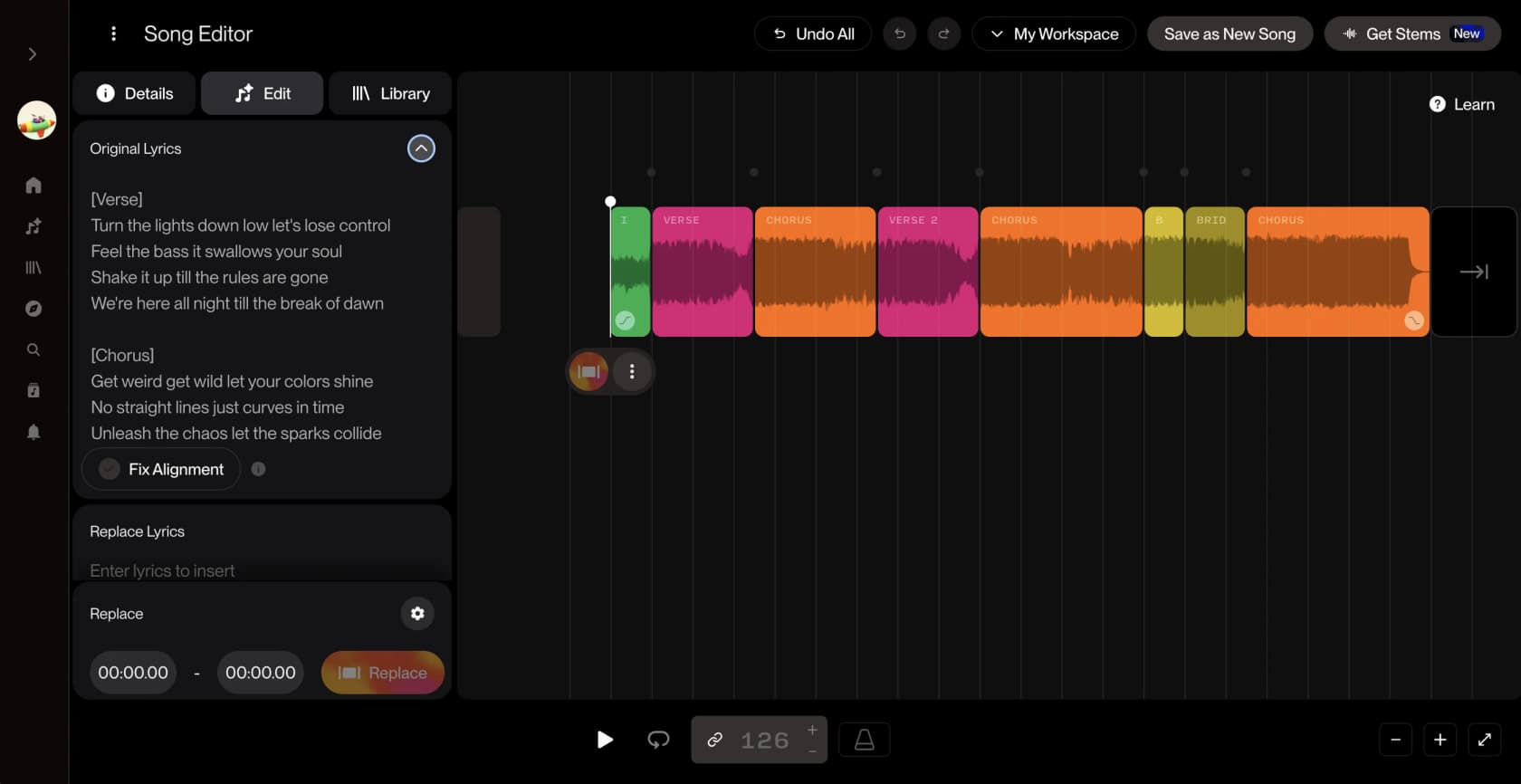
It's the lightest editing layer Suno has - useful for "cut the second chorus shorter" or "add a bridge here," but it doesn't touch individual stems and it doesn't replace what Studio is reaching for. Think of it as the in-line trimming you can do on Pro before you go pay for Premier.
Stem Split (12 stems, time-aligned)
On Pro and Premier you can split any finished song into up to 12 vocal-and-instrument stems as time-aligned WAVs and drop them straight into Ableton, Logic, Reaper, or whatever you actually mix in. This is the feature that most cleanly bridges Suno output to a real production workflow.
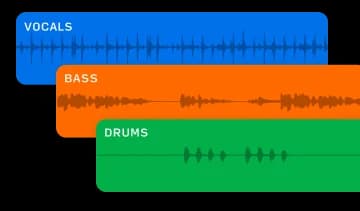
The 12-stem cap is generous compared to most consumer-grade splitters, and the time-alignment is reliable enough that producers we've seen quoted on r/SunoAI use Suno specifically as a "generate the song, then mix it like a normal record" workflow. If you only ever use one paid feature on Pro, this is probably the one.
Sound quality: the v3 to v5.5 arc
Suno shipped seven model versions across two years - that's the pace of progress that explains both the hype and the resentment.
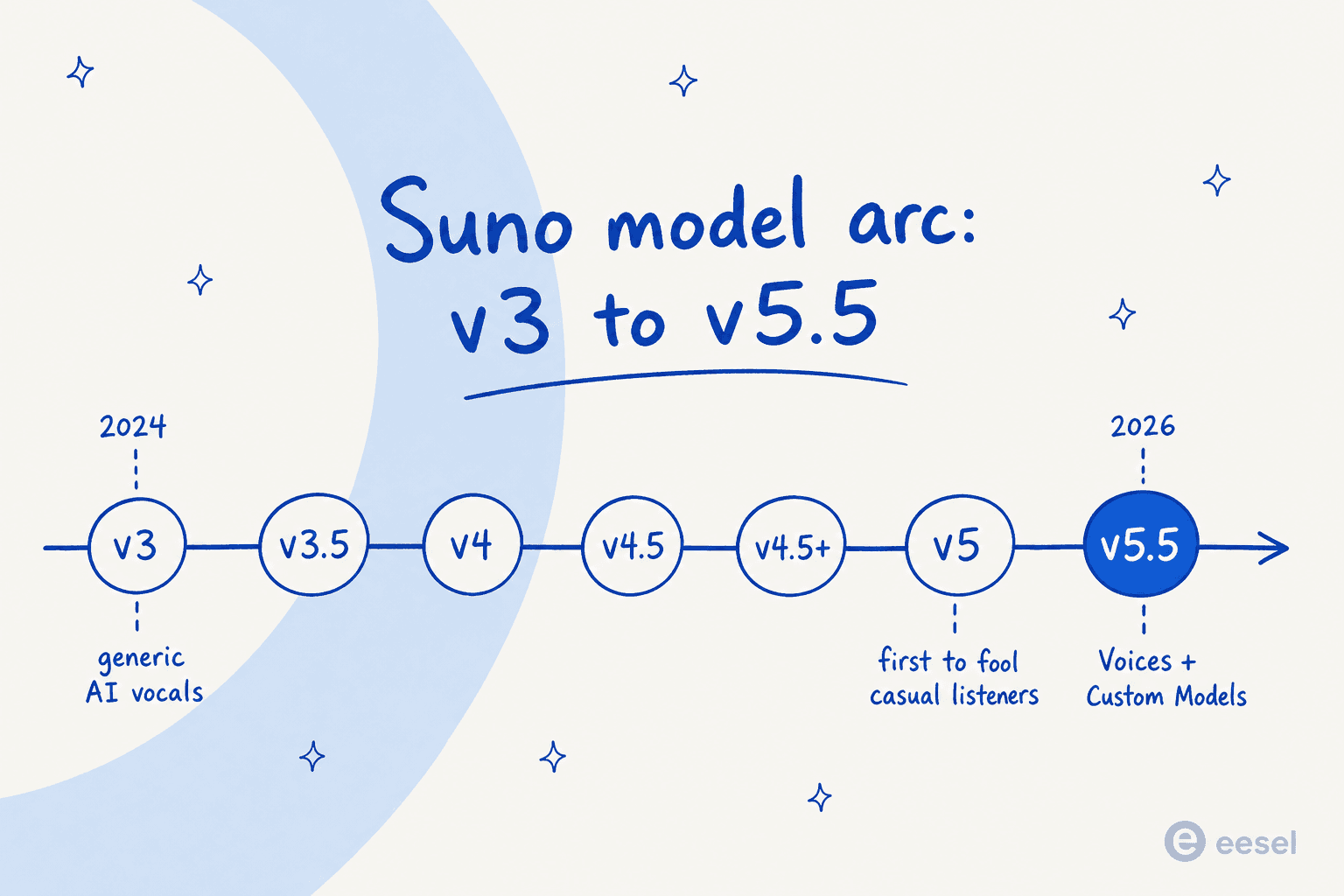
The cleanest qualitative summary of the v4 → v5 jump came from AI-education consultant Darren Coxon on LinkedIn:
"Suno once again raises the stakes in text to music production. And this feels like a big one. To date, AI music has sounded pretty generic
improving all the time, but still a sense that the vocals sang along with the beat in a rather predictable way. But Suno v5 has moved on, and now produces music that sounds more, well, human." Darren Coxon, LinkedIn

And from a more methodical angle, UX pioneer Jakob Nielsen ran a verse-by-verse v5.0 vs v5.5 A/B in March 2026 and flagged a specific failure mode worth knowing about:
"Yes, Suno 5.5 can't pronounce 'spatial metaphors' (last verse), but Suno 5.0 had more words it pronounced wrong. Admittedly, the term 'spatial metaphors' doesn't occur often in the lyrics for mainstream songs, so it probably wasn't in the training data." Jakob Nielsen, PhD, LinkedIn
The pattern is consistent across the comparison reviews we read: v5 is the first model that fools casual listeners on vocals, v5.5 sharpens the personalisation surface (Voices, Custom Models), and the remaining failure modes are technical vocabulary, unusual scansion, and the occasional "what is the model trying to pronounce" garble on dense lyrics.
Versus Udio - Suno's most direct competitor - the cross-platform consensus is now Suno wins on vocals, Udio wins on instrumental clarity and stereo separation. From a 2026 TLDL comparison of Reddit threads:
"Suno V5 produces noticeably better vocals than Udio, with V5 vocals sounding like actual human singers with natural vibrato, breath, and phrasing." TLDL Suno-vs-Udio comparison, 2026
A subtler limit: senior producers say Suno still doesn't reliably take direction on the production fundamentals - bar count, key, form, tempo. From songwriter-producer Martin Berger's LinkedIn:
"Suno's editing functions are basic and though you can influence its output, it doesn't yet reliably recognise specific musical prompts around bars, key, form and tempo. This limits the ability to make meaningful changes to its output without complicated external workarounds, or sound quality compromise. Think of AI on its own as a ready meal, it's cheap, quick and easy, you can even add a bit of sauce. What you get in the end is just tasty enough to stop you feeling hungry. But it doesn't replace a good restaurant chef or great home cooked food!" Martin Berger, songwriter/producer, LinkedIn
That "ready meal" framing is the most accurate one-line verdict on Suno's current ceiling: spectacular at "fast, listenable, finished," compromised at "I need this to scan in 7/8 time at exactly 92 BPM with the bridge in the relative minor." If your work depends on the latter, Suno is a starting point, not a finishing one.
What real users say about Suno in 2026
The community sentiment is split harder than the headlines suggest. There's a sincere power-user fanbase, a vocal critic camp, and a third group that loves Suno specifically because the alternative is even worse.
On the power-user side, podcaster Andrew Warner's defence captured the case for Suno as a personal-creativity tool more concisely than Suno's own marketing on X:
"Suno just raised a quarter billion dollars to help you make AI songs. Quit bitching about how it'll replace musicians and open to your eyes to how much it can ADD to your life. Here's how I use (and f'ing love) @suno: 1) Remember - For years, I felt bad about sucking at remembering names. Now I use Suno to turn the names and interests of people I'm going to meet into catchy songs. 2) Podcast intro - For 15 years my podcast had no music because I couldn't find the right song. But last month, I created the perfect 3-second intro. 4) Motivation
The music in hip-hop and heavy metal fire me up, but the lyrics (guns and anger) don't do it for me. Now I can get a motivational song with lyrics that inspire me." Andrew Warner, X
On the critic side, the loudest complaint in 2026 isn't quality - it's customer-facing decisions around the WMG deal. Specific pain points:
- Persona regression after the May 2026 update, captured above.
- ISRC self-upload blocking - users with their own legally-distributed tracks find Suno refusing to accept them for cover/remix workflows. From u/Ok_Pipe_4690 on r/SunoAI:
"I tried uploading my own original song that I wrote, recorded, produced, mixed, and professionally mastered. I own 100% of the rights and even provided the official ISRC code registered through distributors. Suno instantly blocked it for 'copyright infringement'
on my own track. After multiple emails with support, they basically said: No manual whitelist or exception possible, even with ISRC and full proof of ownership." u/Ok_Pipe_4690, r/SunoAI

-
Studio credit burn - the satirical "Slop Studio Pro" reframing from producer Mike Patti on X is the clean version of the Reddit gripes. Studio operations spend credits whether or not the output is usable, so a heavy editing session can chew through hundreds of credits for one finished take.
-
The "AI slop" framing. This is the big-picture critique not specific to Suno, but Suno is the most-named target because it has the most reach. Composer and Fairly Trained founder Ed Newton-Rex has been the most consistent voice on this, going back to April 2024 on LinkedIn:
"I analyzed a bunch of Suno's output, and found it generates music that closely resembles well-known, copyrighted music: melodies, chord progressions, lyrics, instrumental parts, and styles." Ed Newton-Rex, LinkedIn, April 2024
The Suno community itself acknowledges the slop critique honestly - the r/SunoAI thread on the topic has hundreds of replies, including from active paying users, who agree the problem is real even while defending the tool. The honest read is that Suno's quality has outrun its taste filter: it can now make music that sounds polished, which means casual users are flooding playlists and uploads with content that sounds professionally done but says nothing.
The lawsuit overhang and what it means for commercial use
This is the section most reviews skip and most buyers actually care about. Here's the timeline, and what it means if you're publishing Suno music for money.
June 2024: The RIAA filed a landmark lawsuit on behalf of Universal Music Group, Sony Music Entertainment, and Warner Music Group, accusing Suno and Udio of training on copyrighted recordings without licenses.
August 2024: Suno filed a motion to dismiss with a "training is fair use" defense. CEO Mikey Shulman posted a public blog response framing model training as "learning, not copying," and arguing the lawsuit threatens the open internet itself.
November 2025: Warner Music Group settled and partnered with Suno, the first major-label licensing deal of any AI music generator. Suno also acquired Songkick. The Warner deal narrowed user rights in small but real ways: free-tier downloads were removed, paid downloads gained caps, and the Terms of Service softened "you own it" language to "users are generally not considered the owner of any music or other content created using the Service."
As of June 2026: Universal and Sony are still suing. The Warner settlement doesn't extend to them. A pivotal fair-use ruling is expected from the US District Court in Massachusetts this summer. Practitioner-rights critics like Gil Eyal frame the WMG deal in stark terms on LinkedIn:
"Suno's partnership with Warner Music Group marks a turning point. For the first time, a major label has openly embraced AI generated music. And it raises a real problem. Labels are supposed to protect musicians. But this deal accelerates the shift toward AI created tracks in advertising, corporate videos, background playlists, and commercial work." Gil Eyal, LinkedIn
What this means for a buyer reading this in June 2026:
- For personal use, no practical risk. Generate, listen, share with friends. You're not the party the labels are coming for.
- For commercial use on Pro and Premier, you have rights from Suno but no indemnification - the ToS runs from you to Suno, not the other way around. If an UMG or Sony track turns out to resemble what you generated, you carry the risk.
- For published-on-Spotify, label-distributed music, the bar is higher than Suno's commercial-rights clause can clear on its own. Most labels' submission policies haven't caught up; some explicitly bar AI-generated tracks. Check the distributor's policy before you upload.
- For ad agency / corporate-video work - the Warner deal makes Suno noticeably safer than it was 12 months ago for in-house and stock use cases, but the prudent move is to read the Suno ToS on commercial restrictions and avoid prompts that name living artists or quote known lyrics.
The bigger-picture take from product analyst Aakash Gupta on X is worth reading as both an investment case and a moral one:
"Suno just crossed $300M ARR with 2M paid subscribers in 24 months. The math tells the whole story. Each paying user spends roughly $150 per year to create music. Spotify Premium charges $65 per year to listen to it. People will pay 2.3x more to make something than to consume it. $300M ARR with an active copyright lawsuit from Sony, Universal, and Warner is the most telling number of all. The labels will eventually extract their cut, the same way they did with Spotify." Aakash Gupta, X
The buyer-side translation: Suno will probably keep operating no matter how the UMG/Sony cases resolve, but the economics of your output will shift if the labels' cut shows up in your bill or your commercial-rights clause down the line.
Suno alternatives at a glance
If you're weighing Suno against the rest of the AI music landscape, here's the entry-tier comparison. Numbers are monthly prices on the cheapest paid plan, public list pricing as of June 2026.
| Tool | Entry plan | Free tier? | What you get | Internal deep-dive |
|---|---|---|---|---|
| Suno | $8 Pro (annual) | Yes (10 songs/day) | 2,500 credits/mo, v5.5 model, stems, Personas, Voices, commercial rights | This page |
| Udio | $10 Standard | Yes (limited) | 1,200 credits/mo, longer songs, deeper structural editing | Udio pricing |
| Riffusion | $12 Pro | Yes | Unlimited generations, vibe-based browsing, recent rebrand to "Producer AI" | - |
| Boomy | $9.99 Creator | Yes | Distribution to Spotify built in, lighter creative control | - |
| Mubert | $14 Creator | Yes | Royalty-free background music for video/podcast use, license-clean | - |
A few patterns worth lifting out:
- Suno and Udio are the only two with genuinely "I made this song" output. The other three are closer to royalty-free background music tools - useful for video, podcast, and ambient applications, but not what you reach for when you want a finished track with vocals.
- Boomy's distinct value is the built-in Spotify pipeline. If your goal is to upload to streaming with the minimum friction, Boomy makes that easier than Suno.
- Mubert is the cleanest legal story because it licenses from a curated artist pool rather than training on the open internet. If your use case is "ad agency needs background music for a client deck, copyright risk is unacceptable," Mubert is the safer choice and Suno isn't even close.
- Riffusion (now Producer AI) is the closest aesthetic competitor to Suno on output quality but has a smaller community and less feature surface area.
For broader AI-tool context across creative work, our Leonardo.AI review covers the image side, our Midjourney pricing breakdown goes deep on hours-per-tier billing, and our roundup of Pika AI pricing and Runway AI pricing handles AI video. The token-economy gotchas are similar across categories.
Who Suno is the right pick for
After a couple of weeks of generating across Free, Pro, and a Premier trial of Studio, here's the take:
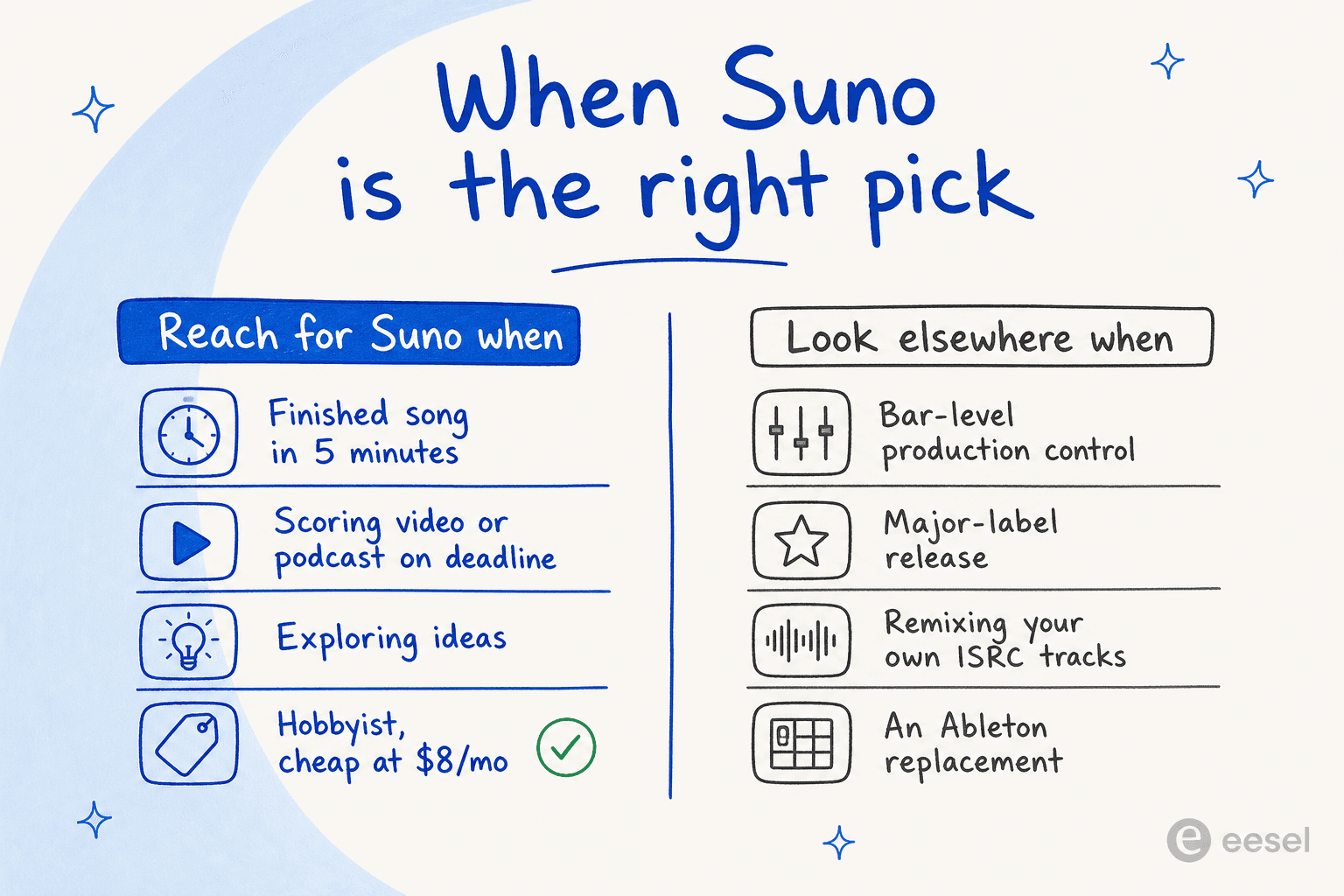
Reach for Suno when:
- You need a finished-sounding song in five minutes. Suno is the unmatched leader on "blank page to listenable track" speed.
- You're scoring a video, podcast, or ad on a deadline, and royalty-free libraries aren't giving you the specific vibe you need.
- You're exploring ideas - Suno's "let the model surprise you" loop is genuinely good for finding a hook you'd never have written on your own.
- You're a hobbyist, learner, or "I want to write a song for my mom's birthday" use case. Pro at $8/month is genuinely cheap for what you get.
Look elsewhere when:
- You need bar-level production control with reliable BPM, key, and form. Studio is reaching for this and isn't there yet; you'll be back in Ableton or Logic.
- You're publishing on a major label and need a clean copyright path. Warner's deal narrows the risk; UMG and Sony's active lawsuit means it's still not zero.
- Your workflow depends on uploading and remixing your own ISRC-coded tracks. The current fingerprinting blocks even verified self-uploads.
- You're an experienced producer evaluating Suno as an Ableton replacement. It's not, and it's not trying to be.
Our verdict: Suno is the strongest AI music generator on the market for general creators in 2026 and almost certainly the one to pick if you're not already in a specific niche (royalty-free background, label release, sophisticated production). The Pro plan at $8/month annual is the right starting tier; only upgrade to Premier if you'll actually open Studio more than once a week. Watch the credit burn on heavy editing sessions, treat the post-Warner commercial rights as "fine for most things, careful on big-money work," and read the UMG/Sony lawsuit news through the summer before you bet a six-figure project on Suno-only output.
If you're not sure Suno is the right fit, our roundup of Suno alternatives walks through the seven we'd consider, and our Udio review covers the closest direct competitor.
Try eesel.ai if you're shopping for AI tools more broadly
Suno is one of the strongest AI tools we've reviewed in the creative space. If your shopping list also includes AI for customer support, that's where eesel.ai comes in. eesel deploys autonomous AI teammates inside the tools you already use - Zendesk, Freshdesk, Slack, Gmail, Shopify, and 100+ others - so your support team can offload ticket triage, drafts, and resolutions without adopting a new interface. Real numbers: 73% tier-1 resolution in the first month for Gridwise, 100,000+ tickets/month for Smava, 4.6 / 5 on G2.
eesel AI working inside Zendesk
The pricing model is the inverse of Suno's credit math. Instead of credits you can't predict, eesel has one fixed monthly price - from $299/month for 500 credits (1 credit per ticket or chat), with $4 per blog post - with no seat fees and an optional overage cap you set. You can see exactly what a month costs before you commit. See the full breakdown on the eesel pricing page.